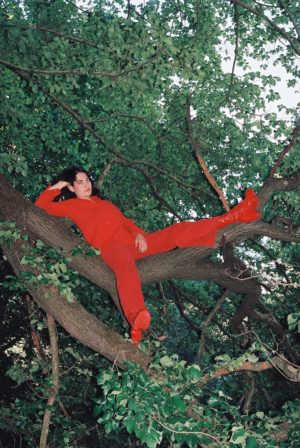

Featured image by Luca Veneter, additional photos by Allen Ying
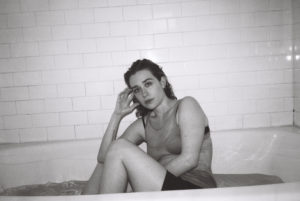
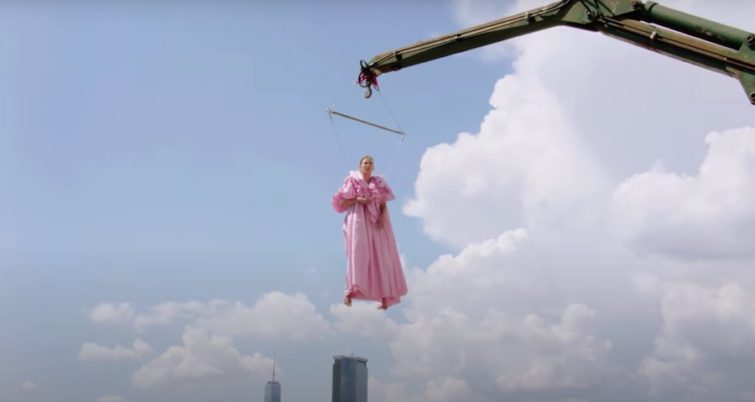
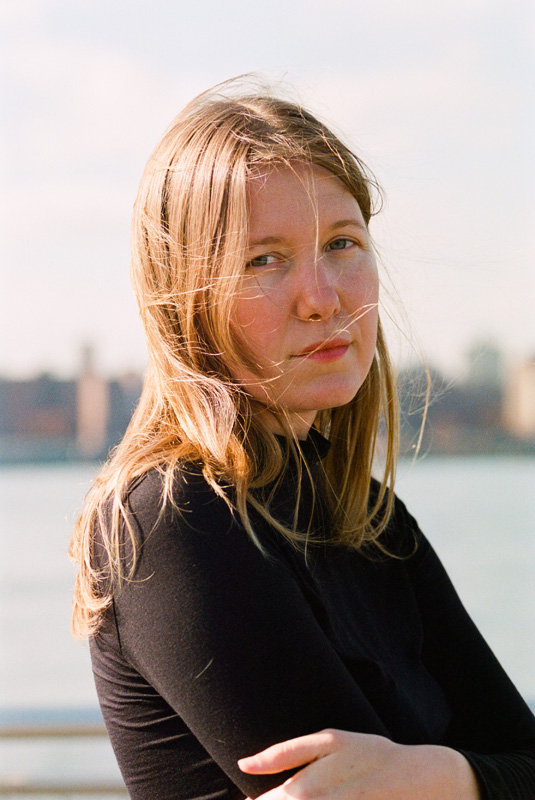
Aerial East, an NYC-residing artist, is a very serious person. That might seem strange to a lot of musicians, or to a lot of consumers of music who’ve grown accustomed to music being born from sheer playfulness, or this sense that can sometimes feel like drowning oneself in noise as a kind of therapy. Aerial is opposite – she is quiet and precise, and very intentional. She leans heavily into the quiet on her LP Try Harder out Feb 12 on Partisan Records (Fontaines D.C., Pottery). She finds subtle ways to play with the intimacy in the stumblings of her own humanity as it’s connected to the humanity of others; specifically in the video for “Katharine,” out today, she quite literally suspends herself in thought as she meditates on a faded friendship between two women.
While the imagery is evocative in its stillness, her explanation is almost contrarily practical. This sort of twist on intention is what I personally find so curious about Aerial as an artist. About the video, she says, “I’ve always thought cranes were beautiful, so when Luca mentioned his idea to shoot someone in a slow zoom on a crane I was hooked. I thought, if we can get a crane it will be so stunning to see someone dangling in the sky like that. Finding the crane was pretty daunting and at some points seemed pretty unlikely. But one day we went down to Red Hook, drawn by the many cranes permanently perched by the water and hoping to gain access. We were hitting a lot of discouraging dead ends when we stopped by our friend Benny’s record shop and he, magical person that he is, said he knew a guy, Preston, with a homemade 30 ft crane built by an artist to transport his large sculptures. Support your local record stores!”
So while most people might end up looking for more and more meaning in it, she was mainly focused on the plain and simple beauty of it. Part of the beauty of it ends up stemming from the happenstance of the logistics of making that image happen, in how she managed to grant herself access to a crane in Red Hook. That’s pretty cool.
I asked her a few questions over email about the record. Here are her very thoughtful and of course serious answers.
How have you been dealing with that feeling of ungroundedness while being so forcefully grounded thru all of this (pandemic)?
At this point I have adjusted but in the beginning I was absolutely feeling ungrounded. I work in a restaurant that I love and have been with for 7 years and when we closed down it was very upsetting not knowing if we would open again (we did) and not knowing if unemployment would cover my rent or for how long (so far so good). I spent all of April and May in Massachusetts and I didn’t know if it made sense to keep my apartment in New York City without a job and with such high rent. I am very lucky to be receiving unemployment. Some of my coworkers are not.
I honestly didn’t initially or specifically notice the lack of drums until I read it in a press release – I kind of just noticed an intimacy and a warmth. If I recall correctly you deal with hearing issues, do you feel comfortable speaking about that and how it affects how you think about driving the music? If not, no worries. It’s just kind of crazy to think what a different album this would be with drums and I’d love to hear more about your decision to omit them.
Originally I wanted to leave drums off because I just didn’t want to listen to them. I was experiencing a lot of anxiety and could only listen to Ethiopiques, vol. 21: Emahoy (Piano Solo) I learned halfway through the recording process that my eardrums are damaged because of multiple childhood ear surgeries which is why I was experiencing pain and sensitivity to loud noises. I’m glad it translates as intimacy and warmth. That is what we were going for.
I also love that the artists you worked with advised against this decision but you went with your gut. How important is it to listen to your instinct vs the well-intentioned advice of others? How do you strike a balance in art and in life?
Listening to your instincts is the most important. It is my main goal always.
Regarding the song “I Love Dick”: it’s such a thing to build up these preferred realities about the people we meet. “When I met you you were so cool-” that’s such a relatable feeling, and also one that can come along with a lot of regrets! Do you think that you’ve grown having gone through this thought process and experience with whomever the song is about — if it’s about someone? Or is it based only on the book?
I like this question. It really makes me think. I haven’t really admitted to myself that this song is about someone but it definitely is. Learning that people can’t be who you want them to be is something I explored a lot in my first album and I grew so much through that experience.
You’re telling these stories set in Texas at a very political time. Do the politics surrounding Texas // how it almost flipped // and the current state of affairs change at all how you feel about your time in Texas? Time and place are such strange things.
I love Texas. There are people there still that I love. It is a beautiful place and my time there was beautiful. I feel lucky to have had that experience.
How important is it to you to match the imagery to the music? How do you know it’s right? And who have been some of your favorite people to work with?
My main visual collaborator is my best friend Brianna Capozzi. We were making images together before I made my first album and before she was a fashion photographer. The way she sees me has really shaped the way I see myself. I don’t know how you know it’s right. You just have to trust yourself.
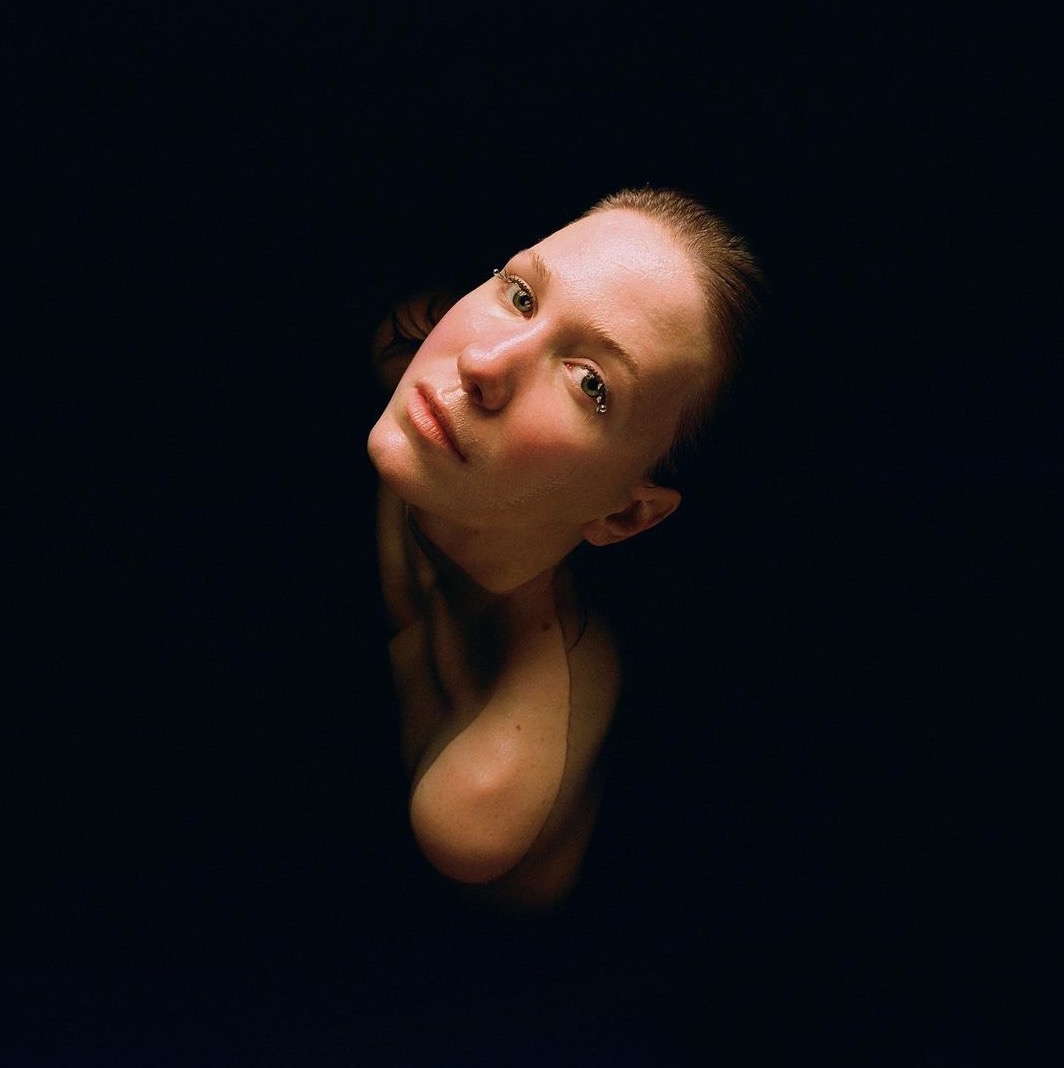
“Try Harder” single art by Brianna Capozzi
Saw you perform last year in this incredible gold lamée (I think) jumpsuit and found myself really deep in thought about the contrast of that outfit to the music itself. Was the contrast intentional, or do you just like to dress up?
The contrast is intentional. I know my songs can be sad and I like to try to bring lightness to the performance with flamboyant looks. That gold suit was designed for me by Sarah Aphrodite and made me feel like Dolly Parton.
How important is it to have fun when you are creating and performing? Inversely, how do you personally prefer to factor in seriousness? How do you find a balance and what’s your sweet spot?
I’m actually very serious and often have to remind myself to have fun. A lot of aspects of being a professional musician can be stressful and it can be easy to lose connection with the playful side of it.
“Katharine” addresses a faded friendship – it’s so cool to hear platonic intimacy so explicitly like this. Was there a moment that made you feel like you needed to write this song?
How important do you feel that this kind of love and intimacy is?
My friendship with Katharine was very important to me and changed my life. She is the reason I moved to New York. She was the first person I shared my songs with and she insisted I share them with others. I wrote this song in a cab on my way to a staff holiday party at Hooters. I’m not sure why I was thinking about her in that moment but she is still an important figure in my life even though we haven’t seen each other in a while.

Look out for Try Harder out Feb 12 via Partisan Records, stream Aerial East here, and follow her here.