
Brevity is inevitable when you think about it. The human mind is like a constant machine. Always whirring, churning through conversations already had, being had, or yet to come. All the while we think about the weather, food, water, aches, pains, why’s, where’s, over and over again, without the slightest indication of just how much is actually being processed. The curse comes with the sheer size of it all. None of it can last, because how the hell could it?
According to one of those unsubstantiated internet facts, the human mind has around 50,000 to 70,000 thoughts a day. There is a horror in realizing how many we’re actually left with when we finally climb into bed. The answer is, not many. Like dust in wind, out of all the thoughts we’ve had spiral around our heads invisibly, often involuntarily, only a select few actually come to rest on dry land.
This is why we write. When pen goes to paper there is a formulating of these thoughts, a process to make the intangible tangible. To capture the best of them and let them exist, outside of an ether and into the physical. The beauty of this is exemplified in Nanako Hirose’s new film Book-Paper-Scissors.
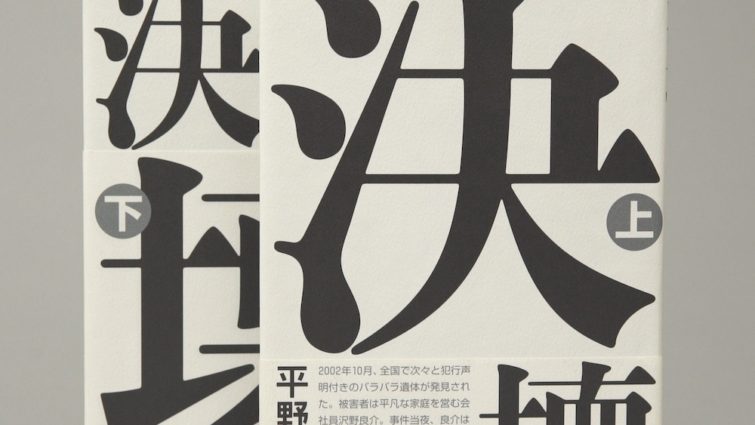
It starts with the sound. The twisting of paper, the scrunching, folding, shifting of text, delicately, but purposefully, until the camera retracts to capture the fingers behind it. Those fingers belong to Nobuyoshi Kikuchi, a 75-year-old Japanese book designer who has devoted his life to handcraft the perfect house for those words to exist. There is an importance in it, after all. For novels to survive, they need what he calls a “body,” and the stunning process of creating it is demonstrated throughout the film.
There’s the binding, the pressing, the delicate way the sleeves are created, sometimes to allude to wood, other times to replicate the feeling of skin. The technicality of the process is clear to see, but it soon becomes evident that Book-Paper-Scissors is more than a film about fabric. It’s a film about human emotion. The joy of being able to touch creative work and call it your own.
There has always been a romanticism about this, especially since we’ve entered the digital age. The smell of an old book or the sound of an old vinyl record has a real satisfaction that has only been amplified by the online era. That’s not to say it’s perfect. The film never claims that it is. Around halfway through, Hirose takes a two-minute detour to show Mr. Kikuchi attempting to play some music through one of those old school record players. His 75-year-old wrist churns the handle over and over again, and the sound that greets him is a distorted mess. “The breaks don’t work,” he decides.
It’s a problem most of us would associate with a faulty Honda rather than a song, but all the same Mr. Kikuchi tinkers, touches, tries again, and voila, the record plays perfectly. The hum of the music feels better as a result. There’s a weightiness to it. There’s an identity that is impossible to replicate inside a cloud.
This identity becomes integral in forming a relationship with media. To hold a book in the hands will always be more personal than to not. There’s a transition from the artist to the consumer. The writer’s thoughts become theirs to hold, to read, to ponder, to shelve. This gives the creation far more meaning as a result, because when the consumer levels up to the owner, the words in the book become theirs and theirs alone. As Nobuyoshi describes, his process is less a creation and more a “preparation”. Anticipating the moment the work belongs to someone else, to become a part of them in a way that non-physical ownership cannot replicate.
Perhaps there’s a pretentiousness to it, but watching a man in his later years dedicate every day to these pages is something that should always resonate. What were once thoughts in a head have been noted, printed, and bound into a body which has been intricately designed to complement them. It’s scary that this could become a lost art. In a world of E-books and music downloads, there is a morose inevitability that this kind of physicality could be lost forever. In such a case, formulated thoughts will instead swirl around the cloud, still untouchable, still brief, just as they had been inside our head. But for now, it is nice to know there is a man in Japan taking the time to immortalize someone’s words in just the right way.
‘Book-Paper-Scissors’ is part of the Japan Cuts film festival starting today. Check out their site for more films and info.