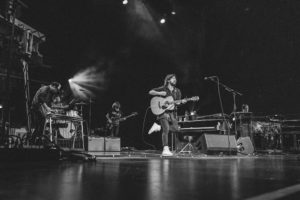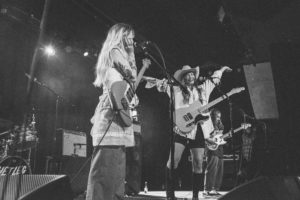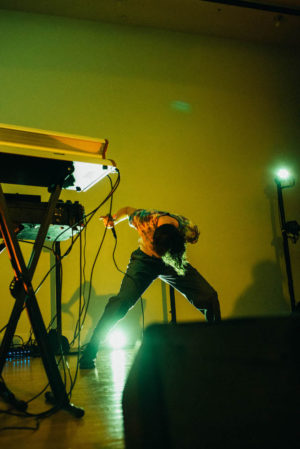

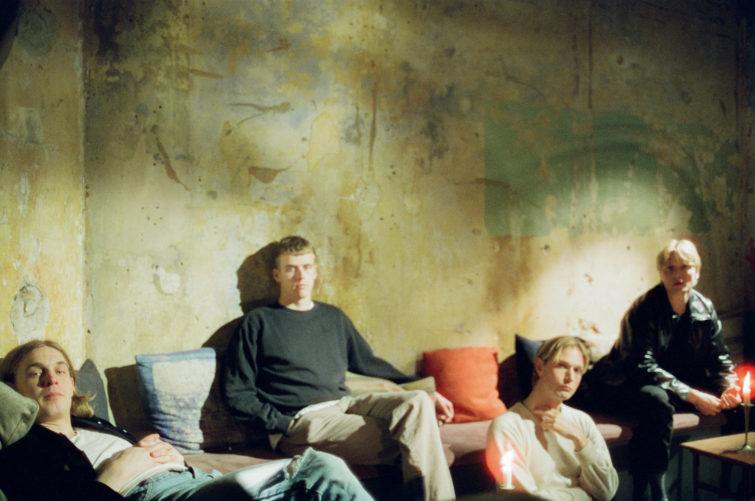
Photo by @foxsticks
After 4 years since their last full length album, Danish band Communions are ready to bring you something new. On track to releasing their third full length record later this year, it’s been a long time coming since their Covid era album ‘Pure Fabrication’. At the beginning of this year, they released their first single ‘Not A Phase’ and just earlier this month they surprised us with a double feature: dropping both ‘Forgotten Frequencies’ and “Lodged’ on the same day. I hopped onto a zoom call to chat with the indie-rock fourpiece to discuss their beginnings, the Copenhagen alternative scene, and their favorite parts of the music creative process. Listen to both singles below and read my interview with band.
Let’s start from the beginning!
Martin: Well, me and Mads have been doing the band since around 2014. So it’s been a while now. We had some other members originally, just 2 of our friends from high school. Then they kind of stopped in the band around around 2020 and around the time we were mixing our last album called ‘Pure Fabrication’, and then me and Mads mixed the album and we finished it, just me and him. Then we we kind of needed some new people to play that record live around 2021, o then I recruited Mikkel, who plays drums. He knew some other guys that were playing music and Morten was one of them. So we were playing that record live. And then after we finish that, we wanted to try to make some new music together. But, you know, we didn’t really know if that would succeed or not, because we hadn’t tried with that new constellation. But yeah. That’s what we’ve been doing the past years. Writing this new music. It’s been fun, that’s where we’re at.
So how old are you, in 2014? When you first started the band.
Martin: I was probably around 21 maybe? (To Mads) You’re younger than me. He’s like 4 years younger than me.
Mads: I was 16, I think, yeah.
And was this your first band, you and Mads?
Martin: I was playing in a punk band. Actually, me and Mads grew up in the United States. We were born in Copenhagen. But we lived in Seattle for 10 years. I was playing in a band there, with my friend. So yea I was in some sort of teen punk skate band.
Playing in a garage?
Martin: Totally. Then we moved back to Denmark.
Mads: I haven’t played in another band. This is the only.
Morten: We’ve played in some other stuff.
Mikkel: Me and Morten played together as well before. Different kinds of bands and genres.
Can you tell me a little bit about the music scene in Copenhagen?
Martin: I can only speak for the alternative music scene, because there’s obviously the pop thing going on, which is like its own thing.
Is that what’s popular?
Martin: Yeah, I think the most popular music here is Danish language, pop music. It’s not our thing. When we were starting out, thing we came from was very much this alternative scene, with a lot of like post punk stuff going on. And some people were doing more electronic things. That’s kind of the scene that we came out of. It was like very much a part of this place called Mayhem, which is this venue which was basically a garage, and just people doing their own thing. That was a long time ago. Now it’s kind of… I don’t really know what the scene is anymore. I think people are just kind of doing… it’s more dispersed, people are doing their own thing.
Morten: I think, especially in Copenhagen, a lot of the alternative guitar music stuff is single person, like a single artist now. There’s a lot of solo artists that do their stuff and play with each other.
Martin: There’s been a lot of really good music coming out of Denmark recently. So it’s not that there’s not a lot of cool acts and music. It’s just… I don’t have the impression that it’s like one scene or group of people.
Morten: I would tend to agree. But Copenhagen is really small. So most people know each other in some kind of way. But still, it’s not coming out of one place as opposed to Mayhem. Maybe like 10 years ago.
Mads: There was a certain point in time… there was a concentration of music in the guitar post punk genre going on. And now it’s like this generational change. People are doing other things from that time. The younger generation, they’re playing a different type of music. Now, there’s a lot of young people doing like hyper pop and stuff like that, you know.
Martin: Lots of DJs.
Mads: Techno.
Martin: We released our last record during Covid. We weren’t really able to play many shows, like internationally and stuff. There’s a lot of expenses with making rock music in a band where, you need a studio. And all these things. So maybe it has something to do with as well.
Do you have a favorite city to play in?
Martin: It’s kind of a cliché answer… but I mean, Copenhagen, probably. When we actually do play a headline show, just because a lot of people show up and stuff. Playing in Europe is fun.
Mads: I’ve also played some good shows in London.
Have you ever done the United States?
Mads: We played one show in LA, like a long time ago.
Martin: But no, we’ve never done a US Tour. We played in Tokyo a couple of times. Back in 2017 and 18. That was probably the most crazy thing. Crazy.
What brought you out there?
Martin: This thing called Hostess Entertainment, which is like an Asian distribution company but Western music and labels. First time it was a club show, and the second time it was for this festival called Summer Sonic Festival. I think those are the biggest shows we’ve ever played.
Do you have a dream city you would like to play?
Martin: I think it would be fun to play in Seattle, Washington, which was where we grew up. Go back and play a show there… that would be a personal one of mine.
Mikkel: I think it would be fun to play in the city for the first time, maybe in a country we’ve never visited before. A more exotic place like Rio de Janeiro for example or Sydney.
If you could learn a new instrument, what would it be?
Mads: I would learn drums.
Martin: I know what you answer is (to Morten). It’s the cello, right?
Morten: Yeah (laughs). It’s also because it’s really hard to get entry level good. So I struggle these days.
Martin: But Morten is being humble because he can already play a lot of instruments.
Morten: Yeah, I dabble in a lot of stuff. This one is especially hard
Martin: I wish I could play piano, fluently. Really useful for songwriting. I imagine, like if I was really good at piano, then I think the my approach to writing songs might change, I don’t know in a good or bad way.
Mikkel: I’ve always wanted to play guitar, actually, but not because of the instrument, but more because it just looks cool. But my fingers are more for drums or drumsticks than for strings and stuff and I have a lot of excuses to not learn it actually. I’m a drum teacher myself. I don’t really think I ever gonna play the guitar to be honest.
Do you prefer writing / composing music or playing live? Is there one that you prefer more than the other?
Mads: I think personally I like writing music more than playing it live but maybe I am a bit more like introverted.
So all of it then? Writing, composing, recording and being in the studio?
Mads: I like it all equally. I think its the performance performance aspect of it that doesn’t come as naturally.
Martin: I would agree, I think I’m kind of the same.
That’s so interesting, everyone always says live…
Martin: Really? No, I think I like composing the most and seeing it, seeing it come together in the studio. Obviously the first steps of writing a song are always really nice, because it’s this beginning moment where anything’s possible, but I like seeing it come together in the studio and it taking form.. really my favorite thing. Live is cool, but for me it’s something totally different.
Morten: Yeah, for me. It’s very much the same. I like the initial part of writing, I think. Creating something that wasn’t there before, you know. That’s the fun part, and that’s maybe also for me what makes live less exciting… you’re doing something that’s already been done. Deciding if you’re putting something on the line or doing something different with the songs. For me it’s just creating the new.
Martin: I think Mikkel might have a different answer…
Mikkel: Yeah, I think it’s really just the combination of all 3. Writing music is nice in itself, but also because we can show it to people and play it live. Before going to studio and recording, producing stuff we need to write music. Its just like the wheel, and if it was only the 2 of them, I would miss something in it. But if I have to choose, I would say live. It’s like the end product.
Do you ever get frustrated with the process? Like you’ve been working on something for so long and you can’t quite figure it out?
Mikkel: Yeah, I think it’s a part of all 3 processes, frustrations. You kind of get around to all kind of feelings when you’re doing it. That’s just a part of it.
Martin: Yeah, sometimes a song comes together really easily, and sometimes it doesn’t. I think when we were making this record, something that surprised me was a lot of the songs that I thought were gonna come together the easiest ended up being the hardest to finish, and a lot of the songs that were the least finished going into the studio actually ended up being the easiest to complete. It was really weird. It varies, it’s possible to run into walls sometimes when you’re in the studio and trying to finish something. Feeling like you’ve been spending too long on something is never a good feeling, in a sense, because usually the best things, kind of just work.
Do you ever shelve things for later?
Morten: We did this with one song on this record. Right?
Mads: Yeah, that’s true.
Martin: Yeah, I think it’s kind of hard to do that, though, because you’re always developing and saving something for later. You’re not the same person that you were when you made. Maybe you could use it again in some totally new context. But yeah, it’s not something I’m a fan of doing, actually.