
We had an urban legend in our town when I was a kid. I don’t know where or how it got started but that’s often the case with urban legends. They seemingly come out of nowhere and they are told and retold so many times that whatever the story might have once been, it’s now something else. Our urban legend was about a family who had once lived on my street. We believed the father had killed his kids and then killed himself. A very ordinary fear for a quiet, small town where nothing ever happens. I remember that as kids we weren’t afraid though, we were ghoulishly excited — finally something interesting to talk about. Of course as we grew older we realized this probably wasn’t true. Then we got even older and we realized it was completely true — it really had happened. I don’t know how we knew about it, maybe it was some form of hindsight. Rot grows in small towns.
The film Candyman (1992) was based on a Clive Barker short story called “The Forbidden” in which Clive Barker depicts the Candyman as something of a creature, closer to animal than human. In the film, Candyman, Daniel Robitaille, becomes an avatar for the racial oppression that plagues the housing projects in Chicago, called Cabrini Green. The residents of Cabrini Green live in poverty and fear though their fear does not encompass only the eyes of the police — there is another monster who haunts those grounds.
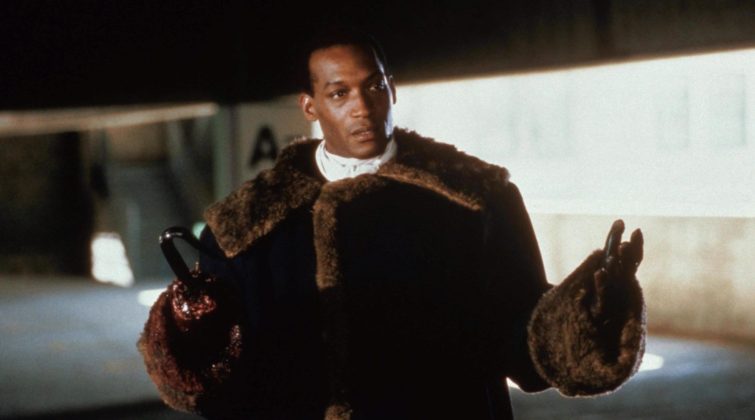
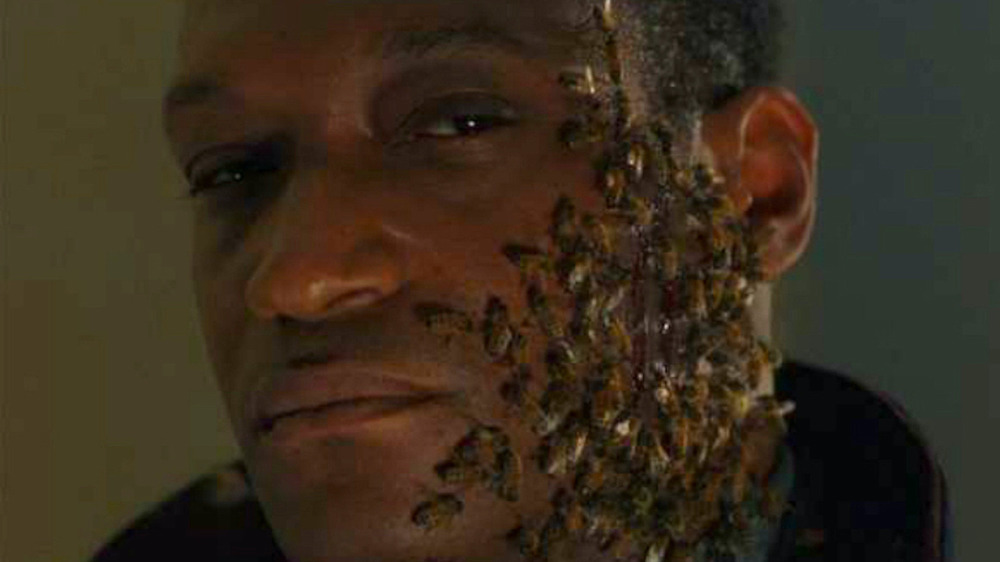
Candyman, played by Tony Todd imprints himself in the viewer’s memory from the moment he slinks onto the screen. With his fur coat, surrounded by bees, he looks almost more like a god than a monster. He oozes the sort of taboo sexuality that has become so deeply associated with Count Dracula. There is literally no other actor who could have done this apart from Todd. When he purrs to the main female character, asking her to “be [his] victim” you kind of want to tell her to just fucking go for it.
Our protagonist in the film is a white graduate student named Helen Lyle (Virginia Madsen) who is studying urban legends for her thesis statement and is fascinated by the way the residents of Cabrini Green tie in their trauma to the monstrous figure of the Candyman. An interesting tidbit about the Candyman is that you sort of have to commission him to murder you. No joke. Like Bloody Mary, Candyman doesn’t just come out and commit murder for free. He’s too busy, and arguably too sexy for that. No, you have to stand in front of a mirror and say his name five times otherwise, he will not come into your home, whisper sweet nothings and then stab you.
We are given Candyman’s backstory through Helen’s own studies. Daniel Robitaille was a black painter who was hired to do the portrait of a wealthy white woman. They fell in love and she got pregnant. When her parents found out, Daniel was lynched, had his hand cut off and replaced by a hook, was covered in honey and left for the bees and then he was set on fire. It’s despicable and not very far off from what is still done in some US states. Helen learns all of this, and still decides to summon him. After all, who really thinks that if they call Tony Todd’s phone number that he’ll answer?
He does! And then he systematically begins to destroy Helen Lyle’s life. He frames her for the murder of Anne-Marie McCoy’s (Vanessa Williams) infant son. By the end of the story it is revealed that the child is still alive and Helen manages to rescue him from Candyman but not without sacrificing herself and taking up the mantle of the ghostly killer. She has come full circle and given in to his temptations. She has transcended the expectations set down by the police and her husband and she is free to mete out revenge as she sees fit. It is one of my absolute favorite tropes in horror, the attraction of the monstrous to the weak and marginalized and how it empowers and frees in equal measure.
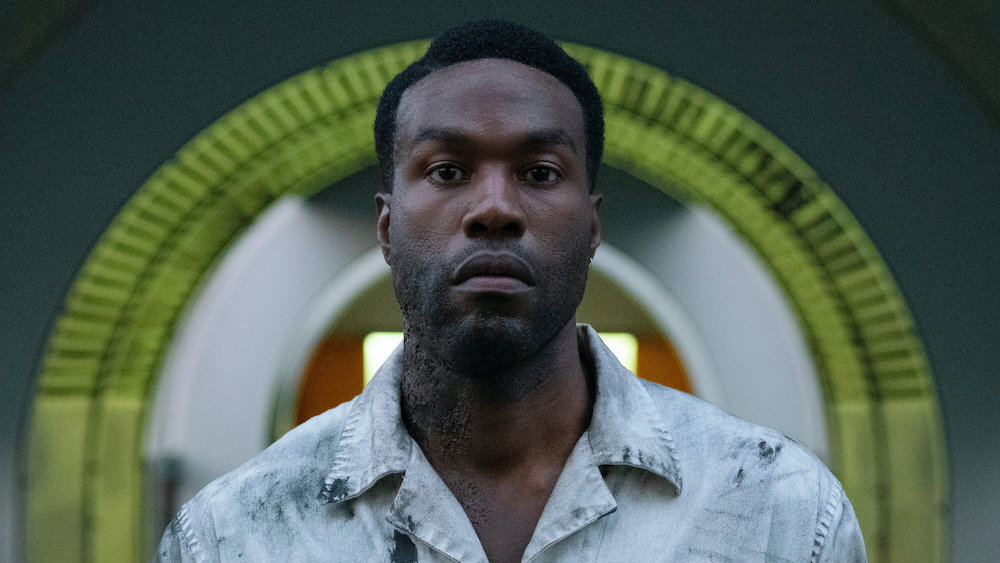
Of course the fact that the film stars a white woman protagonist pursued by a monstrous black man who primarily hunts other black people is a fatal flaw in the storytelling. In the 2021 Nia DaCosta remake, this is remedied in triumphant fashion. The first improvement is that the protagonists Anthony (Yahya Abdul-Mateen II) and Brianna (Teyonah Parris) are both black. The second is that in this version, Candyman is something of a vigilante killer, whose primary victims are white racists. The new film makes Candyman into a collective, a true hive, making the bee motif even more compelling as well as connecting to the image of a movement being more than one figurehead.
For all that 2021’s Candyman is its own being, there are plenty of connections to the original. Daniel Robitaille is name dropped (and yes, Tony Todd does make an appearance) as well as Helen Lyle. Anthony ends up having a VERY important connection to the original film and Cabrini Green is still the source of the haunting. In this version however the story is less focused on a taboo desire than it is on racial dynamics through history and police brutality. The famous phrases referencing “the writing on the wall” and the need to “say his name” take on a deeper meaning. “They will say I have shed innocent blood. But you are not innocent,” Candyman says to the corrupt police officers at the end of the movie. It was a line in the original as well, but far more powerful here. Candyman has never been a traditional villain, which is why he speaks to me so deeply. The more traditional a villain is, the more dull and and lack-luster they seem. After all, most monsters don’t see themselves that way. Everyone has a value system that they live by, and the 2021 Candyman’s is one that I am sure many of us could get behind.