
To make Carrie White this week’s horror villain was a difficult decision because truthfully she is not really a villain. That’s probably not the most popular stance to take on a character who is best known for murdering her entire high school class while covered head to toe in blood but let me explain. Up until that climactic final scene, Carrie is entirely a victim, bullied my her classmates and abused by her mother, burdened by a power she doesn’t understand, she is the perpetual outsider. And she is kind until she is driven to match cruelty with cruelty in a last desperate bid to defend herself. I don’t believe that anyone is born evil. Call me naive, but I have always thought that human beings are essentially good. They become evil through experience and through circumstance. Evil is a decision, just like good. Except it is much more difficult to choose to be good.
Carrie was first created by Stephen King in one of his first ever novels. Most of the book is told through newspaper clippings giving the piece a raw outsider perspective on a situation that reflects a very sad reality about High School. That reality being that teenagers are fucking cruel and bullying is way too normalized and minimized as the real issue that it is. It is not even close to an exaggeration to say that people die from bullying. They commit suicide and sometimes they are murdered by their fellow classmates. And adults don’t seem to really give a fuck. Telekinesis doesn’t exist of course but teenagers do commit murder and sometimes it is shockingly brutal — Carrie isn’t quite so dramatic as we like to believe that it is.
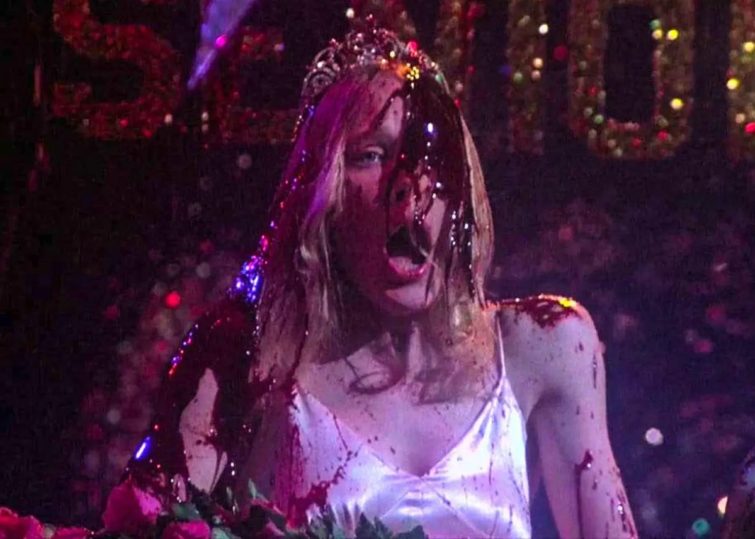
Brian De Palma‘s 1978 classic is to this day considered one of the greatest horror films of all time. Sissy Spacek‘s ethereal gentle rendition of Carrie White makes for a pitiful figure even at the end when she devolves into nothing more than a force of destruction. In Stephen King’s novel, Carrie is described as overweight and acne ridden in direct contrast with Sissy Spacek’s objectively stunning appearance, but her alien disposition and painful timidity allow us to still see her as an outcast. And contrary to popular belief, beauty doesn’t save you from abuse. Nothing matters less than looks when you are being attacked both in and outside of the home.

Though Brian de Palma’s original is most certainly a classic, it is not without flaws. It is impossible to watch without the overwhelming awareness that the entire story is being told through a male lens. The movie begins with a slow motion shot of frolicking naked women. Carrie and her mother mostly interact through shrill, animal screams and even during her iconic prom night rampage, Carrie still doesn’t come across as having agency. The sequel is so forgettable that I actually did forget about it until writing this article and NBC television version is nearly as bad despite starring Angela Bettis and being written by Bryan Fuller.
In contrast Kimberly Pierce‘s 2013 reboot added depth and nuance to the archetypal plot line of an outcast turned genuine monster. For one thing, it is not filtered through the male gaze. Gratuitous shots of nude women are ousted, and even the period scene is transformed from a herd mentality bullying tactic to a scene that from the perspective of an individual who is not so beaten down as Carrie could be a moment of female bonding over how weird and embracing periods can be as a teenager. Even bully Chris Hargensen (Portia Doubleday) is given reason for being the way she is. The standout changes in this film come from Carrie and her mother of course. In this iteration rather than being a stereotypical religious nut job, Margaret White (Julianne Moore) is shown as a woman who has suffered horrible abuse herself and is genuinely doing her best to care for a daughter who it is implied was the product of rape. Carrie (Chloe Grace Moretz) though fragile and fearful as ever has a backbone. She stands up to her mother and shows active interest in her telekinetic power. The prom scene comes across less as a horrified fugue state and more as a product of vengeance. This version of Carrie isn’t a horror film, it is a tragedy. There are so many opportunities where you genuinely feel like Carrie might be ok, even knowing the story well. To see her become a villain is heartbreaking. And that is what makes her so damn interesting and worthy of the title of villain of the week. Even if you kind of wish she weren’t one.