

Photos by Jessica Gurewitz
I’ve been a storyteller my whole life, a lover of fairytales, of darkness being a harbinger of light at the end of the tunnel. As we grow, we realize that life does not follow the trajectory of a grand adventure tale. It’s a collection of moments, of temporary emotions, some joyous, some painful. And yet still, we hope for that happy ending, because one goal that most human beings share in common, is that enduring pursuit of happiness.
No one is more capable of writing emotion into music than Jonny Pierce of The Drums. Jonny’s first album was released when I was only seven years old; I first listened to “Down By The Water” seven years later. While it is easy to associate The Drums with the melancholy, easy listening style that permeated much of the early 2000’s music, Jonny’s own voice and personality radiate hope, and light. His latest album Brutalism reflects that hard-won hope. Jonny voiced to me a desire to not be remembered for the sadness that has been inherent in his last two albums, and after listening to the full album, and speaking to Jonny for only 30 minutes, I don’t think that was ever a danger. If happiness is humanity’s end goal, Jonny might be closer to finding that than most anyone I have spoken with.
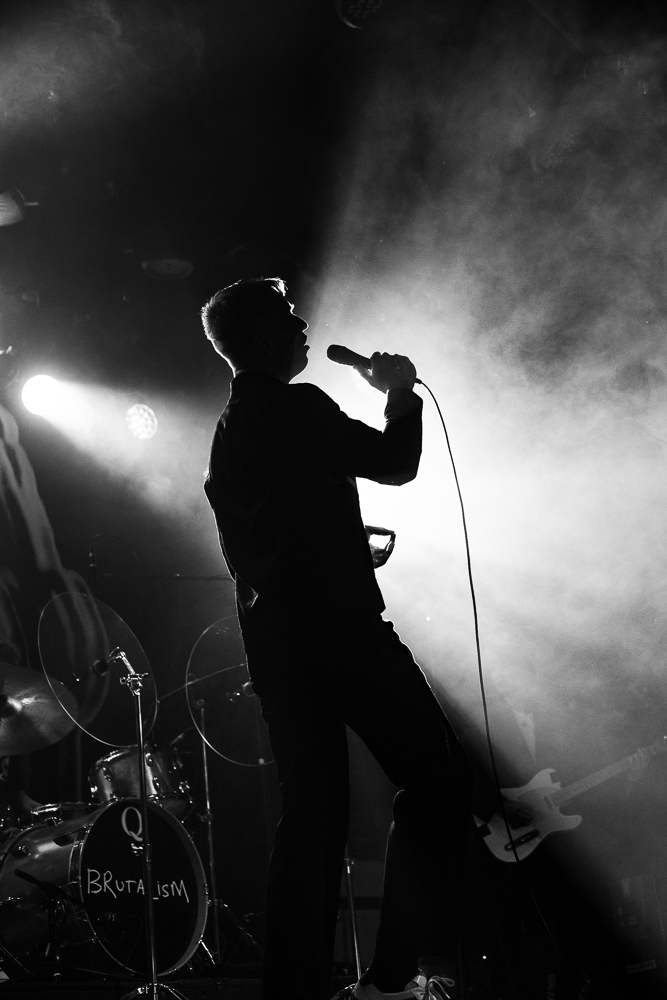
You’ve spoken about wanting to project a message of human connection with this new album. Were you feeling lonely in the past? The desire for human connection is something that I think tethers many of us. How did you display that sense of connection with this album?
Jonny Pierce: We all deal with loneliness and particularly for me it wasn’t always so much about loneliness, it was more about feeling disconnected. Even in a room of people, or people I love and care about, a lot of the time I still end up wanting more out of the experience and just not being able to settle in with the moment.
Many times when I am in the moment and able to connect, I am not around people who are willing to. This record is really an expression of frustration and this is something I have dealt with my whole life since I was a child. I don’t really have answers on this album, I am more just saying, “This is what I am dealing with, here is how I am feeling.” If anything, this album was my way of trying to lead by example. I want to live in a world where we can talk about feeling isolated or feeling lonely or disconnected as a means to connect. When we can admit that we are frustrated or at the end of our rope — that is really a great foundation for building human connection. I get frustrated with encountering too much chit chat. There is so much surface level conversation. I try to dig deeper when I am talking to other people but a lot of people find it offensive or scary to talk about how they really feel, so I thought by writing songs like “Body Chemistry” which deals with depression, and isolation. There is also a song called “Loner” which talks about fear of the future, fearing I will always feel a bit cut off and it’s interesting because every day I remind myself to be grateful and make mental lists in my head of the things I am grateful for. I hope the record doesn’t come off as whiny or as a record of me complaining in an arbitrary way. The record has a purpose and that is just to express how I am feeling, and hope that in turn, it will attract the type of people who are also ready for real conversation and real human connection because that is where joy is found.
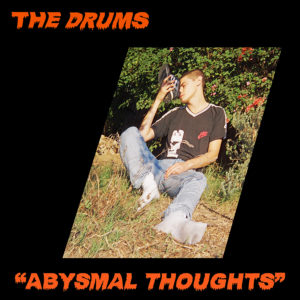
Can you talk about the headspace you were in when you recorded Abysmal Thoughts? The very first track on the album begins with a line about not needing another push toward the edge, was there anything in particular that drew you away from that edge? Is it still a balancing act for you?
JP: I was right at the edge. My whole lifestyle felt like my rock bottom. I was just going through a divorce, I lost a bunch of friends over it and I didn’t have the strength to keep them on my side. I was doing all I could to stay afloat myself and I was in a new city that I didn’t connect with. I was drinking a lot, partying a lot to get away from my pain and I was without a record label. It was a scary time for me. It was right after Encyclopedia which was for all intents and purposes a flop. When I listen to that record there are only a few moments that really speak to me. I felt useless and worthless and just by writing about that, it was so therapeutic for me. It was the first time that I was fully on my own in the studio so 100% of it was me pouring my heart into something. “Mirror” was the first song I had ever written where I stopped looking outward for people to blame for my problems and started looking inward and taking responsibility for where I was in my life. I think that really was what started backing me away from the edge. It’s still a long arduous process and I am still in the process of learning to love myself and take care of myself and appreciate the work I am putting out into the world. That alone was big for me. The lyrics and spirit of Brutalism is part 2 of the journey I was on during Abysmal Thoughts. I’m still asking a lot of questions and exploring, I feel like I’m moving forward.
Depression is something that is becoming a much more accepted topic of discussion now. What is it like for you to share that part of you with your listeners? You have talked about becoming more comfortable being vulnerable with others, is it easier to project that vulnerability through your music?
JP: You ask anyone who knows me and it’s across the board. In my every conversation it’s not like I need to give everyone my deepest darkest secret just when I’m meeting them but I do want to know how someone is feeling. I have a low tolerance for small talk, I start getting angry. I feel like it’s kind of useless after a few minutes; it’s a substitute for real, rich, beautiful conversation which can lead to a nice human experience. If we’re at breakfast at a diner, I’m going to try to have a real conversation, if I’m in the studio writing a song, I am going to try to give that to you. When I’m in bed with my boyfriend, I’m going to try to have a beautiful, real moment. It takes effort and sometimes it’s scary but none of it can be worse than living a life full of topical chit chat and then dying. That to me is the true torture when life becomes wildly mundane. What gets me by is staying vulnerable at all times.

The entire album is very much about embracing the parts of you that are scarred or that need a little bit more work or attention; it does come across much more positive in terms of emotion. Is that the case? Do you feel like you have a more positive outlook?
JP: Slowly, through this life, I picked up tidbits of knowledge and sometimes I find these little treasures and I forget about them a couple of weeks later but one that seems to stay with me is this idea of joy being possible through the vehicle of transparency and vulnerability. It’s really hard to experience joy if you are unwilling to experience sadness. You can’t block one emotion if you want to experience the others. It’s all lumped in together. If you block one emotion, you block them all. I try to feel what I am feeling, and talk about what I am feeling, and be less private and secretive. While my lyrics are often sad, I feel so much joy within them because I feel such a connection with the people who come to my shows and who talk to me. I get DMs and emails daily who have been suffering, and there is a joy that happens for both of us to discover someone else who feels the same way. I remember being 16 and discovering The Smiths. For the first time in my life, I felt hope because there was someone out there singing about how I was feeling. They were sad songs but I felt happy listening to them. There is real beauty in letting go. When you’re not being yourself it’s really a false belonging that is happening.
This record is me being myself, and there is joy in that.
Sometimes self-care is more about kicking your own ass to just get out there even when you aren’t feeling 100%. What is self care about for you?
JP: The best thing that I can do for myself is just to be still. To learn to just turn everything off. A big addiction I’ve had for most of my adult life is an addiction to travel. When I started touring I really loved it and I realize now I loved it because it was an excuse to not face up to my challenges and if you’re just moving around all the time it’s easy to feel like you’ve left your problems behind. Just recently, during the making of Brutalism, I stopped and stayed still for a little over a month. There were days I just cried all day and there were days I had no appetite whatsoever and its because things were rising from the surface and I was giving space and time to my heart to show itself to me. By not going out and partying, by not jumping on a plane and going to Europe for no reason, I allowed space and times and stillness for me to just listen to myself and what I needed. Stillness is just underrated. We’re addicted to being at every event, walking every red carpet, jet setting. But it doesn’t leave space for getting to know yourself. That to me was so key, to just stop everything. It was the hardest month of my life, but I came out the other side knowing myself more and knowing what I needed to work toward maintaining that state of being where I am more sensitive to what i need.
I spent my whole life trying to please other people. My mother and father are very anti-gay and I was a gay kid. I learned to survive by trying to please them just hoping one day I would get their approval. That started as a young kid and carried over into adulthood, into a lot my relationships, so I spent a lifetime making sure everyone around me was happy while I was miserable, and by taking that time in LA and being still, for the first time it was me saying I’m going to decide everyone else needs to fend for themselves, and I will be the parent I never was to myself. It was a beautiful experience.
In your track “Blip of Joy”, you seem to be expressing a state of awe at the feeling of being ok and experiencing emotions that maybe you haven’t in a while. Was there a moment that you can remember where those thoughts or feelings really crossed your mind? Is it more like a kaleidoscope of moments?
JP: That song came about during a very specific moment. I had met someone who was just so sweet and so handsome and just kind of swept me off my feet. It was at a time when I was really needing a human connection. I had just gone through a divorce and I really had no self-esteem at all. I was DJing a club in LA and just really feeling pretty hollow and this guy and I ended up dancing and we took a walk at 4 AM and stopped at this house that was under construction and climbed through one of the windows and had a really beautiful intimate experience, then went out to the backyard. There is a line in the song that says “the grass is wet and for once my heart is free” and just talks about the morning dew on the grass. And that was a real moment and I wrote the song the next day still on a high. Of course, that person kind of just disappeared. It was such a beautiful moment though and it encouraged me to believe that even when I feel like I have reached my limit, sometimes joy just sweeps through when you least expect it. It is like an exotic animal, like seeing a wild bird in the jungle or an endangered species. I am in awe in of the moment and also a little scared to appreciate it and dive in because I’m afraid of it being gone again. I am someone who would always rather experience pain and loss than not let myself experience joy. When I am done I don’t want people to say”Oh my god, Jonny Pierce, 20 years of a sob story.” I hope that I can keep writing songs about joy, and maybe one day about joy everlasting.
You can keep up with The Drums on Facebook and Instagram.