
Photo by Diego-Trenas
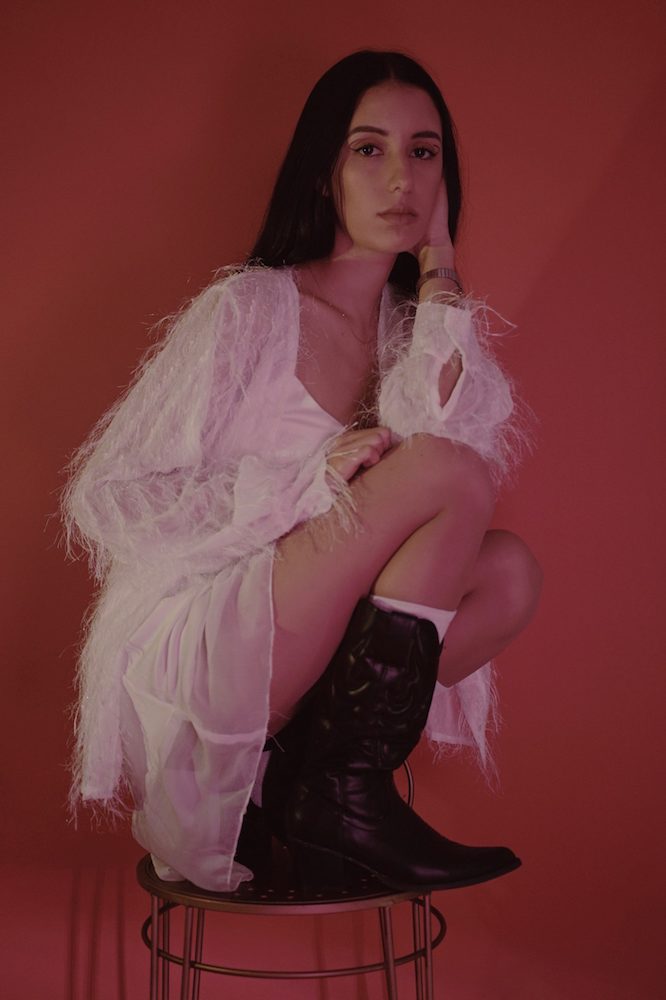
Andrea Silva grew up in Colombia singing Shubert at funerals as a kid. There wasn’t a lot of radio playing around the house, and it wasn’t until she moved to LA that her musical knowledge expanded beyond traditional Latin folk, jazz, and funeral arias, to include artists like Neil Young and Elliot Smith. Her debut LP, Everlasting, is out today on AWAL. While she worked with producer and songwriter Teddy Geiger (Shawn Mendes, Lizzo, Leon Bridges), her sound is rooted in rebelliousness and kept untethered to convention by way of the weightlessness of her voice. We asked her some questions about the record, all of the baggage she’s left behind, and the parts of herself she’s now embraced – because of and thanks to Everlasting.

photo by Aaron-Sinclair
Do you think growing up not exposed to mainstream pop music gives you kind of an advantage when it comes to finding your own authentic sound?
Loyal Lobos (Andrea Silva): I feel like mainstream pop will always be there. You just cannot avoid it. If you take an Uber it’s playing, if you enter a store, a coffee shop, walk on the street it’s always there. And I actually have come to terms with making “pop-adjacent” stuff sometimes, but definitely it always comes down to feeling like the song is grounded and playable for me. I like playing songs on guitar and knowing that they feel complete and pure in a way. But I also admire and respect people that create music with beats and writing to tracks because it’s a whole other skill and I’ve actually been writing like that sometimes lately. I think I feel privileged to have been exposed to the songs I knew from back home that were mostly the songs that my parents’ generation grew up with like Violeta Parra, Mercedes Sosa, Silvio Rodriguez, even bands like Poligamia, because they will always be there deeply rooted in the way I experience music, but I think everybody gets that. Everyone has that first musical experience and I believe that it becomes a big contributing factor to the music we make.
Of course everyone wants to be recognized as themself, as their own artist, but who would be three of the most flattering artists for someone to compare you to or to describe you as sounding like?
LL: It’s tricky because even when people ask you to describe your music they wanna know who you sound similar to and I don’t really wanna be compared to anyone. This whole process has been me avoiding people trying to define what type of artist I am based on my ethnicity, the languages I sing in, my sound, my looks etc. I’m ok with people putting me in their playlist grouped with stuff that goes well with my songs and I’m ok with people relating me to other artists, but I’ve never asked myself that question and I don’t think I ever want to because then I’m just one thing.
Where would you most like to see your music being played? Was this meant for being alone, played on a speaker with good bass? For a big stage, an intimate stage? Were you picturing anything in particular while the songs took shape?
LL: I think a song isn’t mine the moment it’s out because it immediately belongs to each person that connects or has an experience with it. So I don’t necessarily intend for them to be played or experienced in just one way. I’ve lived with these songs for three years and they have kept me company through different phases and circumstances of my life, and performing them in different spaces is always a unique experience. I used to prefer small intimate performances because I was so consumed with singing that I wouldn’t necessarily engage too much or move but as I’ve played in front of bigger audiences I’ve started to enjoy it more and appreciate the more loud and energetic performances.
You’ve said parts of this album are about healing wounds from your past, specifically to do with your sexuality. Do you hope that these songs will help others with similar struggles?
LL: Yeah that is definitely one of the things that can be the most rewarding about making music. It’s really touching when people write to me about it. It’s still crazy for me to think that a stranger lived through such an intimate experience or reflection of mine through my song and they are able to relate or cry with me or reflect.
Would you feel comfortable elaborating on how you came to terms with that trauma? No worries if you’d prefer not to speak to that.
LL: I think we always have different ways and there’s never a finish line to trauma. I know everyone has had a traumatic experience in their lives and we all cope with them on a daily basis until we are gone. For me writing these songs and just being so involved in a complete project like an album made me grow so much as an artist and a person. It did feel cathartic to finish out songs about difficult experiences and almost look at them from the outside and that itself was very healing to me, like purging.
“I always struggled with not fitting in one category. I felt I was too not-American to do folk music, and not Latin enough to do Latin music. For this album, I created my own space.” – Are you happy in the space you’ve created, culturally, personally, and musically?
LL: Yes. But I also often end up in dark spaces where I doubt myself and get crippling anxiety and think there is no space. I guess that’s the balance that I’m always trying to find within myself and my own experience of my presence as an artist is constantly shifting.
Your bio says that Schubert is not a logical starting point for your debut album, but I’d strongly disagree with that. You’re so right that there are no rules there – it’s also incredibly emotive, I can hear the influence especially in transitional moments of your songs. Can you speak further about singing at funerals and how that shaped your relationship with music? Did it register as morbid at all?
LL: What’s crazy is that I don’t remember anything morbid about funerals, I just remember the people and the amount of love and compassion that death brings. To me that’s beautiful. I remember once I was in trouble in school (per usual) and one of the teachers started crying and telling me he really wanted me to succeed because he had so much love for me ever since I sang at his brother’s funeral. I was always giving this guy trouble (and had forgotten I sang at his brother’s funeral). He should’ve hated me but I touched him somehow by singing a song in such a vulnerable moment and that made him feel loved. That’s so powerful. I think maybe that’s why I feel so comfortable sitting on sad feelings, I don’t see them as negative.
Did you play any other instruments classically? Do you have a favorite piece of classical music?
LL: No and I wish I hadn’t been such a punk at practicing and studying because I was always very quick at reading music or understanding theory but once I got bored I would drop it. But also within that character I developed my music and my art so maybe I wouldn’t have written the songs I wrote for this album if I was less rebellious.
Do you have a favorite song on your album? A favorite lyric?
LL: Every time someone tells me one song of the album is their favorite I say “me too” and that’s for every single song of the album haha. One that’s really fun for me to perform because of the dynamics it has and the instrumental sections is “Spring’17” and it’s also a very simple concept and lyrical development through the song so I like when I can say more using less words.
‘Everlasting’ is out now. Follow Loyal Lobos on Instagram