
I’d first heard of Lynch during my freshman year of college when a friend of mine, who was really big into “cult classics,” mentioned the director in passing as one of the weirdest guys on the planet. This lead me to looking up Lynch’s filmography, which lead me to finding Eraserhead on YouTube, which then changed my life and how I view films. So Blue Velvet has since been on my list of “films to see” for a long time, and I finally got around to watching it.
It was an experience like none other.
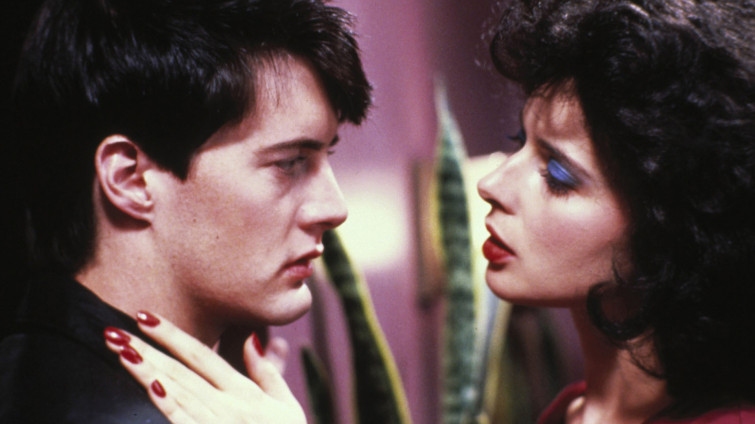
I honestly had the expectation, going into this film, that it was going to be a lot like Eraserhead for some reason. But Blue Velvet is neither overly ambiguous nor indescribable in plot — it’s simply a masterpiece in mystery and surrealism. The premise follows the life of college student Jeffrey Beaumont (Kyle MacLachlan), who comes home from school after his father suffers a near-fatal stroke. His hometown of Lumberton is a picturesque American suburb that seems to suffer no troubles, crime, or poverty. On his way home from visiting his father at the hospital, Jeffrey finds a human ear in a vacant lot. This catalyst then leads him down to a hellish side of humanity, involving murder, a strung-out jazz singer (Isabella Rossellini), and a sexually violent criminal named Frank (Dennis Hopper). But the plot isn’t enough to really explain what this movie is in essence, nor the type of effect it has on its viewers. You just have to see it.
If Lynch does anything in this film (and he does so much), it’s that he displays the darker side of life in a such a convincing, vivid manner; my jaw literally dropped during certain parts of the movie (such as the deeply disturbing sex scene between Frank and the jazz singer Dorothy Vallens). Never has a film disgusted me yet simultaneously enticed me to keep watching — not because I wanted to see how “bad” it would get, but because I genuinely cared about the characters and the story. I think the reason behind this is because there are moments that are actually quite funny (in a very dry, satirical way) and that the characters come off as real people, rather than just vehicles for some abstract, artistic purpose. Blue Velvet has this perfect balance about it that gives you just enough taste of everything terrible before pulling you back to the good-hearted side of mankind. It gives you a sense of hope, despite all the awful things that are happening. It makes you look for the “cardinals” through all the “bugs” in the world, and roots for good triumphing over evil.
I can see how this film established Lynch as a director who’s truly original, and brimming with talent. The impeccable quirks and symbolism have launched this film to the top of my “favorites” list (right up there with Taxi Driver and others). But perhaps the real reason I love this film so much is that the story is just so damn good. It’s about discovery, the process of unearthing the different dimensions within ourselves — not just solving a horrifying crime. At one point in the film, Frank tells Jeffrey that he’s just like him, which is true to a certain degree. Somewhere deep within Jeffrey, there is a part of him that is a monster, and it does come out at certain points (hitting Dorothy out of blind rage, for example). And as Lynch said, the “film is about things that are hidden,” and within our hearts and minds there are many things living there that we don’t wish to pursue or find (and understandably so).
Blue Velvet is absurd, beautiful, and dream-like — a work that still holds up nearly three decades after its initial release. If you want a movie to challenge you, make you think while still keeping you interested and entertained, I couldn’t recommend it any more. Come realize how strange a world it is.
Review by Trevor L. Sensor. Follow him online @trevorsensor.