

When a Wolf Falls in Love with a Sheep
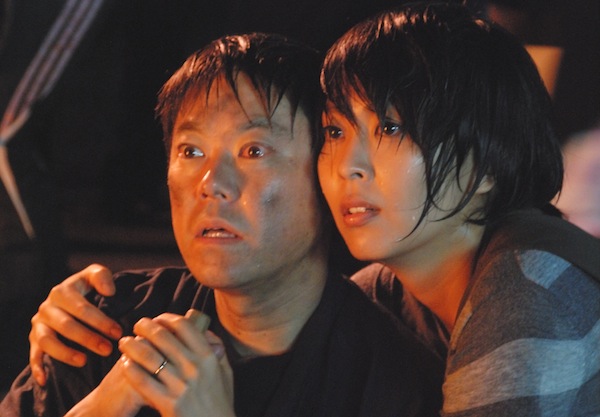
Dreams for Sale
There is a point early on in Dreams for Sale, just as the story is beginning to find its way into a familiar destructive-depression groove, when every bit of logic in your brain tells you that A will happen to these characters as they move into the next act; or at least B will happen, certainly. Film being what it is these days, that’s usually the width of story options we’ve come to expect. So when Z happens instead, it takes moment to settle back down and readjust your brain.
The Z in question comes after an accidental fire burns down the sushi restaurant that husband and wife duo Kanya (Sadado Abe) and Satoko (Takako Matsu) have gone into serious debt to build and make a success. Though the customers all make it out alive, the only thing left from the fire is Kanya’s chef’s knife and the huge burden of the debt.
Kanya, depressed and feeling like he’s dragging everyone around him down with him, begins to withdraw from life, especially from Satoko, who offers him her meager life savings to help pay off their debt. In a final bout of blind self-harm, he finds himself alone in a hotel room with Rei, a friend who has just come into a thick envelope of money, a bribe so her paramour’s wife doesn’t find out. Initially upset over how he came into the money, Satoko decides against divorce and comes up with a different idea: to use Kanya’s charm on other women (women she thinks deserve it), for other thick envelopes of cash to pay off their debt, or better yet: to start up a new restaurant.
That sidestep of the obvious story path is down to the film’s writer-director, Miwa Nishikawa, who spent parts of her early career working as an assistant Hirokazu Koreeda, who gave her a boost when he produced her first film, another twisty family drama called Wild Berries. Like Koreeda himself, Nishikawa has a knack for taking a straightforward and giving it a little flip, creating a new and unexpected experience.
In Dreams for Sale, part of the drama comes from a little flip of Cyrano, with Satoko taking the behind the scenes role, puppeteering Kanya through some of the more emotionally manipulative moments of their con spree. Though he seems to take naturally to defrauding these women, Kanya ultimately struggles with his conscience in certain situations. This mark one of the few truly accessible emotional avenues for the audience to enter in and see through his eyes for a little.
As you watch it, the film does occasionally feel meandering as it delves into Satoko’s lonely everyday life while Kanya is off his other women, but in retrospect these are some of the more interesting moments that the film offers. They drive home Satoko’s disconnection, as if she herself doesn’t quite believe this is the life she’s living now and can’t find a comfortable position in it. Dreams for Sale is a pure character study. It’s a difficult film, with a difficult culmination, but it’s one made with a keen eye and a steady hand.
Who Should Watch It: People who like conventional stories flipped and told in unconventional ways.
Who Shouldn’t Watch It: People with weak bladders; the film’s running time and continual plot shifts don’t afford for a break to pee.
Dreams for Sale is screening at the New York Asian Film Festival on Saturday, July 13th at the Japan Society. Get your tickets here.
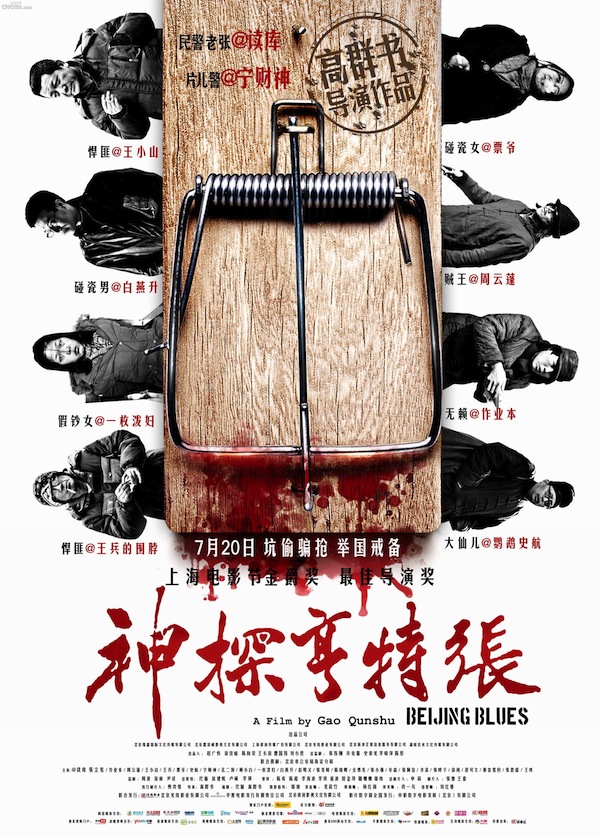
Beijing vs. Shanghai is always a fascinating study. It’s as if the higher ups in the government decided to draw a line between fun and no fun, between smiling and being a square, between the West and the East. And no matter how adventurous the barrage of insects on a stick outside Tiananmen Square is compared to The Bund, Beijing still comes off as the cold, bitter and smoggy brother of its brethren.

Maybe that’s why Beijing Blues is so incising: the city that holds itself like a cold, locked down safe is cut in half. It shows its weaknesses through the eyes of a police captain like anyone and everyone. Sure, he has a certain conviction to do good, but that doesn’t keep him from telling his wife to stay in the kitchen. That’s not surprising, though: People excel in some areas and are weak in others, balancing out their humanness. And Beijing is, regardless of the attempts by its government superiors, a city of such humans.
Beijing Blues is a character study, both of the police captain Zhang as well as the city in question. In their humanity, there are details of self-preservation instilled: certain thieves, for example, only chase after non-Beijingers. And justice, it is said, should not come at the expense of breaking the law. The film unfolds as a police procedural, though without the glamour of Johnnie To’s crime epics. Mood-wise, it’s hard to pinpoint it as a comedy or drama as some scenes are just plain ridiculous. Then again, a city as big as Beijing surely has such moments. With its near-sterile, calculative approach to storytelling, one could argue that this is a Jia Zhangke film with cops and robbers. It could even be dubbed an “action contemplative” film filled with long shots of the capital’s streets against the backdrop of local pop music, including a particularly gorgeous scene where Zhang is followed through the night by a man of mystery. Why is he chasing Zhang? He’s not violent, but he’s obsessive. It’s one of the film’s small mysteries that gets answered at just the right time.
Unique to the film is the cast list: When the credits roll, not only do we find out the names of the actors, but also their real-life professions. Our police captain is played by Zhang Lixian, a “well-known publisher.” Others include “a security guard in Shuangyushu Police Station in Beijing,” a “well-known TV presenter,” and a “director and playwright of experimental modern drama.” In short, a cast of non-professionals filling out the roles of characters in the city they inhabit. Is this simply a love letter to Beijing? Maybe, but one thing’s for sure: Its victory at Taiwan’s Golden Horse Awards for Best Picture was both shocking and impressive. Though one would hope Beijing Blues was rewarded for its filmmaking, there’s undoubtedly a foundation of respect for getting the mainland capital to tear down its facade, showing its people to be like you and me, getting its humanity out in the open.
Who Should Watch It: Those who love the deliberate dissection of city life told through a loose police procedural.
Who Shouldn’t Watch It: Those who prefer melodrama and a discrete storytelling arc.
Beijing Blues is screening at the New York Asian Film Festival on Tuesday, July 9th at the Film Society of Lincoln Center. Get your tickets here.
by Rahat Ahmed of Life as Fiction
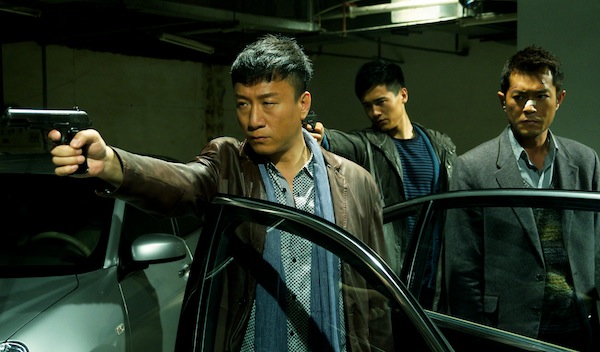
Drug War
Remember the self-righteous Hays Code1 that plagued American cinema for over thirty years from the mid-30s into the late 60s? It’s alive and well now in Hong Kong thanks to the Chinese censors. With a population of only 8 million, the island depends on the earnings from a vast mainland audience, but in order to get there, it needs to appease the bodies that control their morality. And after Felix Chong and Alan Mak of Infernal Affairs fame (the film that The Departed was based on) failed at the task with their corporate thriller Overheard, one had hopes that the great Johnnie To would succeed.
In following up Life Without Principle, his most mediocre crime film in years, there’s ample evidence in Drug War to show that he was hamstrung by fear of censorship and general working conditions in the mainland. Gone is the tragic beauty of his Election duology and The Mission, films that are gritty, bleak but fantastic cinema due to their absurd realism—films that also could not be made with Chinese funding.
Fear not, though, Drug War is still a To film, which means it’s better than most cinema out there. The master pumps out a film a year with ease at a quality that’s unheard of. Even at its weakest points, the film is enjoyable—just not great or relatively memorable. The worst may be that we only get a couple of complex set pieces, for which To is known and much admired, and the simpler of which is stands out for its efficiency and impact. But don’t compare this to the incredibly curated Exiled or the cinematic extravagance of Vengeance. In its effort to keep the story streamlined for a wider audience, Drug War misses out on too many of To’s staples and ends up brazenly two-dimensional.
The best part is Sun Honglei playing a shape shifting police captain who charms multiple sides of the coin. It’s a common plot tactic made great by his acting. Sadly, it’s the kind of performance you’d wish to see in a more memorable film. Add in the fact that nearly every other character in the film feels absurdly stock, it also devalues the performance of the seemingly overachieving Louis Koo, who still hasn’t matched his coolness factor from Accident. Again, it’s hard to not wonder if the flatness of the characters is to match the black and white moral codes of the censors. It’s frustrating to see the work of a heralded director pushed to the edge for potentially commercial purposes, but if it’s going to lead to Election 3, biting the bullet is a worthy venture.
Who Should Watch It: Those who enjoy a gritty, calmly-paced game of cops & robbers.
Who Shouldn’t Watch It: Those who prefer large explosions and laughs at the expense of a slow burn.
- It ruined the ending of many great films, including the otherwise perfect Witness for the Prosecution from the incomparable Billy Wilder. ↩
by Rahat Ahmed of Life as Fiction

The Kirishima Thing
In many ways, Gus Van Sant’s Elephant is the best satirical parable about teenage high school life ever put on film. It worked because it was intensely believable even when it went overboard because the tiny details surrounding the giant “laughs” were real, based on experience. However, the fact that it had to utilize the Columbine Massacre was an unfortunate side effect of what it took to get the point across.1
In The Kirishima Thing, winner of the Japanese Academy Award for Best Picture, it seems a lot simpler: The captain of the high school’s volleyball team suddenly decides to quit. All hell ensues.
It may strike the average viewer as an event of irrelevance, but in the microcosm of a small school, consider them losing LeBron James to not even free agency but boredom. Cleveland burned jerseys, but these kids are about to chow down on effigies. Someone symbolic to the culture of a world so miniature leaves, and a hole is discovered inside that needs to be filled. But can it be filled? Who will fill it? And how will it affect the balance of that world?
People who follow a person like this, regardless of form and function—are they worthy of one’s attention? Are they, maybe, possibly, the contemporary definition of a zombie? Interestingly enough, that’s what our director is getting at. It may ultimately be a fairly shallow statement, but the so-called losers of this world know one simple thing: This is the world they have to live in. Talented people, such as our MacGuffin Kirishima, believe there is a way out of whatever hellhole they are stuck in. But others need to accept and move on. And often, it just so happens, that comes in the form of fiction—through literature or film or song—a solution outside reality that people insist on.
Those who feel predestined due to their beauty, athletics, or traditional intelligence are the ones who are stuck. Those who know no other path are content in finding a way under the radar. It works not only as an analysis of high school social hierarchies but also class subcultures throughout the world. Like the boys and girls of mumblecore who whine about their middle class existence2 while still succeeding in life beyond the average Joe, it’s always the people who have options to rise up or fall who find themselves in states of jealousy or at odds with their paths. Those who have nowhere to go but up know the direction they must take.
Who Should Watch It: Those who are fascinated by a contemplative analysis of a high school social hierarchy.
Who Shouldn’t Watch It: Those who are comfortable with the black and white scenarios of Mean Girls.
- If you want a more literal (and serious) depiction of a similar topic, you can’t go wrong with Denis Villeneuve’s Polytechnique. ↩
- Best experienced in Joe Swanberg’s Hannah Takes the Stairs. ↩
The Kirishima Thing is screening at the New York Asian Film Festival on Sunday, July 7th at the Film Society of Lincoln Center. Get your tickets here.
by Rahat Ahmed of Life as Fiction
When a Wolf Falls in Love with a Sheep
Largely set in a backdrop of Taipei’s famous winding backstreets, When a Wolf Falls in Love with a Sheep similarly weaves a zany tale of love between two bored, unhappy characters. Taiwanese director Hou Chi-jan incorporates stop-motion sequences to great affect including a fantastically universal scene of the narrating protagonist, Tung, hopelessly waiting around for someone he loves. At the beginning of the film, Tung awakes to a farewell post-it on his forehead from his girlfriend. The unceremonious breakup sets a series of monotonous routines in motion, where some of the most lively scenes are in fact ones portraying moments generally considered the most mundane.
The film uses the familiar plot convention of two characters brought together by their unideal circumstances, made more refreshing with creative use of stop-motion animation interspersed. One of the cleverest story elements of the movie is the major method of communication. Good old-fashioned paper is used as the communication source. It’s done through a number of crafty ways including a fantastic scene using paper planes. By getting rid of the technology crutch, the outdated is made original, which unexpectedly makes for some of the more imaginative parts of the narrative.
An oddball copy shop owner, one of the first of several eccentric locals we meet, offers the lovelorn boy a job. With his girlfriend having dumped him by writing she was off to ‘cram school,’ Tung agrees in the hopes that it will help him find her in the nearby institutions. The unconventional film title comes into play after making the discovery of a sheep drawing on one of the photocopied exams at work. The illustrator, Xiao Yang, is of course the girl who will end up being the girl. Over a series of animated exchanges (literally) via photocopies featuring plenty of wolf and sheep puns, along with reveals of character quirks reminiscent of Amélie—an unlikely bond forms sans the romance.
The worst breaker-upper ever vis-à-vis the ex-girlfriend makes a cameo at the end of the film right around Tung’s realization he’s in love. Thrown into the corny, but entertaining time-stop sequence, she is essential to the scene with the boy running after the girl to profess his undying love. The confession doesn’t go quite as expected and pans out humorously, which is essentially the overall impression acquired from watching the film. The whimsical feel bends the rom-com genre enough to create an imaginative story, without the thought that it’s a complete reinvention. What’s most fun about watching When a Wolf Falls in Love with a Sheep is that that’s okay though.
Who Should See It: Anyone into offbeat romances like Amélie and Eternal Sunshine of the Spotless Mind
Who Shouldn’t See It: Anyone who doesn’t find feel-good, lighthearted film fare appealing.
When a Wolf Falls in Love with a Sheep is screening at the New York Asian Film Festival on Saturday, July 6th at the Film Society at Lincoln Center. Get your tickets here.
by Sandy Chung
Juvenile Offender
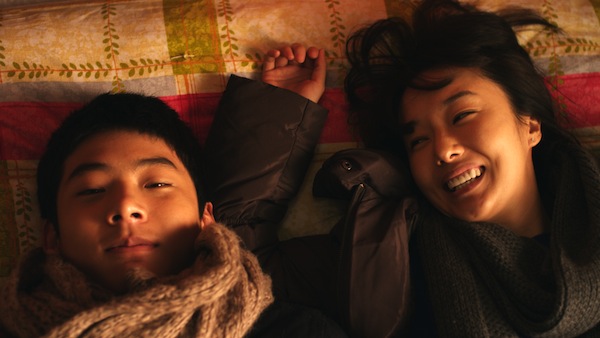
Kang Yi-Kwan’s emotional exploration of the complexities of growing up in less than ideal circumstances is both painful and beautiful. Juvenile Offender is driven by brilliant performances from its young and incredibly talented cast, along with a well-crafted script that probes the evolution of relationships between certain people.
Living with little-to-no parental supervision, 16-year-old Ji-gu (Seo Young-joo) gets caught up in the wrong crowd, commits a burglary, and finds himself in a juvenile detention center. His sick grandfather dies, and with no one else to care for him, he is eventually reunited with his young and seemingly irresponsible mother who, until now, was believed to be dead. As it turns out, Ji-gu was the result of an unexpected pregnancy when his mother was 17. They attempt to form a normal mother-son relationship, but a lack of money and experience prevents this from happening. And when Ji-gu and his girlfriend find themselves living out similar mistakes, tension is raised and the need to face up to the consequences of their choices is made brutally apparent.
Juvenile Offender illustrates the darkest of scenarios, but it is also surprisingly relatable. Even for people who weren’t forced to endure painful circumstances like parental abandonment, teenage pregnancy, or the lack of a place to sleep at night, the transition from childhood to adulthood can be pretty brutal. In fact, teenage years can be absolutely terrifying as we suddenly realize that our parents aren’t always on our side, and they’re certainly not always right. And as we naively put ourselves into compromising situations out of youthful ignorance, most of us have probably learned that you can only “get by” for so long until you eventually get caught doing something stupid, and have to face up to your actions on your own.
Additionally, both Ji-gu’s and his mother’s characters show that the evolution into adulthood is weird and oftentimes agonizing; as we grow, it’s like we begin to realize that we need to exchange our juvenile recklessness for responsibility, but we don’t quite want to. And while more popular teen-centered films illustrate this idea through an attractive and humorous lens, Juvenile Offender literally presents it in the bleakest possible way. Not to say that the film isn’t enjoyable – it’s actually very engaging with characters you can’t help but empathize with and almost start to love despite their many flaws – it’s just incredibly real.
Who Should See It: Anyone looking for a good dose of heartbreak and realness.
Who Shouldn’t See It: People who only enjoy idealistic, happy things.
Mystery
Nowhere do we struggle with the nature of good and evil more than when it comes to money. And in an ever-expanding Chinese economy, such dilemmas fly in the face at breakneck speed. So, it’s of little surprise that at the center of Lou Ye’s return to mainland filmmaking1 is the changing subculture of China where corruption and lust intersect to ruin lives, loves, and families.
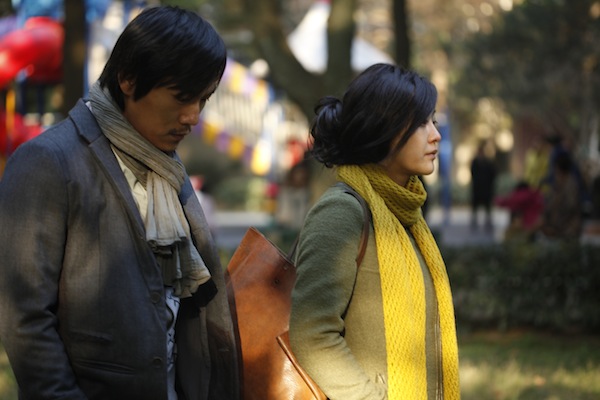
Mystery is a very good thriller in its own right, with twists that are genuinely unexpected and satisfying as long as the viewer doesn’t venture into spoiler-filled critical reviews. What’s impressive—as noted by the film winning best screenplay as well as best picture at the latest Asian Film Awards—is its ability to subtly shift its emphasis from a blatant and obvious (if entertaining) genre film into a social statement.
The beautiful Hao Lei (of Summer Palace fame) stars as a well-off housewife who discovers that all is not proper in her seemingly ideal household, and that her husband may or may not be playing hooky with a girl of bountiful youth. And then the wheels fall off, resulting in an analysis of a curiously amoralistic character who is so not due to nature but rather her circumstances. Surrounding her are pawns of the landscape: A spoiled, rich boy who believes that money buys apartments, fast cars, freedom and innocence. A mother with an adorable son whose father seems perpetually absent. A mother who’s lost her daughter and wants someone to pay for the crime—maybe even literally. And a husband who, sitting next to his wonderful and loving wife, can look deep into her eyes and lie. But why does he lie? Because by all counts, he seems like a good man.
All is not what it seems. But then again, taking a few steps back, one has to wonder how much of this is China, how much of this is globalization or capitalism, how much of this is the world changing around us. Isn’t this just human nature? Will we always find a way to please that part of us that wants to act on instinct and wantonness, ravaging an otherwise content life?
This is Lou Ye’s first film to premiere in China since he received a five year ban2 for screening the sexually explicit Summer Palace, capturing a dreamlike love affair against the backdrop of Tiananmen Square, at Cannes without the government’s permission. Here, his commentary isn’t focused on the government that has become a shell of itself. Instead, it’s about the country’s progression towards a market economy where an individual’s sense of freedom comes at the expense of a widening wealth gap. It’s a world where the rich sneak past the one-child policy and daughters are buried in cash—sometimes just to keep a little face.
Who Should Watch It: Those interested in an arthouse thriller with social commentary.
Who Shouldn’t Watch It: Those who prefer happy, clear-cut endings.
- While it didn’t get a big release locally, Suzhou River is one of the better introductions to modern mainland cinema. ↩
- Though he did take his skills to France to craft a tragic international love story starring A Prophet’s Tahar Rahim in Love and Bruises. ↩
by Rahat Ahmed of Life As Fiction

The Animals is Gino M. Santos indictment of the Filipino wealthy. The film centers around a group of wealthy high school students as they embark on a night of debauchery, violence, and alcohol. Specifically the film focuses on siblings Trina and Alex, along with Trina’s boyfriend Jake. All three are embroiled in the typical teenage drama that goes on in high school; worries about getting into college, fitting in, and looking cool are universal themes for movies about teenagers.
But all their common youthful flaws are exacerbated by their incredible wealth. Jake runs a party planning organization for his rich peers and also has a casual addiction to Valium and cigarettes. Trina, like a lot of teenage girls, suffers from body issues–but unlike a lot of other girls also has kleptomania. And her younger brother Alex is in the middle of an absurd initiation process for a fraternity where he is tasked with putting cigarettes out on his tongue and getting into fights. The main focus of the movie is the upcoming party that Jake and his friends are throwing. Everyone who’s anyone is there. Because of this the first half of the film moves really slowly–most of the movie’s action happens at the party.
These kids abuse alcohol, drugs, and money because they can but without the aplomb of their American counterparts in Gossip Girl. The characters exist a world with little parental supervision and next to no consequences. At one point the police come to the party to try and shut it down but are bribed by Jake and his friend Pierre.
Most of this movie exists as a cautionary tale for wayward teenagers. For every shot of strobe lit teenagers dancing to syncopated beats there’s a shot of someone puking all over themselves. Trina successfully avoids being roofied and assaulted by Pierre only to meet a heartbreaking end later. Alex, forced by his fraternity brothers to beat a complete stranger into a bloody pulp, has a breakdown in his mother’s arms. Fortunately, Jake gets out of the party unscathed. The film has a home movie feel with a lot of close ups––especially poignant is the close up scene of Trina being raped and murdered by a taxi driver.
At times the film moves forward glacially, but the characters are relatable and the haunting end is unforgettable.
Who Should Watch It: If you’re into intimate close ups and not turned off by rape or gratuitous vomiting.
Who Shouldn’t Watch It: If you get bored easily
The Animals is screening at the New York Asian Film Festival on Tuesday, July 2nd at the Film Society of Lincoln Center. Get your tickets here.
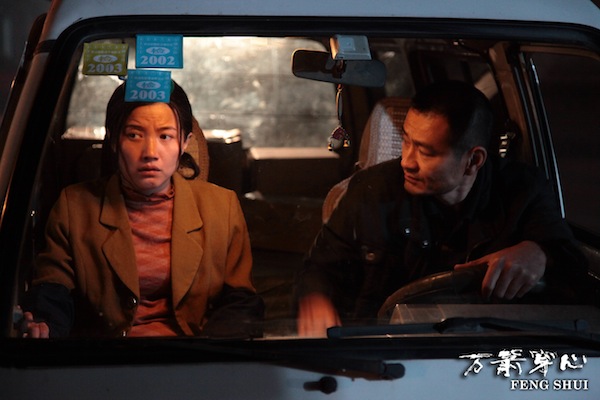
Feng Shui is a bit of a departure for Wang, who specializes in social dramas but has decided to make the political drastically personal in this go-round. The slow pace of the storytelling is definitely a strong point in the film, though the segue into “10 years later” is a little jarring. All in all, it has an interesting way of making you feel sorry for all the wrong characters, but there’s little moral bias in the predominantly gloomy outlook.
It’s not that it’s depressing because middle-class comforts aren’t always capable of providing happiness––that’s a theme we’re all familiar with––it’s depressing because even cold, economic calculations about hard work can leave one empty-handed. Or maybe not. Maybe Baoli hits the refresh button and her son makes peace with the past. Wang doesn’t really give us an opportunity to find out, but this was never about tidy conclusions. In the spirit of success and its relentless pursuit, the story is presumed to keep toiling on.
Feng Shui screens at the New York Asian Film Festival on Wednesday, July 3rd at the Film Society of Lincoln Center. Get your tickets here.
Confession of Murder
Prior to viewing Confession of Murder, I read a brief synopsis and figured it would end up being one of your basic action thrillers with semi-predictable plot twists and some entertaining action sequences. And in part, I was correct; the film made use of some pretty standard elements and themes – the cat-and-mouse revenge game involving a detective and a sadistic madman, specifically. However, the main reason I enjoyed the film was because of outrageous but accurate social commentary on celebrity culture.
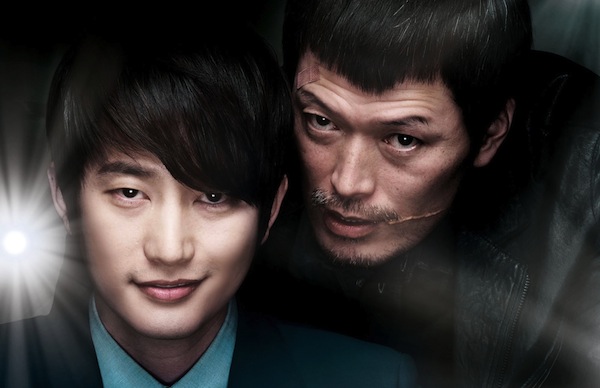
Despite some twists and turns throughout, the film’s premise is fairly simple – as a serial killer’s statute of limitations expires, he comes forward with a newly published book that details all of the murders he’s committed. Naturally, the detective who handled much of the case, and whose lover was murdered, is angered and wants revenge. His deceased lover’s family also comes forward with a plan of their own to kidnap the killer in order to torture and kill him. But when the killer and the detective meet face to face at a televised “debate,” another man calls in claiming to be the real killer, and no one knows who to believe.
The structure was well done and its fight scenes were pretty explosive, but it was the whole “Why the hell are all of these people in love with a murderer?” theme that I found most interesting, and also, disturbing. The admitted killer is young, stylish and attractive, and he oozes so much charm and charisma that he acquires a massive fan base of young women who want to jump his bones.
The whole idea seems like an extended critique of media influence and celebrity obsession. And while I’m not trying to equate pop figures with serial killers, it truly makes us wonder how the media creates such powerful celebrities out of people who aren’t the most honorable citizens and also, why we worship them so much.
All in all, Confession of Murder is definitely worth a watch. The story line is good enough to satisfy anyone who’s looking for an action-filled–and oftentimes creepy–thriller, while the satirizing of our blind devotion to random people based on their good looks and fame will make us question why The Kardashians are still allowed to exist in our lives.
Who Should See It: Fans of really creative fight scenes and Natural Born Killers.
Who Shouldn’t See It: People who are frustrated by plot twists. And chronic TMZ readers.
Confessions of Murder screens at the New York Asian Film Festival on Wednesday, July 3rd at the Film Society of Lincoln Center. Get your tickets here.