
Offscreen is a column by writer, actress, producer, Virginia Rand
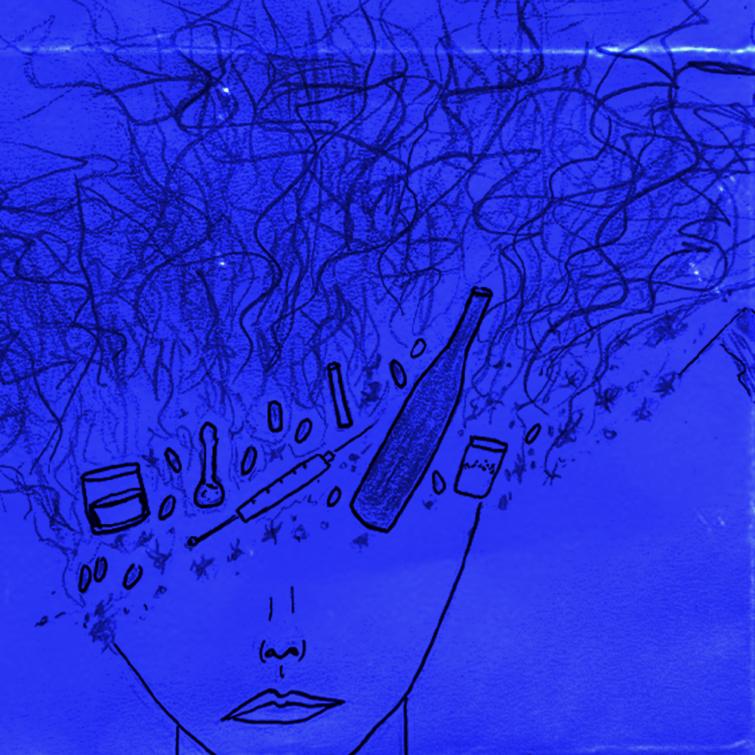
It’s the same day lived again and again: isolation, disruption to a regular routine, slipping into habitual discomfort, coping mechanisms, bizarre sleep schedules, staying in the house. Many of us worked hard to escape this lifestyle when we were actively drinking and using drugs, and so the COVID-19 lockdown holds an eerie familiarity for recovering addicts.
I wrote those words back in May 2020, when the pandemic was coming into full swing and we had already been in lockdown for several weeks. After days in uncertain solitude, many of us in the recovery community turned to each other and asked, “haven’t we done this before?” I began speaking to people who had experienced addiction and alcoholism to be part of an essay about the parallels of quarantine and the life of using/recovery, hoping that our experience could help people who had never encountered such isolation, day-by-day survival, and uncertainty.
Then May 25, George Floyd was killed by police in Minneapolis. Ahmaud Arbery and Breonna Taylor and so many other names came to surface, underscoring the devastating number of names which didn’t. What was happening outside City Hall, down the road from my apartment near Downtown Los Angeles, and across every U.S. state and many other countries was too important to carry on what I was doing in that moment. Another disease had flared to a crucial point; racism in America has been rampant for hundreds of years, and it was imperative to not only stop and listen, but to take active steps into addressing and amending these systems so that American communities can recover from centuries of racial injustice.
The essay was shelved as LAPD helicopters flew over our heads and police in riot gear marched down the street and we watched the National Guard roll down Sunset Boulevard and station outside Los Angeles City Hall. We passed around markers to write phone numbers on our bodies in case we got arrested. We watched parents of children who’d been shot by the police stand in front of crowds and tell their stories. People were lined up, their hands were put in zip ties, and in the midst of a pandemic people were loaded onto buses for being out past curfew. Something deeply important and indicative of our country’s values was being exposed as the pale faced news anchors sneering about property damage in the midst of the question of human life.
And soon after that, wildfires raged across California, and the sky turned orange and the air outside was poisonous from the smoking remains of the state. The land itself seemed sick from the perilous environmental impact of climate change. If we were lucky enough to have homes, we retreated back inside to contemplate what it means to have air to breathe.
Since then, the virus has ebbed and resurged. Fall was a fitful, lurching period where we saw some light on the horizon regarding the numbers of those infected, and some of us went back to work, and some danced in the streets to celebrate the declaration that the 45th administration would be vacating the White House. We thought maybe we could take all that we’d witnessed over the last year and apply it to the lives we saw on that horizon.
But days after Christmas, California was pinned as the new epicenter of the pandemic. The hospitals are full, people are being treated in hallways, in conference rooms. The pods we choose to expose ourselves to are narrowing. Many retreated back into isolation they’d gone into back in March, with the added shell shock of the events in this society. We knew the winter would be hard.
The original article I had written was titled ‘Purgatory: Reflecting on Active Addiction in Quarantine.’ The term ‘purgatory’ connotes an atrophic, ‘in between’ place associated with suffering, and hoping to eventually pass on to another side. The entire year of 2020 felt like a purgatory.. The end of the 2020 calendar seemed to hold hope for many, but it seems that the landmark of the New Year will not relinquish the massive surge of COVID-19, or the new strain which has appeared. Many of us are going back into quarantine, where we were 10 months ago, confronting disease. All this time later, I want to revisit where we were.
dis•ease
/dəˈzēz/
noun
a disorder of structure or function in a human, animal, or plant, especially one that produces specific signs or symptoms or that affects a specific location and is not simply a direct result of physical injury.
a particular quality, habit, or disposition regarded as adversely affecting a person or group of people.
It’s the same day lived again and again: isolation, disruption to a regular routine, slipping into habitual discomfort, coping mechanisms, bizarre sleep schedules, staying in the house. Many of us worked hard to escape this lifestyle when we were actively drinking and using drugs, and so the COVID-19 lockdown holds an eerie familiarity for recovering addicts.
There was an uncanny preparedness for this. Having the immediate world suddenly shrinking around you into the confines of a single room and purpose of getting through the next few hours, days or weeks, while the outside world stretches into vague and ominous form, was familiar. It was surreal to see the same sort of crumbling foundations, and plans for the future disintegrating into the obscure state of affairs.
‘A disorder of structure of function’ seemed to rip through virtually every industry, and just about everyone’s day-to-day existence at the onset of the pandemic.
Laura (34) reflected on her own experience in congruence with people who had never experienced isolation like this until 2020, “[They] are stuck in behavior they don’t want anymore but are not seeing an alternative. Their sense of security and safety are gone. Addicts in recovery at least have the advantage of coping with all that, relying on accepting whatever is happening right now, and not future-tripping about what is going to happen tomorrow. We have a lot of practice with that.”
Along with other mental health disorders, alcoholism and addiction are often categorized as diseases of loneliness and isolation. Drug overdoses have increased this year, and alcohol sales have risen too. Even places like Japan, whose handling of the coronavirus outbreak limited their numbers of infected, saw mental health issues and suicide rates climb.
It is familiar territory for many with histories with substance abuse or other mental health issues. The monotony, the loneliness, the inability to partake in hobbies and a social life. Laura recounted inner thoughts during active alcoholism: “‘I am a nothing person, I have no interests, I have no hobbies, I have no life, I have no friends, I am a nothing person….And it’s interesting to think about how we really, as people, can only perceive ourselves through the reactions of other people, so when you are not being perceived by anybody, it feels like you don’t exist. Some of those feelings have come back.”
‘Going out for essentials only’ has a wry connotation for people who previously bought drugs before they could afford to buy food. Mentally preparing to leave the house during quarantine can involve a similar drive. “When I was using, going out was a mission,” says Lila T. (30), an artist in Los Angeles, as she notes a similar anxiety about leaving the house in a city on lockdown. “It’s all about securing the bag…Once I secured that bag of groceries—before it was a bag of heroin or fentanyl—I only feel okay when I got that bag and got it home. I secure the bag, I pay for it…” here, she exhaled deeply with more evocation than words could convey.
Upon getting home, there is a ritualistic set of things to do. Today it involves a large sanitized plastic box from Home Depot, in which she places all the individually cleaned grocery items before carrying them into her house. A few years ago, getting the bag home involved the ritual of a clean needle, a lighter, and a spoon.
Noting the unnerving similarities presented by the COVID-19 quarantine and her active addiction, Lila has done work in sobriety which affords her the ability to break the monotonous cycle. When she was using, she wanted to be hiking, cooking, gardening, taking care of her house—and these are things she has been able to do in quarantine. The primary difference between the present lockdown and the periods of using is, of course, the drugs. While some behaviors echo her past—“watching three moves back-to-back…getting into a space where I completely dissociate…ordering Dominos, not something I did pre-quarantine, directly parallel with my using life.” She has enough practice in sobriety to continue to accept her life in the present moment with a softer heart.
Like many who have struggled with substance abuse, there are ongoing troubles with agoraphobic tendencies and extreme social anxiety. This causes Lila to wonder what it will be like to reintegrate people into everyday routine when the lockdowns are lifted with a similar trepidation to newly discovered relationships with people in early sobriety. “This whole thing has added to the fear of people,” she notes, while appreciating the deep love she has for her close circle of friends, ultimately hoping that the rest of the world gets the same support. “I hope this is teaching people to have community.”
On a mass scale, the world has been living one day at a time, and confronting themselves in isolation, inescapable from their own company. Simultaneously, it has been a moment to feel oneself amongst others, how interaction affects people, even at a distance. When we can truly see ourselves, it becomes easier to see others.
If there is any solace that can be given from those in recovery, it is that countless have learned to sit with themselves finding increased self-acceptance. Meager it may seem in the face of the uncertainty that stretches before our community, but it is a lens that can spread awareness and compassion, beginning with the individual. There is much to recover from, 2020 was a diseased year, but our society was sick long before COVID-19. We have disorders of structures and functions in our bodies, souls, humanity, and regard for one another.
Can we recover? Collectively, it remains to be seen. On an individual level, we have seen some people rethink their attitudes regarding the world and their place in it. Hopefully, compassion and listening can centralize in our values, where the American push for individualism has closed the window into other people’s lives.
There is no moment in recovery where we can say, “Look! I’ve absolved all my sins! I am home free! I am cured!” Similarly in America, there may be no landmark of proof in the future, but rather moments where we realize we are doing significantly better than we were at a different point in time. These ebb and flow greatly. When a mob of white extremists stormed the Capitol last week, it highlighted how much farther and deeper we have to go for racial justice.
Even with a vaccine underway, COVID-19 has churned up underlying conditions in a way that we cannot, nor should, ever forget. In the midst of a pandemic, people peacefully gathered at safe distances with face coverings to protest police brutality against Black people, and the spread of COVID-19 was kept to a minimum. While racism cannot be so neatly likened to a disease or virus, it served as a strange parallel that COVID-19 cases have already been reported spiking among the workers in the House when white extremists broke in and mobbed the place with their faces uncovered.
I wanted to finish what I started, disjointed as it may be. I am so grateful to the women who lent their time and emotional energy to the original piece I had written. I’m humbled by the perseverance and courage I have had the honor to witness in other people surviving not just this year, but the experiences which led them here.
It is scary to be alone, and scary to become sick, injured, or to overdose now as the ICUs are at 0% capacity. It is scary to think about all the ways we’ve been blind. In 2021, even as isolation is perpetuated, perhaps we can find some solace and perspective in each other’s stories and perspectives. I know a lot of writers found themselves stagnate, I did, many of my peers did. Even now it feels a bit futile, ‘screaming into the void.’ Regardless, if you’re reading this, we’re still here.