

Offscreen is a column by writer, actress, producer, Virginia Rand. Art by Sarah Schmitt.
The Pacific can be unforgiving in its hospitality. In the winter it is cold and rough. Also, there’s critter activity which can spike the adrenaline of the most zen types. Around Manhattan Beach are signs warning people that it is illegal to attempt to catch the Great White Sharks which patrol the area. “Don’t worry,” the locals would say, “they’re not really interested in you.” But they will warn you to “shuffle your feet,” meaning to drag them through the sandy bottom lest they land on top of a stingray.
This was easy enough for me, until one week where one could see dozens of them across the shoreline, perhaps aligned in some mass mating ritual. Which may have been why it felt not just frightening, but incredibly awkward to make direct eye contact with a stingray by my feet, whose round eyes and open, downturned mouth gave her an aghast expression of screaming.
Making my way out past the breaking point was more difficult than usual. Head dunking in and out of the frigid waves can induce a sense of dark flashing in the skull as blood temperature hastens to acclimate. And the waves don’t stop rushing in, one after the other. The water cleared to reveal more rays, all with those expressions of horror and disgust, as if clutching their pearls. Then the white foam sweeps over them and bare feet on the ocean floor, already sore with cold, feel frighteningly exposed.
Even though my pride of self-sufficiency was leveled when I needed a surfer to tow me back into shore, too afraid of walking through the wall of stingrays, I was back again the next day.
A year ago, we found our bodies stuck in singular places — going to the beach could see fines upwards of $1,000 in Los Angeles County. After months of being confined, but with gyms and other indoor forms of activity or recreation closed, people raced to the new emphasis on outdoor activity. Notoriously, hiking in Los Angeles has boomed, with trails around Griffith and Elysian Park scattered with people of all shapes and sizes. Dating site profiles have a subculture of hike fanatics, or at least those who claim to be, brandishing outdoor trail enthusiasm like a badge of moral-standing.
Finding means of exercising/being outdoors has been foundational for physical and mental health. If you live in a city, this concept has probably been repeated to you ad nauseam, a pious slogan of the digital era. People post ‘outdoor enthusiast’ and ‘nature lover’ and ‘wanderlust’ and indications of how much they like to work out on their social media bios, and then make dramatic temporary weekend departures from instagram, presumably to indulge in these activities. Sometimes it feels that collectively we spend more time talking about enthusiasm for these activities as additions to our personalities, than we do actually immersed in them.
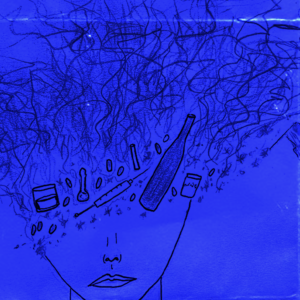
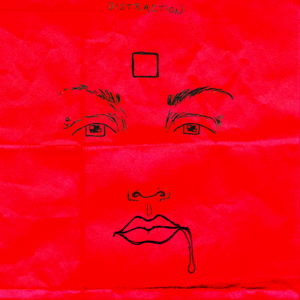
There is no question that seeing image after image after image on social media, of leisure, beauty, and advertisements all interspersed with art, violence, news clips, politics, and sexuality, must be doing something fucked up to our psyches. Post-lockdown, with all the time we have spent with extra hours of increased screen times, as well as careers and lifestyles being reconfigured for a socially distanced internet, digitally detoxing has become a new concern underlying everything else. And so I invested time driving out to the coastline to look at empty sky and water.
In April, I drove to Malibu in a cloud of recent heartbreak to look at the ocean. When I could see it, idling at a red light on the Pacific Coast Highway, my gaze was so consuming that I didn’t realize my foot drifted off the brakes. I knocked into the Range Rover in front of me going under 5mph. The woman in front of me was a furious caricature of the white, middle-aged Malibu housewife, her grey hairs sneaking into her roots as a result of the strict quarantine, her Botox and fillers creating a red framed terrain in her face as she fumed at me. “You fucking idiot,” she screamed, “were you looking at your phone?” I told her I wasn’t, that I was looking at the water, and she didn’t seem to know what to do with this for a second, before she resumed screaming about the mudflap I knocked off her Range Rover.
I ran out into the middle of the PCH to grab it, tourists taking pictures of me, highlighted against the blue Pacific during golden hour. My pull toward the ocean felt simplistic and silly as a result of my accident. But heartbreak would push me to drive to the ocean again soon (and my insurance covered the irate lady’s dent — sorry, lady).
Weeks later, still in a depressive state, my friend Ashley and I went up to spend a night in Carmel. I had never been to that part of California, and as a result of personal difficulty, wanted to go look at the Ocean from a different place. Perhaps to subconsciously manipulate my perspective. In the morning, we went to separate areas to meditate, then sat a while longer in our respective places to watch the water. It is a different flavor of ocean up there. We watched a sea otter for a while after we finished mediating. I had cried a lot. I tried to simply watch, but I couldn’t help but take my phone out a few times to film it, wondering if I would have enjoyed it more if I had just sat there. But that itself is indicative of the overly-reflective, digitally-influenced mind— being worried that I wasn’t enjoying it enough, or appearing to enjoy it enough. Seeing a sea otter made me feel better. I can’t remember whether posting a picture of it did.
Through the summer I went to the beach at least weekly, to swim or to watch. Then in the wintertime, I bought a wetsuit to keep going. Looking out across great distances is supposedly good for the brain. After so much time seeing little else but what fit in the vicinity of my apartment or in the seven square inches of phone screen, having the line of vision opening up all the way to the horizon is cathartic. But swimming is the main objective.
The winter water has held a particular magic in its depths. I am not one for religious ideals of purity, or even its symbolism, but such water feels ineffably holy.
The outside of my house is coated with layers of grit from the nearby 110. The layer of dust that settles on my car, the side of my house, settling into the window sills. How the microscopic pieces of grit settle in my skin can be disconcerting. And so the the wind coming off the surface of the water and into my lungs is clearing.
Also, the phone must be left on the beach, making the moments in the water intrinsically personal and unscrutinized. There is nothing to photograph, no concern for my appearance, the sounds are the white noise churning of waves. No amount of stingrays, brain freeze, or rogue traffic can detract from this.
Plugging up my ears so water doesn’t get in, I have taken to floating on my back past the breaking point, ignoring my fears of being shark bait, and separate enough from a crowd to not get hit in the face by a surfboard. Presence with the self like that is intimacy which is hard to access with the amount of stimulation through the digital world and the sounds and company near downtown LA, a 30-45 minute drive away. It’s been an exhausting year, marked with personal and national tragedy. The dust of the city feels heavy. But there is no mistake feeling my body, whole and alive in the water, that I am incredibly lucky.