

Review by Izel Villarba, find more of his work here.
Amour, A Separation, Roma, Crouching Tiger Hidden Dragon: all foreign language films that, in recent memory, have achieved enough universal acclaim to generate gossip-like attention upon US release and made you feel like you’re missing out if you haven’t seen them. 2019’s Parasite belongs on this list.
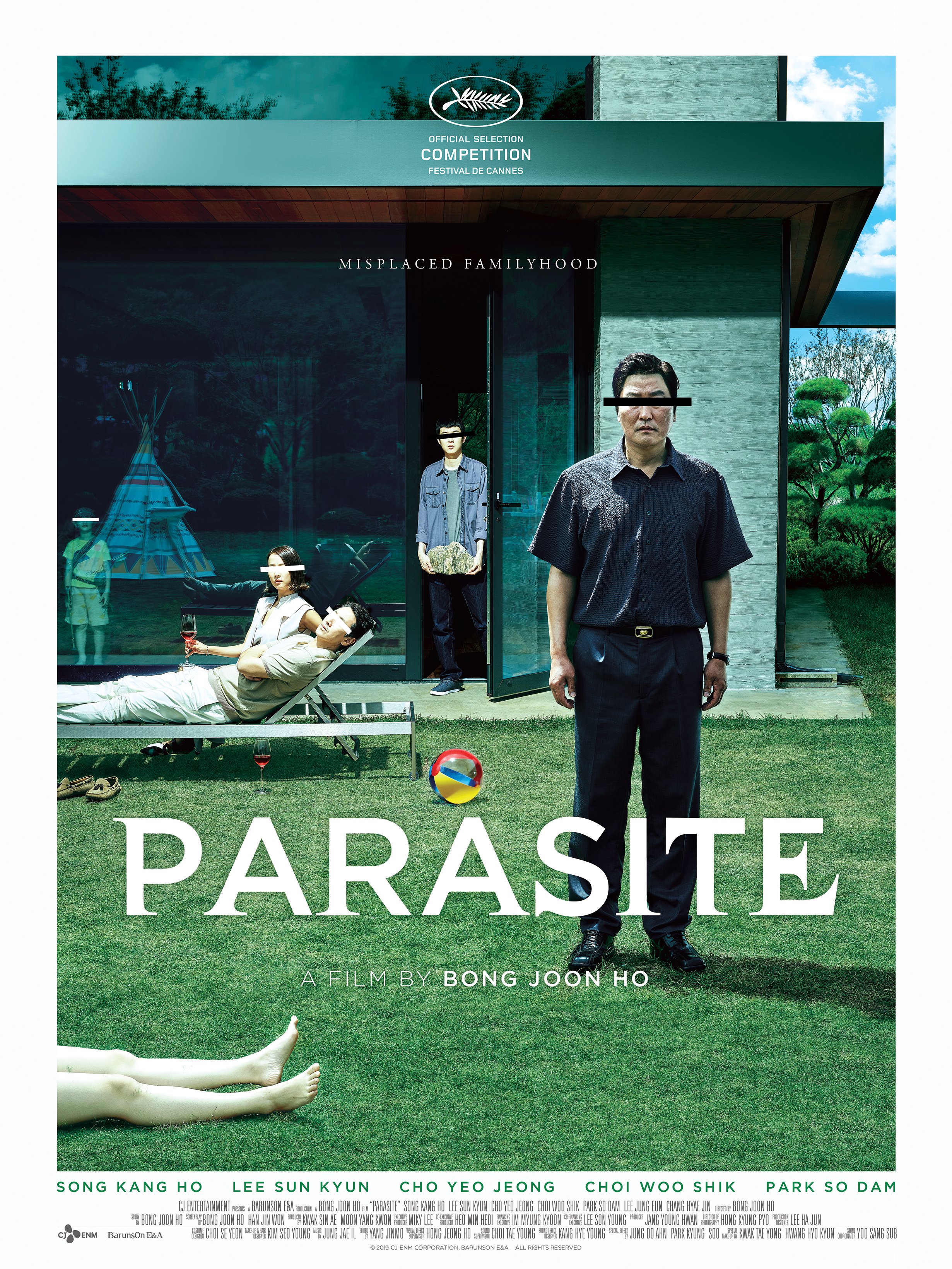
Directed by Bong Joon-ho, South Korea’s contender for the Best International Feature Film Oscar (and potentially Best Picture) certainly lives up to the hype. Social media — a contributing factor to my personal interest in watching the film — has played a massive role in getting audiences to see the film in the few theaters that are playing it. Fans are sharing their praise over Instagram and Twitter, even going so far as to remix a 10 second jingle heard in the film. After watching the credits roll I had an immediate emotional reaction to watch it for a second time. On the subway back I googled everything I could about Parasite: reviews, theories, forums, all to get a sense of what I just witnessed and what I should look out for when I inevitably watched it again. I finally understood what the buzz was about.
Parasite follows the poverty stricken Kim family as they develop a symbiotic relationship with the wealthy Park family. Through a brisk, Ocean’s Eleven-esque series of con scenarios, the four Kims manipulate the Parks into hiring them. The relationship is initiated by a well-off friend of college aged Kim Ki-woo who’s planning to study abroad and needs his replacement as tutor for a rich, teenage girl named Park Da-hye. Desperate to help his struggling family, Ki-Woo accepts his friend’s offer and becomes Da-hye’s tutor after winning the affections of her “simple” minded mother. He recommends his sister, Ki-jeong (taking the alias of “Jessica”), to be an art teacher for the Park’s young son and from there the siblings are able to frame the Park family chauffeur and maid who’re replaced by their father and mother. The four act unrelated and professional in their forged trades, reaping huge pay from the Park’s heavy pockets. One day, the Parks leave for a camping trip and the Kims are able to act like a family again in a home they tricked their way into. They celebrate their success by eating their employer’s food and drinking their alcohol, but the celebration is interrupted when the ex maid pays them an unexpected visit in the middle of the night. She inevitably discovers the Kim family’s ploy and threatens to out them to the Parks. Soon after, the real conflict of the film unfolds.
Joon-ho is a master of his craft when it comes to orchestrating a surreal yet not far removed vision of society. I highly recommend watching The Host, the director’s 2007 sci-fi monster movie which echoes his complete directorial comfort and is a great dive into his slow burning, dark, and unraveling type of storytelling. Parasite magnifies this creative freedom, which I feel lacks in his mixed-international studio produced movies Snowpiercer and Okja. It is wholeheartedly Korean and unafraid of turning a mirror onto its Korean audience. Joon-ho does this through a genre-bending, unpredictable rags to riches tale. I knew nothing about the plot going into this movie — fully expecting a horror flick — and ended up watching a beautiful amalgamation of a thriller, dark comedy, heist drama, art house, popcorn film. In my opinion, going in blind is the best way to approach it. I’m sorry if I fucked that up for you.

The “Scholar’s Rock”
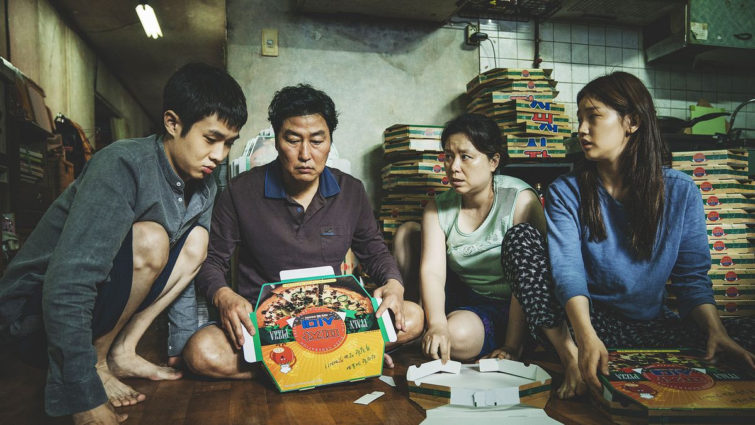
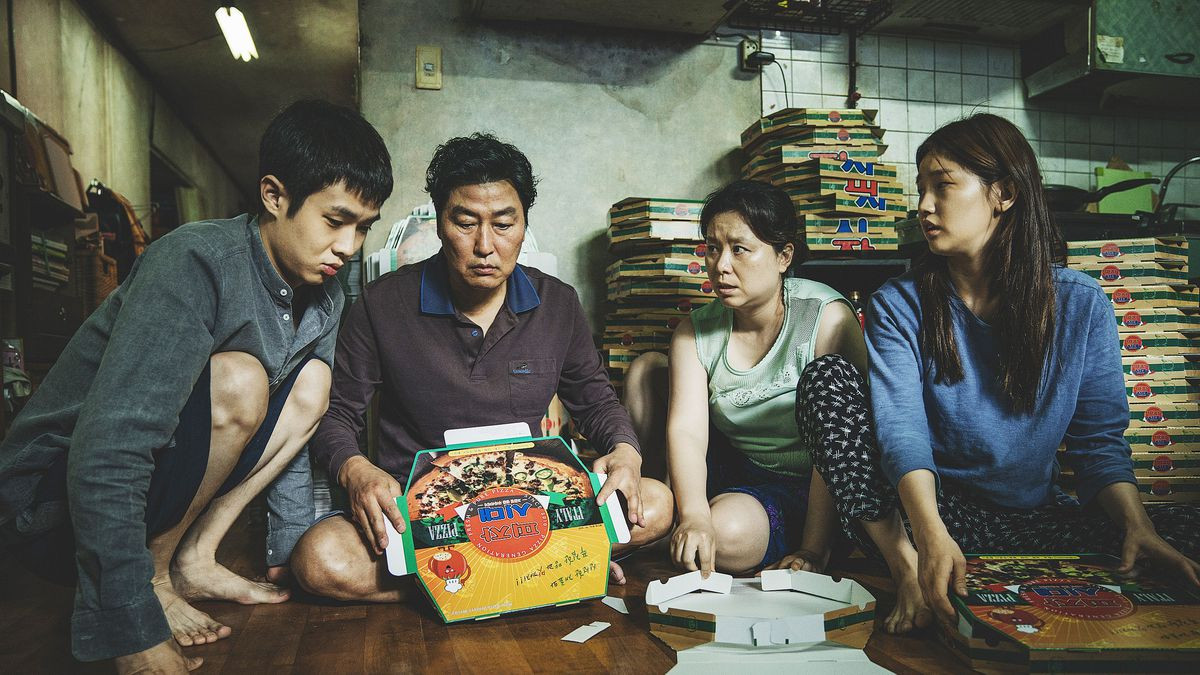
Parasite’s ethos of social outcry reflects the economic divide apparent in South Korea; a sentiment not far off from America’s own class troubles. A similar social commentary film would argue a theme of false hope in upward mobility, but I feel Parasite resonates best as a morally ambiguous approach to socio-systemic disorder. It begs the questions: who deserves the happiness money provides and is it actually happiness that money provides? There are both rich and poor characters to sympathize with and layers of symbolic moments to dissect, all expertly formulated in such a way that it’s hard to have clear feelings on who to praise or who to disagree with and if the supposedly symbolic moments actually mean anything. “Wow! This is so metaphorical!”, says Ki-Woo when his tutor friend gifts the Kim family a scholar’s rock – a symbolic object meant to bring material wealth to whoever receives it. With this exclamation, he acts smarter than he actually is; seemingly in tune with a metaphor that’s inexplicably profound. But what use does his poor family have for a useless rock? They need money! They need food! Towards the beginning of the movie, the family takes on a job of folding pizza boxes — exemplifying their desperation to make ends meet, let alone material wealth.
When I consulted my friend from Korea about what else I could discuss from this movie, he told me that social class disparity is a hot topic right now amongst the youth of South Korea. They’re frustrated with the fact that no matter how much effort they put in, they are competing against the rich who will succeed no matter what, largely due to nepotism. Joon-Ho’s film is acutely contemporary in this regard; he writes the character of Dong-ik, the Park patriarch, as a wealthy CEO of an IT company. Globally, and especially in American culture, IT is regarded as an industry symbolically linked with money. Watching the film, one gets the sense that the Park family is always going to be well off no matter what happens to them. The Kim’s “heist” plan shows just how competent and capable the four of them are for achieving success and how tragic it is that they’re unable to escape their poverty. Chung-sook, mother of the Kim family, says something along the lines of “rich people are happy because they can afford to be happy”.
Cultural subtleties are abundant in Parasite but hard to spot if you don’t know what you’re looking for. For example, a passing comment in the movie mentions Ki-taek, Kim patriarch, failing in the Taiwanese cake industry after he retired; a possible contributing factor to their poor economic situation. Food fads are huge in South Korea and Taiwanese cakes used to be one of those fads up until the bird flu epidemic happened, causing prices on eggs to skyrocket and cake shops to go out of business. I could name countless other examples but I strongly suggest doing your own personal post-watch research like I have because it’s incredibly satisfying to read and hear other people’s insights and discover new contexts to particular scenes and the film as a whole.
International films like Parasite are sparse, but they’re so special in the way that, for a brief moment, they inject another culture into ours (America’s). My hope is that Parasite will leave a lasting impression through its social impact. Thinking back to the first in-person Alt Citizen interview I did with Grian Chatten of Fontaines DC, I asked him what his band (from Ireland) is going to reveal to America that it doesn’t already know about itself when they go on tour here. I think his answer describes the allure of Parasite quite well: “…it’s very easy as an outsider to come in and point things out to people, but also I think if you take an element of one society or one culture and you put it in the pool with another one, both societies become nuanced against each other, like differences, and they become more intensely aware of what they are. It’s like if you have a sibling and one of the siblings is into art and the other sibling is into business, I think being in such close proximity with such differences, you become more aware of your differences, so in that sense you’re inadvertently teaching each other things about yourselves.” The first time I saw this film it felt like I was watching a masterpiece at every given minute. I’m unsure how much longer Parasite will be in theaters so I urge you to go watch it and learn something new about South Korea and, by contrast, America — and if you don’t go see it then frankly, you’re missing out.