
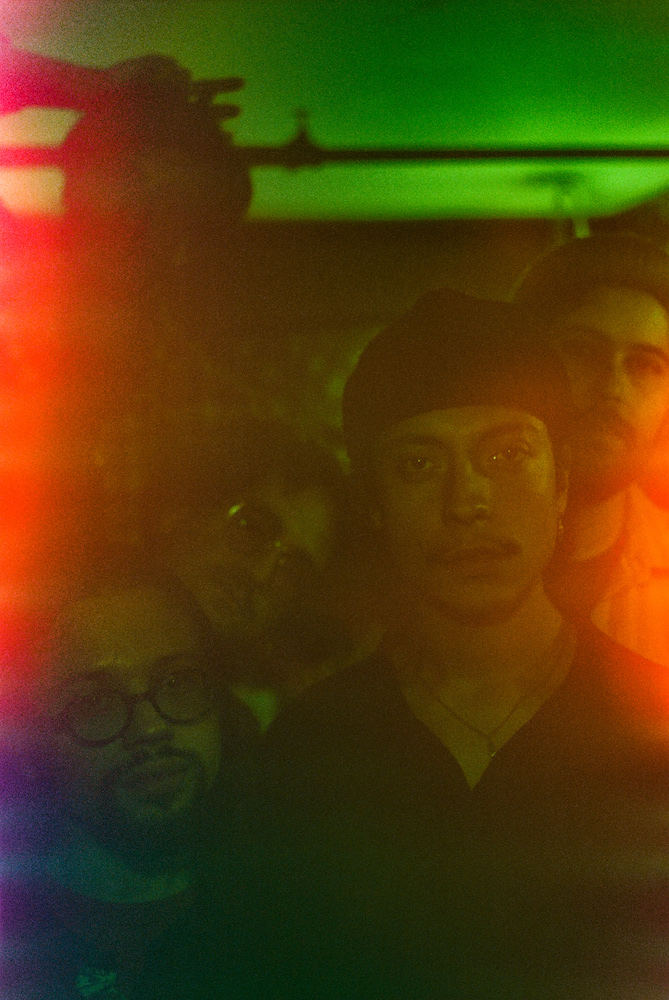
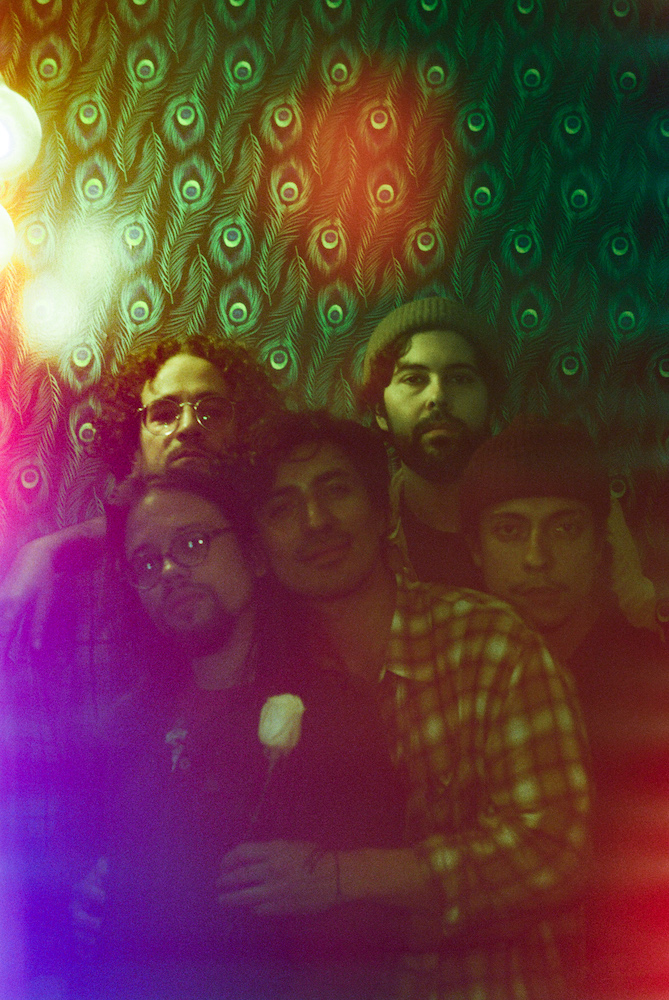
Photos by Lauren Khalfayan, find more of her work here.
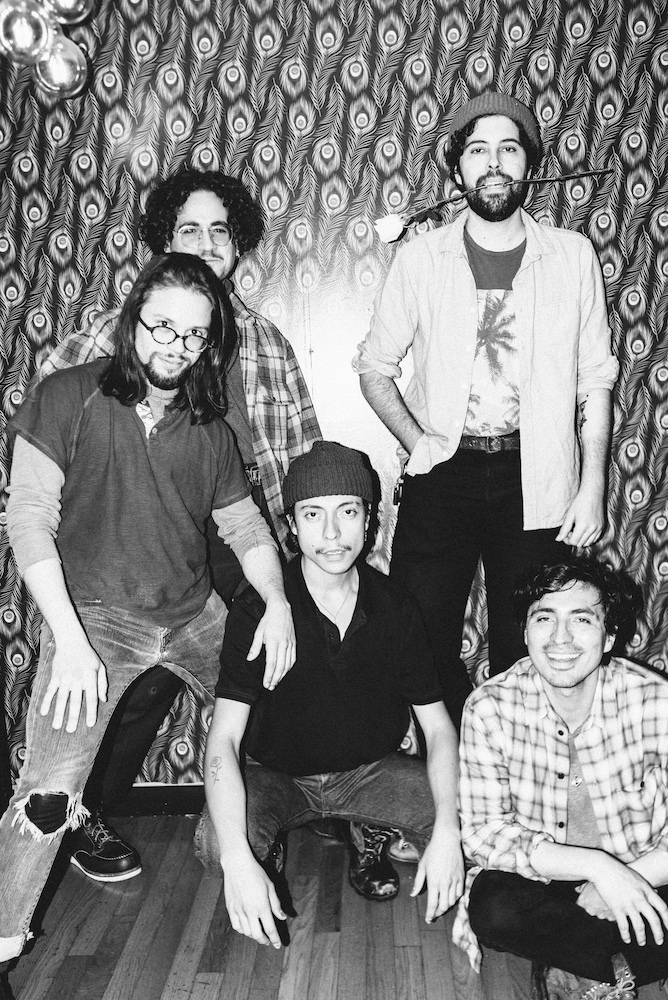
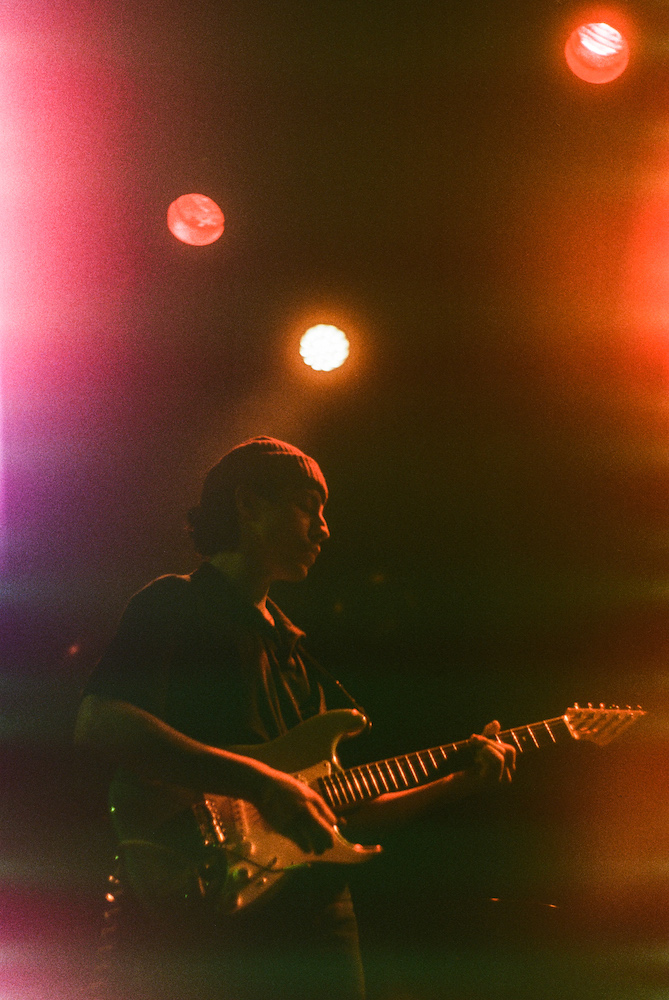
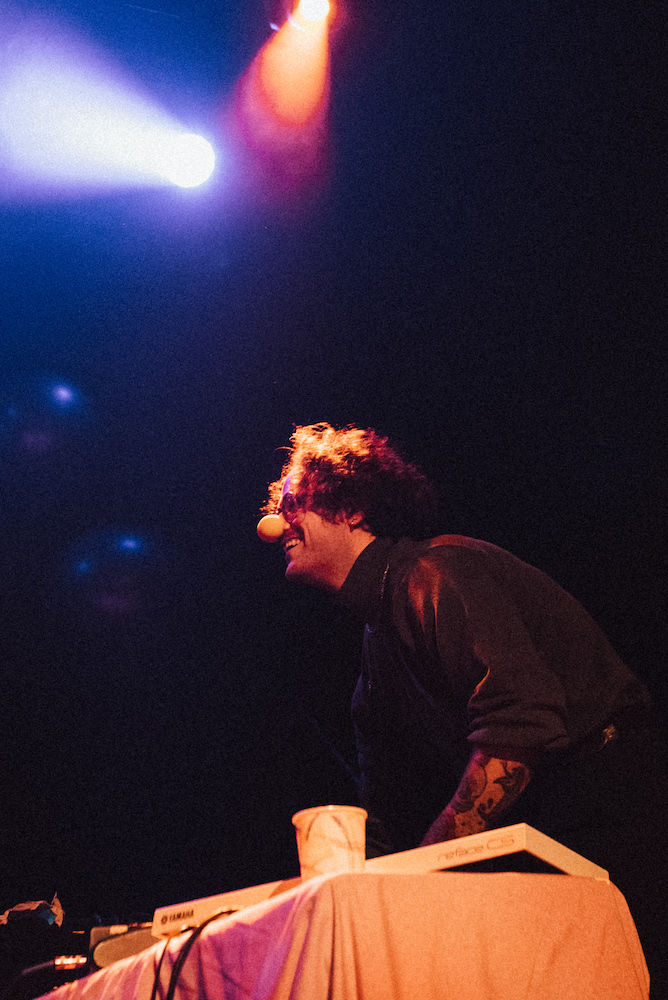
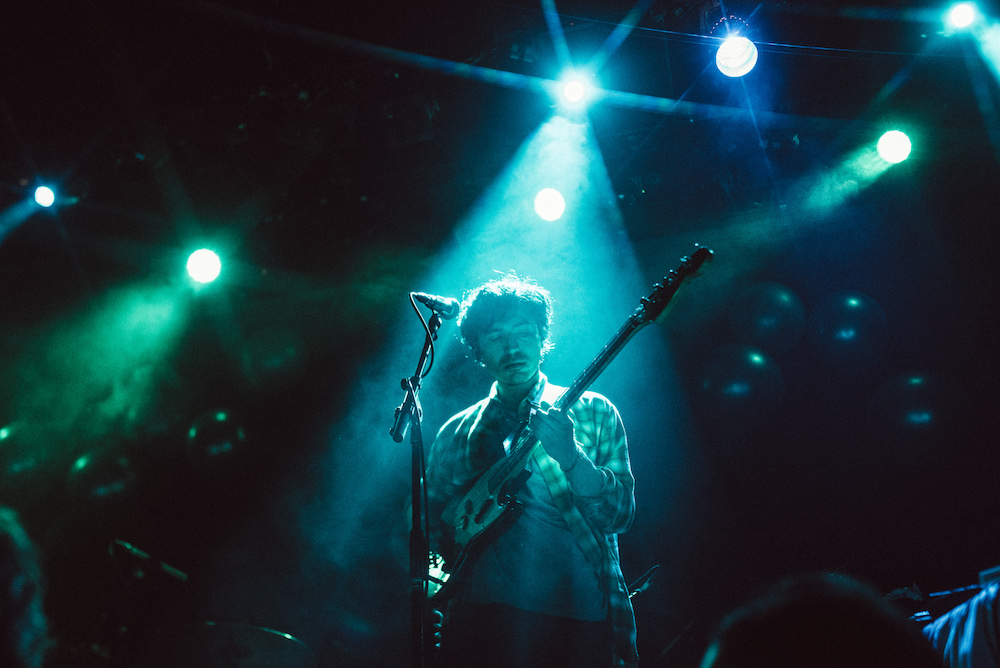
Earlier this year, I stumbled upon Divino Niño’s album, Foam, released just as summer was getting started. It couldn’t have been better timing as it easily became my summer soundtrack and one of my favorite albums of the year. Fast forward a few months to when they roll through on tour with Crumb and I instantly became a super fan. Between their sweet, vibrantly psychedelic tunes and their charming stage presence, they had the crowd, myself included, swooning in the palm of their hands. Although, I think it was Camilo’s onstage karate moves that won me over the most. If you haven’t heard Foam yet, now is the perfect time more than ever as the temperatures start to drop and the days get shorter. It’s all the warmth you’ll need this winter.
After returning from a two month long tour, I got to catch up with Javi about their first time touring for an album and their lessons learned along the way, the impact of language and culture in music, growing up in cult-y churches, and much more.
How’s it goin man, how’s post tour got you feelin?
Javi: Good, just getting some rest. We just got back Monday.
Yeah, ya’ll were on the road for a while huh? How was the whole tour?
Javi: Yeah, we were on the road for two months. It was amazing! We finished the west coast leg, got home for about a week and a half and did the east coast tour. It was just amazing, man. Imagine, you make buddies on the first run and then on the second run you already know these people so you’re just like, “Yo, what’s up!” It kinda just becomes like a big family. And there’s obviously some cities that were really fucking lit and then others that were more chill, but the crowds still responded after the show by going to the merch table and wanting to talk and hang out with us.
This is the first time you guys tour for an album, is that right?
Javi: Yeah, we’ve released some music before. They were like demos and things like that we’ve put out. This is like the first time where we’re like, “Okay, lets make an album…okay lets tour it..okay let’s see what we can do with it.” And yeah it’s been kinda like a whole new experience for us.
What would you say was different about this tour and touring for an album as opposed to previous tours?
Javi: I feel like we kinda had no direction, in a way we were still trying to find what we wanted to do, who we were as artists, and our vision. And also just other logistics like how to tour — who can we tour with that would be a good match, what are some expectations for touring. This tour really surpassed those expectations because of the people.
Totally, I mean Crumb is an awesome band to be able to hop on tour with I bet.
Javi: Yeah, they’re incredible man! They’re incredible live and their fans love them so much, too. The energy was just so good.
What would you say is the biggest take away from touring for an album and preparing for the next one?
Javi: This was a dream tour honestly, I feel like we learned a lot. I personally learned the importance of putting on a show for people in a way. I feel like it’s just too easy to just go up and play songs. That’s kinda what we were trying to figure out throughout the first leg of the tour. We were just like, “Well okay, you can just get up on stage, play some songs and be just an opening act or you could actually have fun with it”. Since people were so open, we just took different approaches. Like the last two shows which were in Brooklyn, we decided to get roses and Me and Camilo did a bit where we dropped our instruments and started throwing roses into the crowd and I started dragging him across the stage. Every now and then Cam would drop and start doing push ups and everyone in the crowd would start counting how many he did on stage. You know, just silly things like that bring an element of a show. Like, “I went to see a band. Not only do they play songs but they were funny.” And that’s what I really learned most about this tour. We also got to get familiar with a lot of gas stations and that’s the ultimate reality of it.
Oh yeah, a lot of gas station sandwiches I bet! So you guys have one song, “Quiero”, that is sung in both Spanish and English and then you have a song like, “Maria”, that’s completely in Spanish. When it comes to the writing process, how do you decide which songs/lyrics are sung in Spanish versus English?
Javi: I feel like everything is very organic, we really don’t even try. I think for us the Spanish songs, Cam would come up with an idea for a guitar part, then I come up with an idea and then we just mess around with lyrics. Sometimes you’re really trying to find meaning and shape to this thing that you’re creating and sometimes the meaning and the face of the song is just, “This is in Spanish, it has to be in Spanish”. For “Maria” it came very naturally for Cam. He came up with a demo on a four track tape recorder and he showed it to us, we were like, “Yeah, this is sick!” And he wrote the lyrics in like a couple of minutes. It’s a simple song but it has this vibe that people really like — I know this tour that was one people really liked. They knew the lyrics and we were like, “What, you guys know the lyrics to this song?”
Do you feel like songs that incorporate Spanish lyrics connect more with your Spanish speaking audience? Do you guys ever get approached by fans expressing an appreciation for the fact that ya’ll are also writing in Spanish?
Javi: Definitely man. You can’t really avoid where you’re from and who you are culturally. We live in America, we embrace and love english, but there’s also a part of us that is obviously Latin American and it just mixes into the music. Something that was really interesting for me was EL Paso — I was talking to one girl in Spanish and she looked at me like, “What’re you saying?” and I was like, “Oh I thought you spoke Spanish?” and she said, “No, my parents are Mexican but they didn’t want me to learn Spanish”. The reality that it’s still there in their blood, but through cultural situations, you kinda adapt to American environment and end up speaking English. I think second generation Americans that come from some sort of Hispanic background are definitely drawn to the Spanish in our music. I think it’s just something about their roots and where they come from in a way, it resonates with them as opposed to someone who has never spoken Spanish or from a different culture maybe and they’re like, “Oh, well I guess that was Spanish,” and it’s cool and different, and maybe they don’t get to hear it a lot so it’s what they would call “foreign” and that’s cool too.
Definitely. I mean when you talk about keeping roots in your music, I for sure hear it there. Even digging back in ya’ll’s older stuff, that single you guys released a little bit back, “Don’t Let it Die”, specifically, that organ hook at the beginning has a very Los Angeles Negroes, old Spanish garage rock sound to it. Just like stuff my mom would show me growing up. So I guess keeping that “roots” sound has been a key element in ya’ll’s music even way back then.
Javi: The funny thing about that song, it’s actually a cover from this guy named Hurricane Smith, who is a total white dude, a total whitey, but a good whitey. He was an engineer for The Beatles and he had this song called “Don’t Let it Die” and he tried to pitch it to John Lennon and John Lennon was like, “Yo, this shit sucks,” and basically fired him. So it was just a cover that we did because we found that record for like a dollar at a random thrift store and thought it was amazing. And obviously our approach to it was completely different than the actual record. So yeh, it all goes back to who we are and when we make music it just always comes out like that naturally.
So do you feel like language and like you said, staying true to your roots, carries weight in music in general to make that connection with all sorts of people of different backgrounds?
Javi: Yeh, I think part of it is also kind of like the song that you write, whether it’s good or not, but I also think people want to see someone that they relate to. Thats something I realized about shows. I was playing on a Monday or Tuesday and people were coming out. I asked someone like, “Why do you go to shows?” and someone said so that they could escape reality. And it goes back to what I was saying about putting on a show. People go there and they want relief from their stress or from whatever that reality is that they need relief from.
I was also doing some reading on you guys and read that some of ya’ll grew up playing music in church and that’s where some of you met.
Javi: Yeh, Cam and I were in this super cult-y, kinda like charismatic christian church. You couldn’t listen to music that wasn’t christian. If you wanted to have a girlfriend or get married you would have to go through the pastor and it has to be approved by the pastor. If you went to the church you had to find like other twelve homies that would become your “disciples” and everybody there wanted to eventually become a pastor. Our whole life was basically this church, it was almost like a full time job. So little by little, we started to realize there’s something weird going on here. Like the pastor would constantly be asking for money, taking money from these people who really didn’t have a whole lot of money already, and there was just something really weird about that. Someone that made me really realize how weird it actually was one of my high school friends who was really into hardcore. I invited him to church one time because I was pressured to bring more people to church and he was like, “Man, this kind of blows. These people are forcing you to do all this stuff. Do you wanna get out of here and play metal with me?” and I was like uh, yeah!
Did you ya’ll play music while you were at that church?
Javi: Yeah we were in the worship band. My family were also in that church and once I left, they stopped talking to me. I was like thirteen or fourteen and they convinced my family to stop talking to me. It was crazy, but everything is cool now. Leaving was honestly kind of a relief, I mean imagine being a kid in high school and all your friends are having a blast, doing LSD and listening to Pink Floyd and The Beatles; I missed out on all of that! Then being able to be like, “Whoa, now I can listen to these records!” So that’s why some of our early stuff is very Beatles, Pink Floyd inspired just because we were like, “Wow, The Beatles are the best band in the world! This is insane!” But that’s just because we hadn’t been able to listen to that kind of music, you know. Same thing with hearing the stuff our parents would listen to. The world basically expanded in terms of music and that was pretty enlightening.
For sure, like a whole new world. I just found that part of ya’ll’s story so intriguing, it’s funny how many musicians I meet who have a similar story. Musicians, more so hispanic/latino kids seems like, who grew up playing music in a church setting and that being their first exposure to playing.
Javi: Yeah, I agree. Honestly, this tour I also met a lot of people that started playing music in church and that’s where they got their start. I thought it was interesting, we come from very similar backgrounds.
I watched ya’ll’s most recent music video for the song, “Plastic Love” and it was pretty gnarly. I loved it! What was the process of putting together that whole idea? I mean, it starts off with someone getting a nice massage from a robot masseuse then it completely goes nuts and the robot goes full terminator mode on them. How’d that come about?
Javi: Thanks man, yeah it gets pretty crazy. We had our buddy, Alec Basse, who’s done videos for Post Animal and Twin Peaks, reach out to us saying he wanted to work on a video for us. We were like, “Yeh man, let’s work on it”. We were about to go on tour and we thought it’d be nice to get one more music video for a song. We gave him three songs to pick through because we wanted to give him the freedom to choose something he liked. So he chose “Plastic Love” and came to us with three pitches, and the one that resonated with us the most was this massage parlor that goes wrong. That production was really cool, those guys were awesome to work with. It was great to see it all unfold, would definitely wanna work with those guys again.
How about the album art for Foam. I know Camilo is a graphic artist and he made the cover art for that one right?
Javi: Yeah, he’s an incredible designer in general. He started off doing little designs here and there and he’s always been able to draw very well. He’s developed this style over a few years. One time he told me, “Dude I’m gonna start an instagram and I’m gonna start posting art every other week,” and it was cool to see it take off from that to like other musicians asking for posters. Then he started doing our album covers and our merch. For Foam, we were looking at a book of sea urchins and nudibranchs and he scanned the nudibranch and vectorized it in illustrator. It took a few tries, the first few iterations were gray and we were just like, “Dude, I don’t know if our music is that gray.” But it was definitely influenced by a lot of Japanese album covers, which was another influence aside from the kinda underwater world.
Well what’s next for you guys man? I know ya’ll will be back in Houston in December at Satellite Bar for the “Castle Christmas” festival. I’m stoked for that!
Javi: Yeh we’re super excited to be back in Houston, man. It was a really good time and I think Gil (Booker at Satellite Bar) just reached out to us and was like, “Yo, you guys down to play this?” and we were like yeah! Also, Inner Wave is playing and we might be going on tour with them next April. We met a few of those guys in L.A. and they’re sweethearts. Actually, the guy who does the sound for Crumb does the sound for them as well so there’s this cool homie connection. It feels like a family. So we’re really excited to be hanging out with those guys.
You can keep up with Divino Niño on Facebook, Twitter, and Instagram