
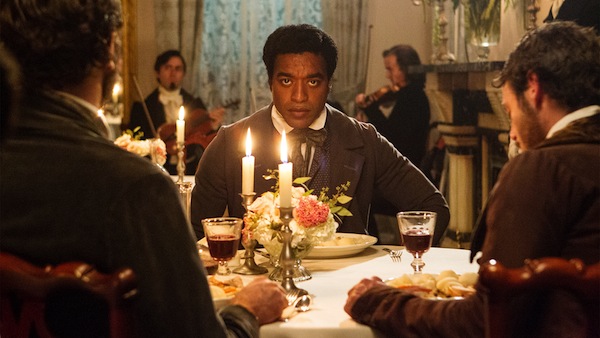
Are you only looking for a rip-roaring comedy? Please don’t go see “12 Years a Slave” then. But really, everyone should go see this film (as everyone has been saying). “12 Years a Slave” is the adaptation of an 1853 memoir from Solomon Northup (Chiwetel Ejiofor), a free black man kidnapped and sold into slavery.
Northup is a respected violinist living in Saratoga, New York with his wife and children. Along come ratty traffickers who deceive him under false pretense of fast money — they get Northup drunk, put him in a cell, and he wakes up to find himself in chains. From there, he ends up on plantations in the South, falling under the primary ownerships of the morally torn slaver William Ford (Benedict Cumberbatch) and finally Edwin Epps, the psychopathic alcoholic (Michael Fassbender).
We see a sick triangle play out, where the cruel Epps obsesses over a slave named Patsey (in a crazy heartbreaking performance by Lupita Nyong’o), to his wife’s dismay. In one of the most unsettling scenes, the disturbed Mrs. Epps (played fascinatingly by Sarah Paulson) responds with a sadistic act of chucking a glass bottle at Patsey’s head. It’s one of the many awful portrayals of human behavior at it’s worst, leaving you cringing at the thought of people capable of such actions. At the same time, it’s a theme that British director Steve McQueen excels at in his very bleak films — fixating on the idea that some form of those little demons are present in everyone. These pre-Civil War slave owners happen to be outward manifestations of that.
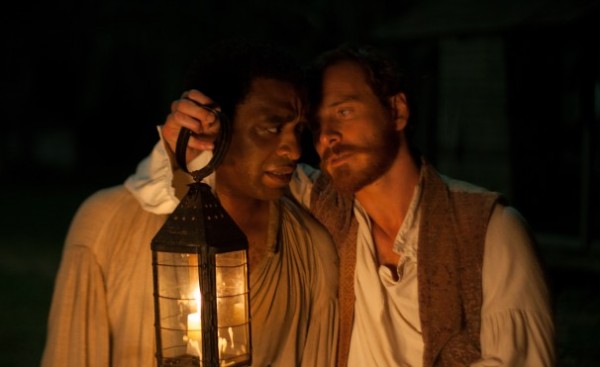
McQueen’s stark filmmaking aesthetic isn’t exactly known for inducing the fuzzies, judging by his previous films, “Hunger” and “Shame,” which also recount the physical and emotional breakdown of their respective protagonist. He tells Northup’s story in an uncompromising way, steering clear of overly sentimental accounts that try to make you feel just how unimaginable and horrifying slavery was. There’s none of the campiness found in “Django Unchained.” The unrelenting scenes showing the violent abuse faced by Northup and Patsey are absurd, not in the exaggerated Tarantino way, but by isolating just how inhumane human cruelty was (and can be). Sometime around the latter half of the film, Brad Pitt pops in as a heroic Canadian abolitionist with his TRESemmé hair shining like a golden beacon of hope. It’s one of the rare moments in the film that make you want to turn and hug the person next you.
Very few films have conveyed this ugly, ugly part of American history the way McQueen has. The visual artist turned filmmaker addresses it in such a way that breaks the glass ceiling so to speak, by looking at the universal grey area we all live in and reinterpreting it through one of our darkest eras.
Who Should See It: If you want to see something that moves you, makes you rethink a bunch of stuff, give lots of hugs.
Who Shouldn’t See It: If your dog just took a visit to the farm upstate.
*Bring a Kleenex. Maybe five or six.
Review by Sandy Chung. Follow her on Twitter @sndychng