

In Nymphomaniac Vol. 1, we watched as sentiments and circumstances went from experimental and semi-playful to distressing. By the end, ‘Young’ Joe had transformed from a curious, budding nymphet into a full-blown sex addict, and in the final, woeful (albeit predictable) scene, she declares, “I CAN’T FEEL ANYTHING” while making love. So, yeah, it was pretty obvious that Joe’s sexual and emotional journey in Vol. 1 was more of a downward spiral into detachment and emptiness than a healthy path to sexual self-discovery. And as we could guess from Joe’s fateful last words in Vol. 1, the second half of Nymphomaniac is a whole lot bleaker.
Joe (Stacy Martin, until she quickly transforms into Charlotte Gainsbourg) and Jerome (Shia Labeouf) are now co-habitants with a young son named Marcel. At this point in her life, she has lost her sexual appetite, and as we learned at the end of Vol. 1, she is unable to “feel” anything, so it’s safe to say that she is unsatisfied in just about every sense of the word. Eventually, Jerome acknowledges that he can no longer fulfill her needs, and he suggests that she tries getting off with other men. This is where the truly strange and sinister stuff comes into play.
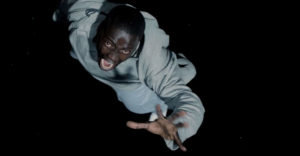
Even with new lovers in her life, Joe is unhappy. She reaches out to “The Dangerous Men” – aka two large, non-English-speaking African American brothers — who take off their clothes and argue over who gets to stick it in which hole, while Joe watches them and their intimidating body parts, impatient and bewildered. Oddly, the scene is rather humorous, but it also shows that Joe is now willing put herself into some not-so-safe situations to fuel her lust. In Vol. 1, Joe’s unrestrained sexuality seemed like it was driven by a youthful thirst for experience — although we all knew in the backs of our minds that this wasn’t the case. But now that Joe has gotten older, it’s apparent that, well, really bad things are bound to happen.
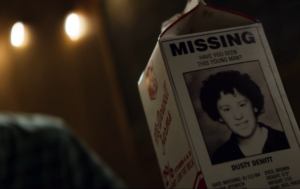
Joe hears of “K” (Jamie Bell) a master sadist, and finds herself more and more addicted to his services. Side note: I don’t know much about Jamie Bell as an actor but in this role, he is pretty incredible — he is simultaneously terrifying and courteous. LvT references Antichrist by having Joe leave her toddler alone because she cannot bear to miss an appointment with K. [Happy Spoiler Alert]: The boy approaches the window in an eerie slow-motion sequence, but he doesn’t fall to his doom this time. However, Joe’s negligence prompts Jerome to leave her, and what little semblance of a “normal” life she once had is now gone forever.
Her job is gone, her attempts at group therapy for sex addiction are unsuccessful, and her vagina is now more of a burdensome wound than a vehicle for pleasure. She eventually takes on a seedy job that involves sexual harassment and extortion, and is told by her boss “L” (Willem Dafoe) that she should find a protégée, and she reluctantly agrees, leading to a weird mother/lover relationship with “P” (Mia Goth).
Meanwhile, Joe continues to relay her past experiences to Seligman (Skarsgard) who keeps delivering his rather irritating comparisons to religion and other themes and ideologies. But here in Vol. 2, the symbolism and connections run deeper than fly fishing and Fibonacci numbers; they are based more-so on broader ideas, mainly animal instincts v. civilization. On several occasions, Joe acknowledges that she does not view herself as a member of society. She says that society is veraciously hypocritical and filled with cowards, and alleges, “Society had no room for me and I had no room for society.” And this is all true to a point; Joe’s overwhelming sexual appetite made her into a force that was destructive to herself and others, but it can also be said that the “society” Joe criticizes isn’t as innocent as it regards itself. It is undoubtedly hypocritical, as highlighted by several aspects of the film. Jerome, for example, is seen as the “good” parent, and takes Marcel away from Joe because of her erratic behavior. He tells her, “Let’s face it Joe, you’re not a mother,” but shortly after, he realizes that he too is unable to give him the time and care that any small child needs, and puts him in foster care.
But perhaps the most obvious instance of this hypocrisy is in the end [Spoiler Alert]: when Seligman, an obvious example of a “civilized” individual, does what can be regarded as the most heinous act in the film. Nymphomaniac is rife with suggestions and ideas relating to how unaduletrated human nature is accepted — or rather, not accepted — in the context of modern society. On one hand, Joe explains that sexuality is the strongest force in human beings, which is seemingly true to an extent. This would excuse her dangerous behavior, but it would also excuse the behavior of sexual assailants. And on the other hand, it makes sense that restricting your urges based societal expectations is dangerous as well. I’m not sure if a clear conclusion can be made — in the film or in life, in general — but one thing that is certainly made clear is that when it comes to the insanely large spectrum of human desires, urges and feelings: there is no definitive answer as to what’s right and what’s wrong.
Review by Nicole Woszczyna. Follow her on Twitter @nicolewosz.