

It’s safe to say that I grew up with The Dismemberment Plan. I was in high school when I first discovered them. They were my favorite band for a long time. I can remember listening to bootlegs of their live shows when I was too young to go to concerts and being impressed (especially the nights they let the crowd pick the set list) by how personable they seemed. I can still remember the day they broke up. I also remember when they announced the benefit shows for Callum Robbins, or more specifically, feverishly checking bootleg sites so I could see if they still sounded like I remembered. When they finally played concerts I could go to, I saw them in DC and they had an effect on me that very few bands have been able to duplicate. Call it nostalgia if you want, but it’s undeniable that me and many of D Plan’s fans have grown up with them.
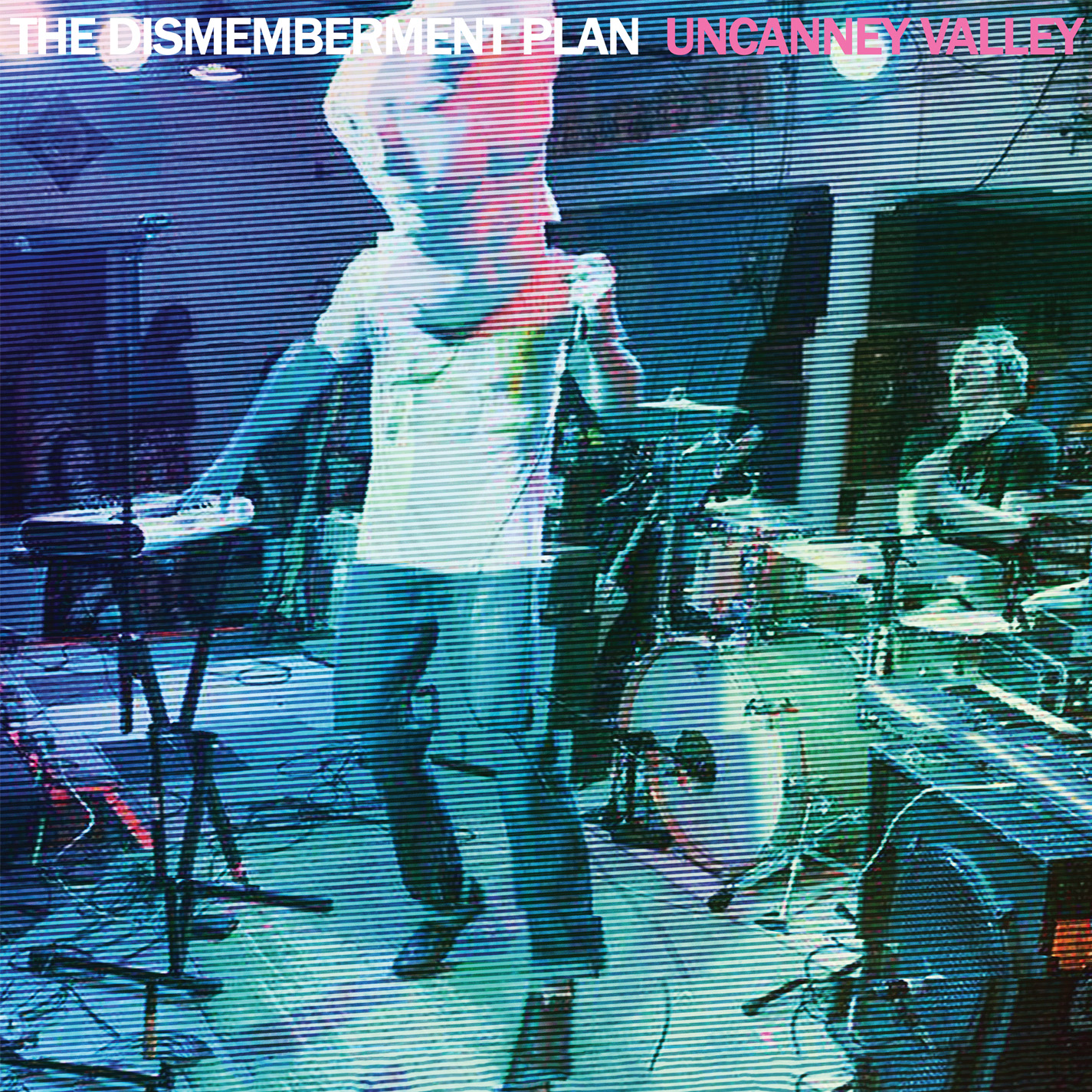
Growing up seems to be a major theme of Uncanney Valley, the band’s largely unexpected new album, the first with original music since 2001(!)’s Change. While the sound is largely the unique mix that has largely never been duplicated, there is a feeling of subtle difference in the lyrics and delivery. Lead singer Travis Morrison seems changed. He’s been through a lot since the band’s last release. On Uncanney Valley he seems more impatient. This isn’t a critique at all. In the 12 years between proper releases, The Dismemberment Plan have matured. So have it’s fans. As much as you could relate to “The Jitters” and “Following Through”, you might more easily relate to new songs like “Waiting” and “Invisible” now. They still have the same feeling, but maybe we interpret them differently. Everyone’s working through a different lens.
There was always something inherently unique about Dismemberment Plan. While they started as a relatively straightforward post-punk band, it was the distorted, looping soundscape of their later albums that set them apart. This along with Travis Morrison’s enthusiastic delivery and brilliantly haphazard lyrics put them in a class of their own. This is all back in full effect on Uncanney Valley. Morrison and the band haven’t really missed a step. If you went into this album having no idea there was a 12 year gap between releases, you might not even realize the gap was there. And maybe for other bands and other albums that would have been a problem. Not here. Instead of being a drag on the album it shows just how strong a band The Dismemberment Plan was before it split. It’s cohesiveness hasn’t fallen off at all. Each song has its own kinks and interesting sounds to explore. Even if the track as a whole doesn’t hold up, the instrumentation makes it worth coming back to.
Uncanney Valley’s themes take on many of those that the band has taken on before. Isolation, love, sex, and the absurdity inherent in these things. Time has affected these things as well. While there is still exuberance in Morrison’s voice, there is a little more behind it. There is anger and resentment in songs such as “Waiting”. There is regret in “Lookin'” and “Daddy Was A Real Good Dancer”. There is also a tinge of nostalgia in “Let’s Just Go To The Dog’s Tonight”. It’s easy to see that age has affected the band. Each song feels like it has experience behind it, and the listener is more willing to believe it. While they handled this material very well before, the songs feel lived in now.
The album’s highlights are still largely and not surprisingly the one’s in which Morrison weaves a story. This is the guy that made “The Ice of Boston” after all. Like any Dismemberment Plan album, it has its weaker moments. That is just a fault in Morrison’s songwriting. Morrison still has the ability to turn these moments from cringe worthy into amusing and comical anecdotes, though, and it shows his strength as a lyricist.
It never really mattered whether Uncanney Valley was good or bad. It’s existence alone was enough for me and the majority of the band’s fans. That it is legitimately good is just an added bonus. Uncanney Valley shows that the band was truly one of the best during their time. It’s tight, layered, and at points incredibly sprawling and intricate, both in its sound and lyrics. Maybe the most impressive thing about Uncanney Valley is that it is still excellent without the need for a back story. Even if you don’t have a history with The Dismemberment Plan like I do, it’s still an album worth checking out.
Review by Justin Owlett. Follow him on Twitter at @JustOwle.