

Lately, it’s felt like there’s not a whole lot to look forward to. I don’t have tickets to see a show until October of 2021, and given the obscene selfishness of anti-mask America, it’s unclear if those plans will even come to fruition. So looking forward to upcoming albums is kind of taking on some of the serotonin burdens that the absence of live music had left us with.
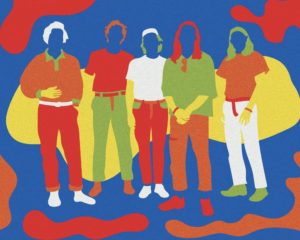
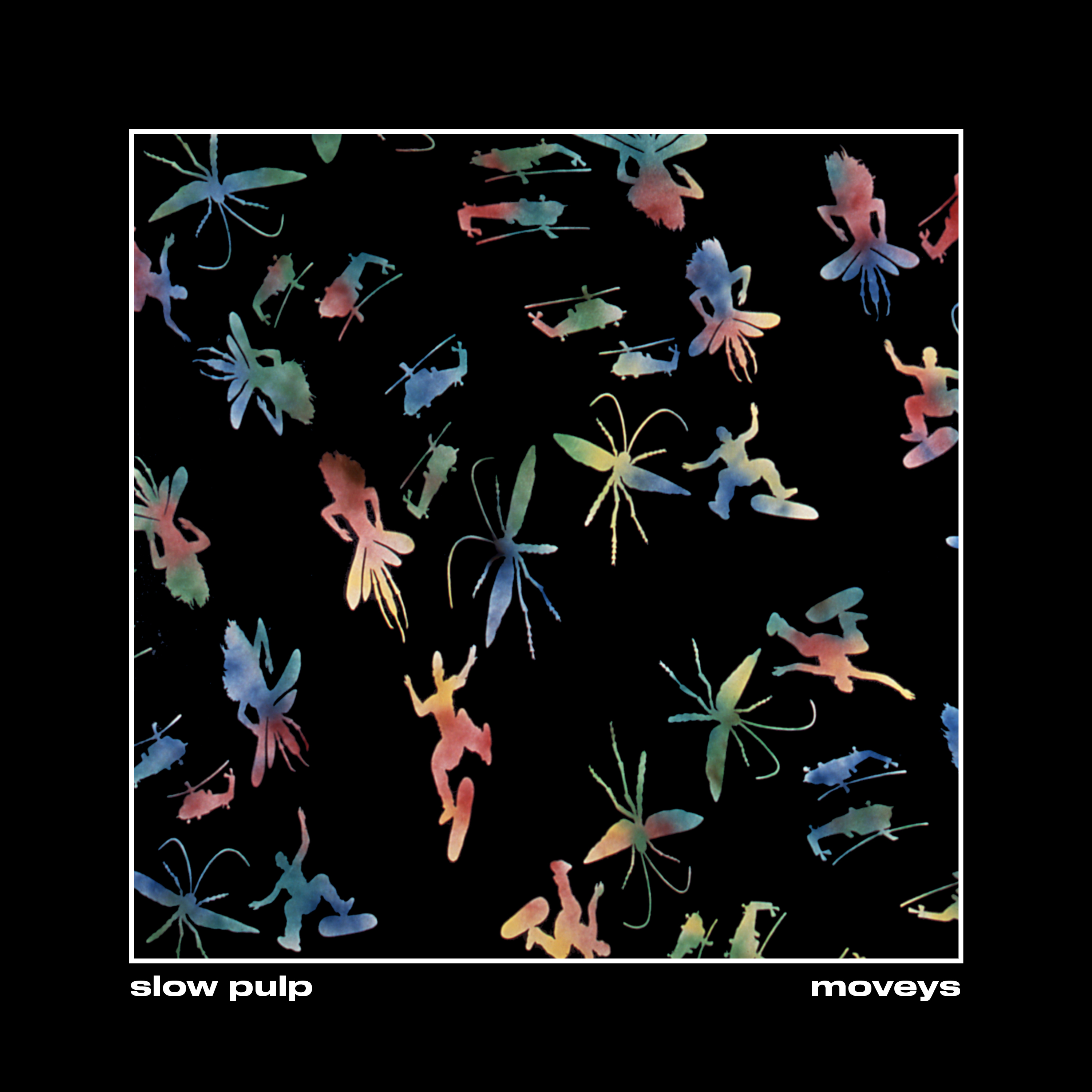
Slow Pulp’s debut LP Moveys is out tomorrow, October 9th. No waiting a full year and a half for this one. It was written and produced almost entirely in quarantine by the band, with longtime friends and bandmates learning to create separately. It turned out really sweeping and big, kind of stretching out time while you listen through it. The drive on the guitars on “Channel 2” along with Leeds on lead vocals lowly singing “I saw it happen, oh…. what comes after, what would it matter” has a hint of appealing salaciousness to it, while “At It Again” has got this upbeat caution-to-the-wind-ness about it. With the former following directly after the latter, you’re taken on a bit of a ride, but it’s a smooth one.
It feels kind of like therapy, or maybe more therapeutic — you get the positive effects without doing any of the work. Slow Pulp’s done that for you. As the band wrote, scrapped, and started writing again while Massey went through a validating medical diagnosis, it did serve that purpose for her. It wasn’t just physical though, as she says, “The way that I internalize trauma is I will hold it in and not process it for a very long time, but writing songs is the one place where I can’t hide from myself. It just comes out whether or not I want it to or if I’m ready for it to. Figuring out how to write together, as a band, was like me learning how to take care of myself and learning how to communicate better.”
Before Covid even hit, Massey’s parents got into a car accident and she had to go home, then shortly after, Alexander Leeds (bass), Theodore Mathews (drums), and Henry Stoehr (guitar), all entered their respective quarantines in Chicago. Most of the instrumentals were already written, so they got to work recording separately with Stoehr taking on engineering, mixing, and production duties. Massey’s father Michael even lent a gorgeous piano bit to “Whispers” while he recovered from the crash. He also engineered all but two vocal tracks from their home studio.
I’ve asked some questions safely via email — get a sneak preview of what’s to come before the full length release tomorrow.
How do you think this album would have turned out differently if you had been able to finish it all together in one place?
Slow Pulp: It’s hard to say how this record would have turned out without quarantine, as many of the songs and sounds off the album were shaped after we had been apart from each other. We feel like there’s an emotional quality to the songs that came from this time, even if it was challenging to finish apart from one another.
Emily, you happened to have a studio available to you at home. Is that something you grew up taking advantage of? How has that shaped your approach and relationship to music? Has it shaped your relationship with your family?
Emily Massey: I was lucky enough to have access to a studio setup and really nice recording equipment during quarantine because my dad is a full time musician. As he was recovering from a concussion he engineered almost all of the vocals on the record. We had never worked together quite like this before and came to the recording process with pretty different methods. After a few hiccups we met in the middle in a nice way. My family was going through a lot of tough things right as the pandemic hit. Being able to work on this project together helped both of us to get through it. Recording became a bit of an escape from dealing with healing and grief. Because of my dad’s occupation music has been a constant in my life. I have a bit of a complicated relationship with music as a result, or at least how I came to pursuing it myself. I resisted music for so long because I felt like I was expected to do it. But as I got older, and started my own career in music we found connections that I’d never thought we share.
Do you consider Chicago to be a part of your identity as a band? How / why?
SP: We all feel a strong connection to Wisconsin having been born and raised there. That being said, we love Chicago. We really respect the music community and are very grateful to feel welcomed here for the short time we’ve lived in the city.
We’re all in the midst of an all-around cultural reset at the moment, which includes the music industry. If you had to predict or guess where we will be a year from now, what do you think the industry might look like, amidst everything else? Are you optimistic?
SP: It seems safe to assume the industry will have to adapt to a lot of new circumstances but we are optimistic that people will continue to seek out music that’s important to them. It seems like the live music industry might be affected the most and we really hope independent venues will be able to weather the storm.
Do you find it difficult to focus on or find joy in music with everything else? Is music still important?
SP: At the moment, we’re not necessarily prioritizing writing new music. We just finished our album not so long ago, and other things feel more important to give our attention to. We’ve definitely been listening to and taking in a lot of music, and certainly feel music is still important.
Was it difficult to scrap the songs you had written before being able to deal with sickness, or were you totally ready to see them go?
EM: Before I had been diagnosed with my illnesses, I was having a very difficult time finding motivation to work on anything creative. When we first moved to Chicago with the intention of writing an album I found myself sleeping away most days. Even when we were on tour, I would be asleep in the car or dozing off in green rooms. The boys had written many instrumental tracks for me to put melody and lyrics to, but I couldn’t get myself to work on them. I had become very depressed at this point and very self-conscious, but couldn’t talk about it in a healthy or productive way. Songs started to pile up and tackling all of them seemed impossible. Everything I made I hated. At some points the songs I did get myself to work on felt so fake and forced. When I got my diagnosis I started to get the tools to take care of myself, and felt ready to approach writing in a new way and that was when we found our flow as a band.
The departure from the majority of the album to the last track is a little bit of a hard left. Can you explain the significance/story behind that?
Henry Stoehr: “Movey” is one of those songs that just kind of spilled out. At first it was primarily just for fun and was not intended for the album, but over time the song started to feel contextually related to some of the other themes in the album in an unanticipated way, and it came to inspire the name of the record. Most projects we’ve released together have included a bonus track at the end, and this song kind of feels like the perfect bonus track for this album.
What will you be up to between now and its release in October? Any plans to reconvene physically or have you fully adapted to remote-ness?
SP: We are quarantining until it is safe to fully reconvene. However, we do like to have a distanced backyard drink from time to time 😉 In the meantime, we all write music from home and whether we start on a new project or not, there will be songs written!
How do you envision this record being presented in a live show? Leaning into the loud? Capturing the depth of the lyrics?
SP: Due to quarantine, we haven’t been able to really play any of these songs together since we finished the album. Figuring out how to translate the songs live is another process entirely for us, and we discover so much about each song through it.
What was your favorite part about making this record, at any step?
SP: We remember getting back a mix from Henry of “Track” towards the end of the recording process after he had added some additional layers and being really excited. It contextualized the whole record in a way, and brought everything together.
Follow Slow Pulp on Instagram, Facebook, Twitter, and here they are on Spotify. ‘Moveys’ is out October 9th on Winspear.