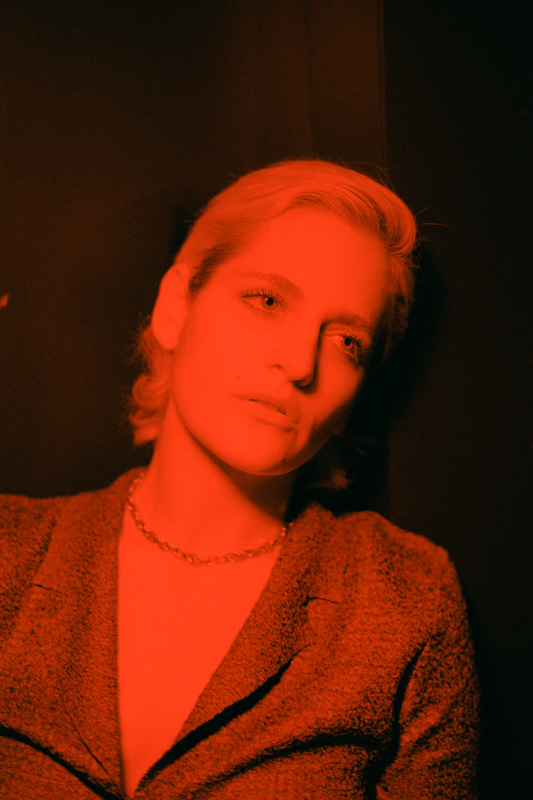
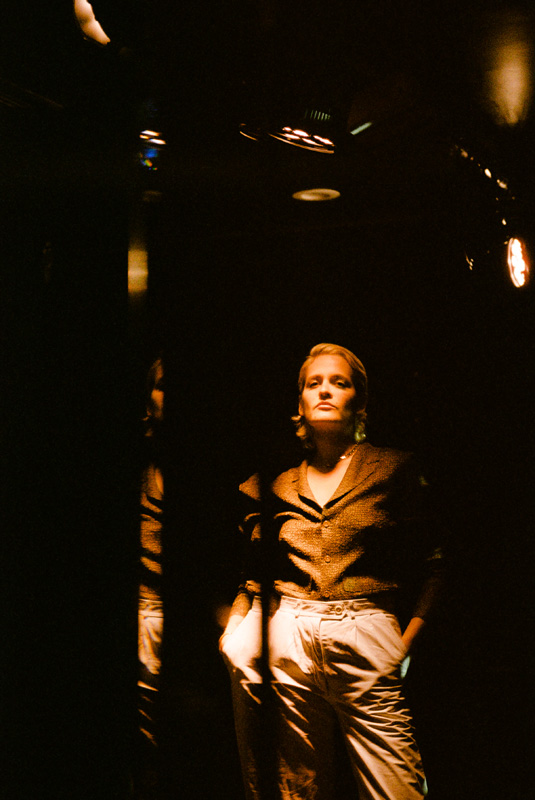
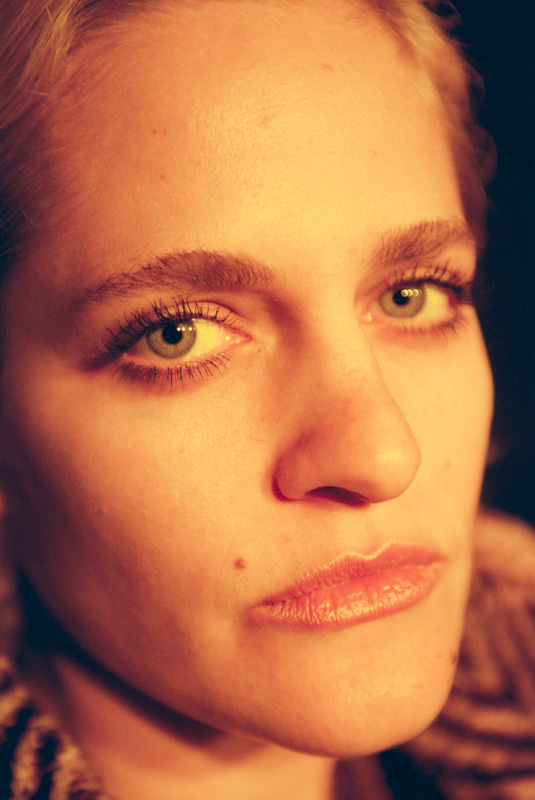
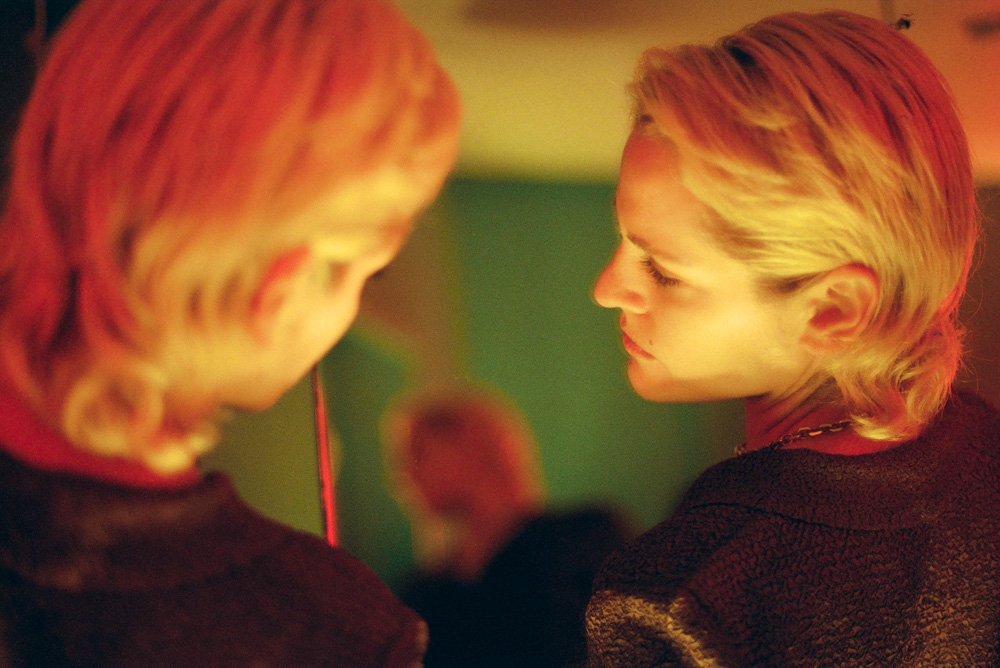
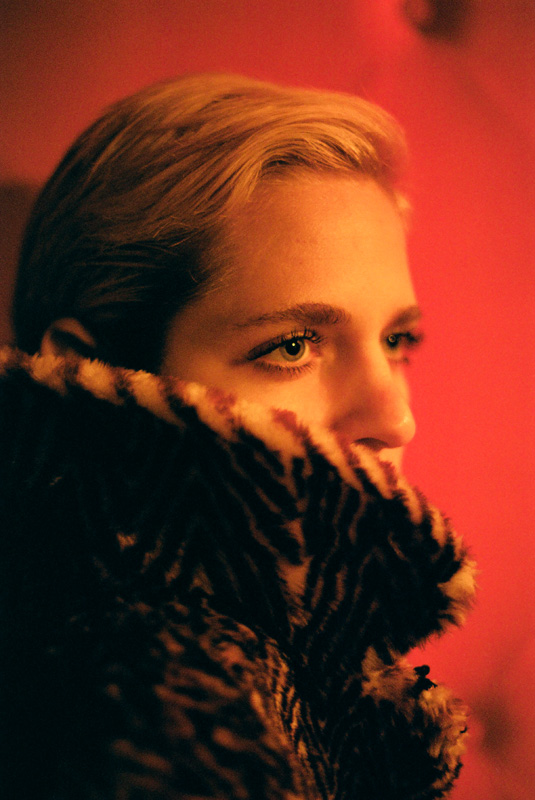
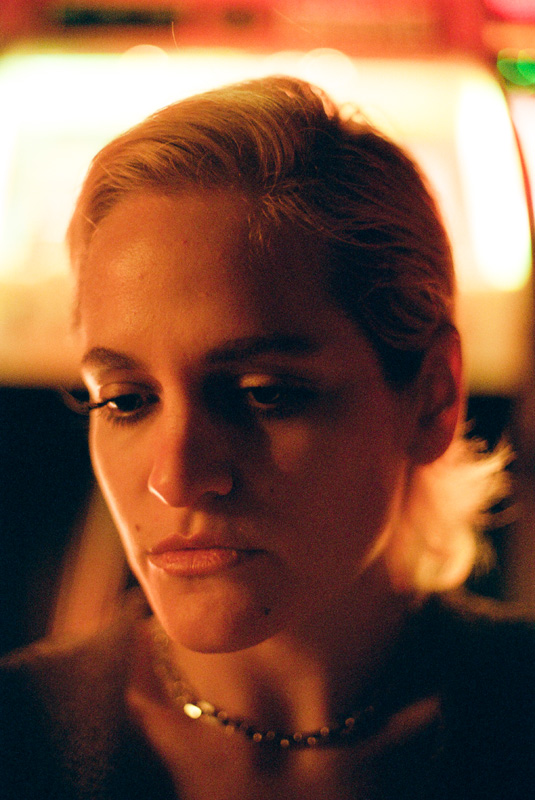
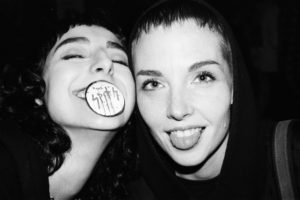
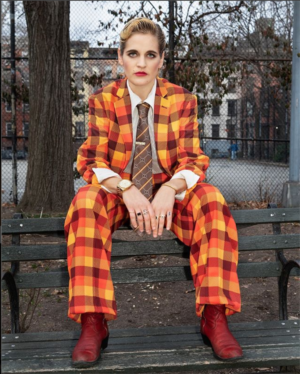
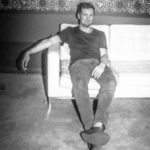
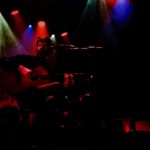
Saara Untracht-Oakner is just as confident and unapologetically opinionated as she seems. Or, if she isn’t, it would be impossible to tell. You might recognize Saara from her magnetic, high energy performances with the surf rock band BOYTOY, and her new solo project where she goes by the abbreviation SUO. If anything, the stripped down, naturalistic work that is highlighted on her solo album Dancing Spots and Dungeons, allows her talent to shine through even more strongly. Listening to Saara, I couldn’t help but be reminded of the gender-bending, dance tracks that were popularized in the ’80s. Saara’s music transcends time and identity barriers, and that’s purposeful. Saara says she doesn’t understand why everything has to be so black and white, and her music proves that it doesn’t have to be. Saara’s music is timeless, unapologetically queer, and absolutely spectacular. The only thing missing is an actual dungeon.
Your solo album is the culmination of more than 10 years of work, what made this moment the right time for you to breakout on your own?
Saara: My band BOYTOY was on hiatus and I had a bunch of songs laying around, some fleshed out ideas and some in the works. I wanted to conceive a complete vision start to finish. Sometimes it’s hard in a democratic group to always be on the same page and there are a lot of compromises. I felt like I wanted to do something with no barriers, pressure, or expectations.
Are there things you could only explore as a solo artist that you couldn’t as part of a group? Or is the transition more organic than that?
S: I feel with this project I get to be more of a conductor. I get to choose my players and see out all the art direction. I’m lucky and fortunate to have found so many contributors who are excited about the project and down to complete my vision and help bring it to life.
You’ve mentioned inspirations like Grace Jones, and Lou Reed. I also see a bit of Bowie in your new music. A lot of your performance is also a combination of feminine and masculine energy, and that was a definite part of the above artists as well. Is that part of why you were drawn to these inspirations (that sense of commonality?) That time in the 80s was a great time for music because of that boldness of unapologetic identity, that I think we are coming back to at this moment as well.
S: I identify with them in so many different ways. Androgyny has always been a part of me. When I was very young I wanted to be a boy, I cut my hair short and wore boys bathing suits and clothes. Once I hit puberty I liked being a woman, but I still felt very in between both gender roles and could sway one way or the other depending on the day. There’s an interview when Lou Reed gets asked “are you a transvestite or homosexual” and he says “sometimes.” It’s like, why does it have to be so black and white? I love that about Grace and Bowie and Lou, people don’t know what to think, but they’re attracted to them. I also have always had a strong presence and powerful energy, which intimidates some people at first I think. I’ve always had a strong sense of self and I think that scares people sometimes but also draws them in. I’m direct and know what I want. Same with these performers. Also, melody. I love melody. It’s what makes a song catchy and memorable and these guys do it great. I definitely draw inspiration from them and from that.
Your solo music isn’t a huge sonic departure compared to your work on BOYTOY, but it does feel somehow even more stripped down and natural. What was your main goal in writing this album? Was there a particular sound you were looking for?
S: It makes sense it’s not a huge departure since I wrote a lot of the BOYTOY stuff, but the way the songs were crafted was very different. When I recorded these songs with Kyle Mullarky in Topanga, I had demos but a lot of the other parts like guitar and piano and bass we wrote in the studio, so every part and line was very intentional. I wanted to create a lot of space in the record, so you could hear every part and everything sits in its own spot. I had references for tones from Prince to Talking Heads to Television, but I wasn’t trying to make it sound like any one thing. I wanted the songs to feel timeless. There’s not a lot of reverb or fuzz on this record and we tried to get a good analog sound without a lot of pedals or effects.
Circling back a bit, how do you think that this post gender movement that were living through effects the creation of art in these circles? Do you think it allows for more freedom of expression? How so?
S: I think it allows more people to feel more free and be themselves. But it’s not new. It’s just more mainstream. And maybe even trendy. But think about Joan Jett singing Crimson and Clover about a girl. That was in 1981. It’s a cover, the first song came out in 1968 by Tommy James and The Shondells, but still. It was a billboard hit and it was a woman singing about a woman. Artists have always been queer and created queer art, the mainstream would just spin it to conform to societal norms. Now it’s just unapologetically in your face.
People talk a lot about your live performances! What goes through your head when you are performing? Do you have a certain space you get into, or do you just kind of get out there and let it happen?
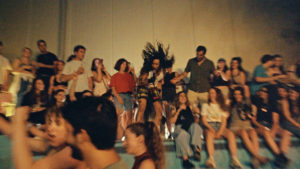
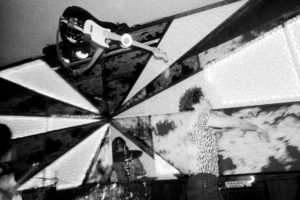
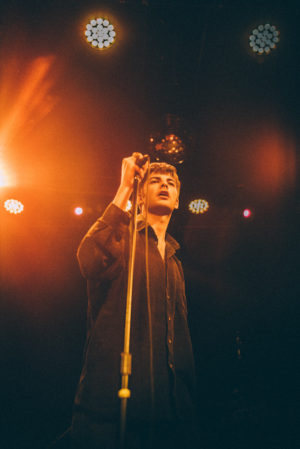
S: It’s been a journey for me and definitely something I continually strive to work on. I like watching videos of my shows and seeing what looks cool and what I can do better. I’m a pretty laid back person off stage, but when I’m performing I want to make it visually stimulating for the audience. I want it to be engaging and sexy and exciting and fun. I want people to feel captivated and loose. No one wants to see someone standing still with their eyes closed. There’s no connection there. It’s been really fun playing a few songs without my guitar. I can move around the stage and the room and not be tied to my guitar. I like to scope the room before a show and see the potential of where the performance can go. There’s creativity in that, in how to incorporate the space into the performance.
You went on an international tour with BOYTOY, what was that like? Did it feel sort of freeing in a way? Especially considering the claustrophobic nationalism that is happening within our current political climate?
International tours are so fun. Europe is great because you drive 3 hours and you’re in a different country with a different language. You drive 3 hours in the U.S. and you’re still in Texas. Australia was really amazing also. The people are so fun and nice and the country is so beautiful and foreign. The plants and animals are like nowhere else. Tour is always hard though. You sit in a van for long periods of time, don’t get enough sleep and don’t exercise. You’re stuck with the same people 24/7 and that can feel claustrophobic in its own way. Every country has its bullshit. There are good and bad people everywhere. You end up seeing that all over the world, but like-minded people gravitate to each other.
That being said, I’m going to Europe on tour with SUO in February. We’re starting it off playing 3 dates with The Growlers and hitting Switzerland, France, Spain, and Belgium and I’m definitely excited to leave the U.S. for a moment.
Out of all the songs on the album, the ones that stand out to me the most are “Spell In The Night” and “To Get Through To You” because they seem like such stark opposites of each other. The former seems almost celebratory, while the latter is a little bit darker. Can you talk about those two tracks a bit?
S: They absolutely are. “Spell In The Night” is a love song. It’s about the very beginning of a relationship, that feeling you get when you’re first hanging out with someone you really like and are totally entranced by them, like you’re under their spell. Most of my songs are from personal experience, although a few are written in the perspective of other people from books or TV shows. This one is about when I was perusing my current partner.
“To Get Through To You” is about feeling really low in a relationship and not knowing how to communicate with my partner. I was feeling pretty sad and depressed and scared of moving either away from it or towards it. I tend to write most or feel most creative when I’m feeling low. It’s therapeutic for me and helps get the bad feels out.
What is your favorite Dungeon?
I don’t think I’ve been there yet. My bedroom does have some really good stone walls though.
Have you ever danced in a dungeon? What dance move have you done in a dungeon (or would like to do?)
I’ve danced at parties where there were some whips and chains, but it was above ground, so technically not a dungeon. Alternatively, I’ve been at some really good underground venues/bars in Europe that definitely felt like dungeons and I’m sure I danced. Whip and Nae Nae.
You can follow Saara on Facebook and Instagram and catch SUO live and in person December 14th at The Broadway — tix here