
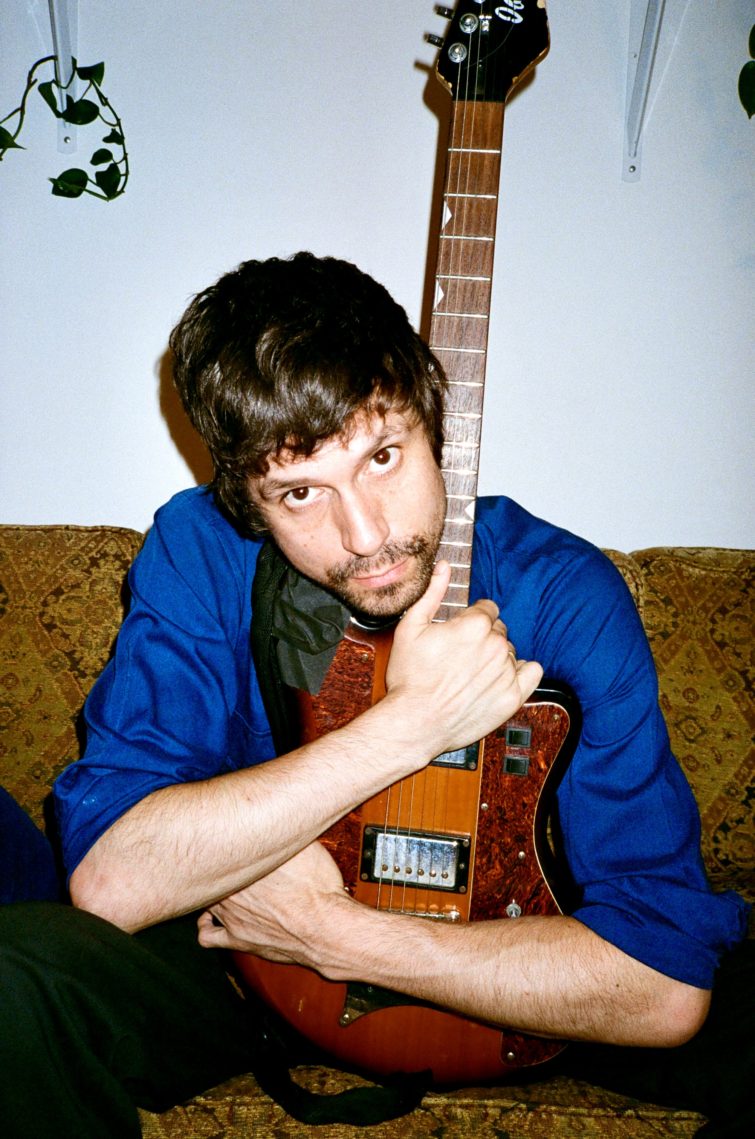
Photos by Marc Giuffre, Words by Marisa Whitaker
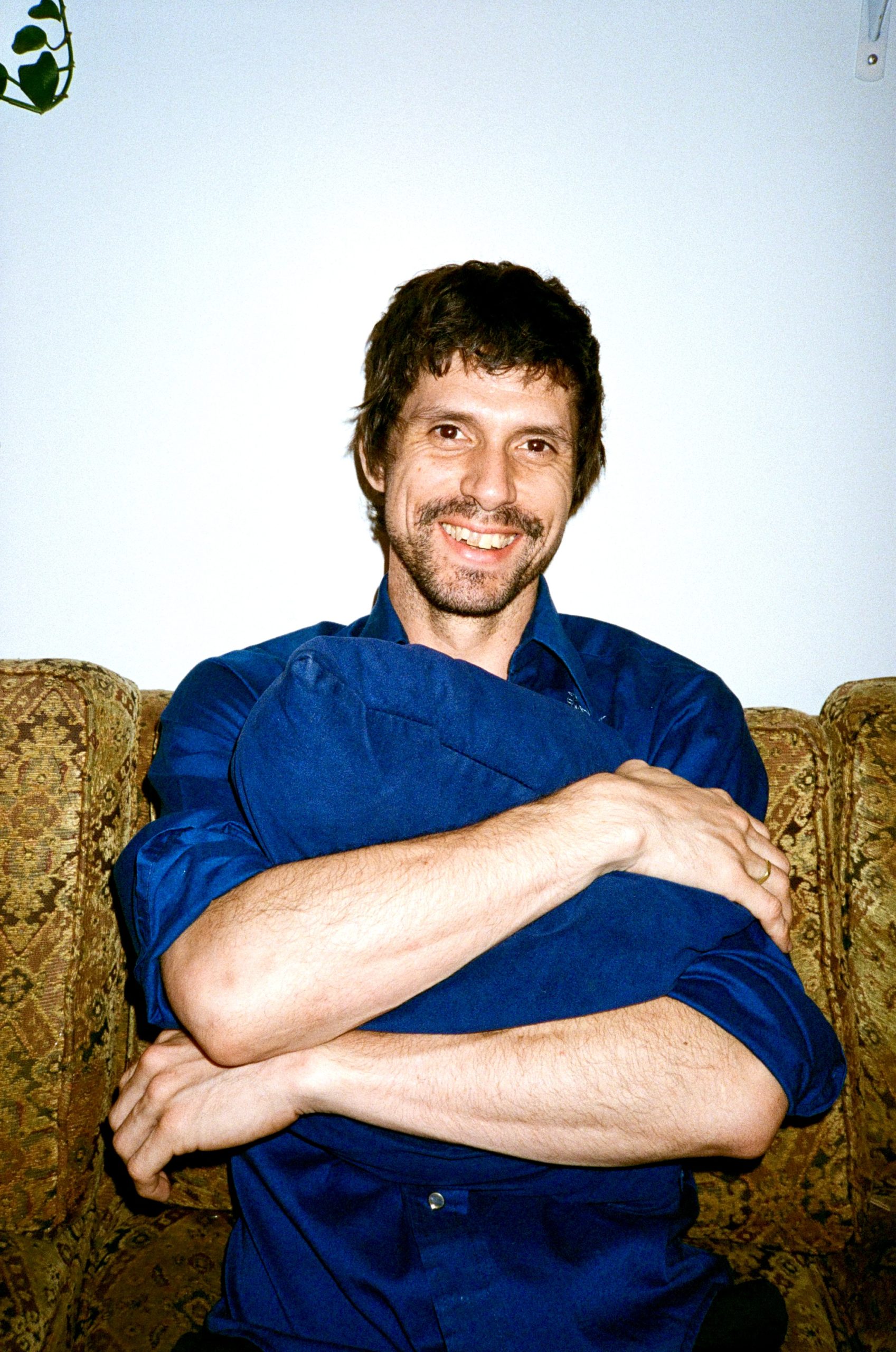
I sat down with frontman, namesake, and mind of Brooklyn-based rockers Dead Tooth, Zach Ellis, on the day Brian Wilson died at Carmelo’s. The divey, Bushwick gem was near empty that afternoon, so we got a nice ‘n’ cozy corner booth, but the overhead music blasting to fill the void was a hint too loud. He bought me a High Life and got to talking about the band’s self-titled debut album, which was released on July 18.
The 38-year-old has been making music since he was 16. He’s played in bands called Canvas: The Human, Steer, HayBaby, Swim, The Adventures of The Silver Spaceman, and Wives. The stability of pandemic unemployment checks and loads of free time allowed him to kick-start Dead Tooth, along with indulging in Twin Peaks and mezcal.
Dead Tooth took years to make, as band members came and went, and the wealth of time and money fluctuated. It explores personal and global plights, alongside its vivid storytelling of fictional and real-life experiences. Most tracks are guitar-driven, some saxophone-heavy, and, at times, dark, disco, surreal, irate, and punk – yet always laden with the grit of New York City.
The band name is because Zach literally has a dead tooth, his right central incisor. He’s kinda like it too – charming, a result of experience, and according to My Rivertown Dentist, in the context of dreams, and not unlike the album, “it can symbolize major life transitions or even the birth of something new.”
We reminisced a bit about the anger we all felt from that U2 album that was downloaded onto everyone’s iTunes in 2014. I told him the riff in “Bare Bones” sounds like the one in Fairport Convention’s “Matty Groves.” And we agreed that his “Surf’s Up” sounds nothing like Brian Wilson’s. Then we really dove in.
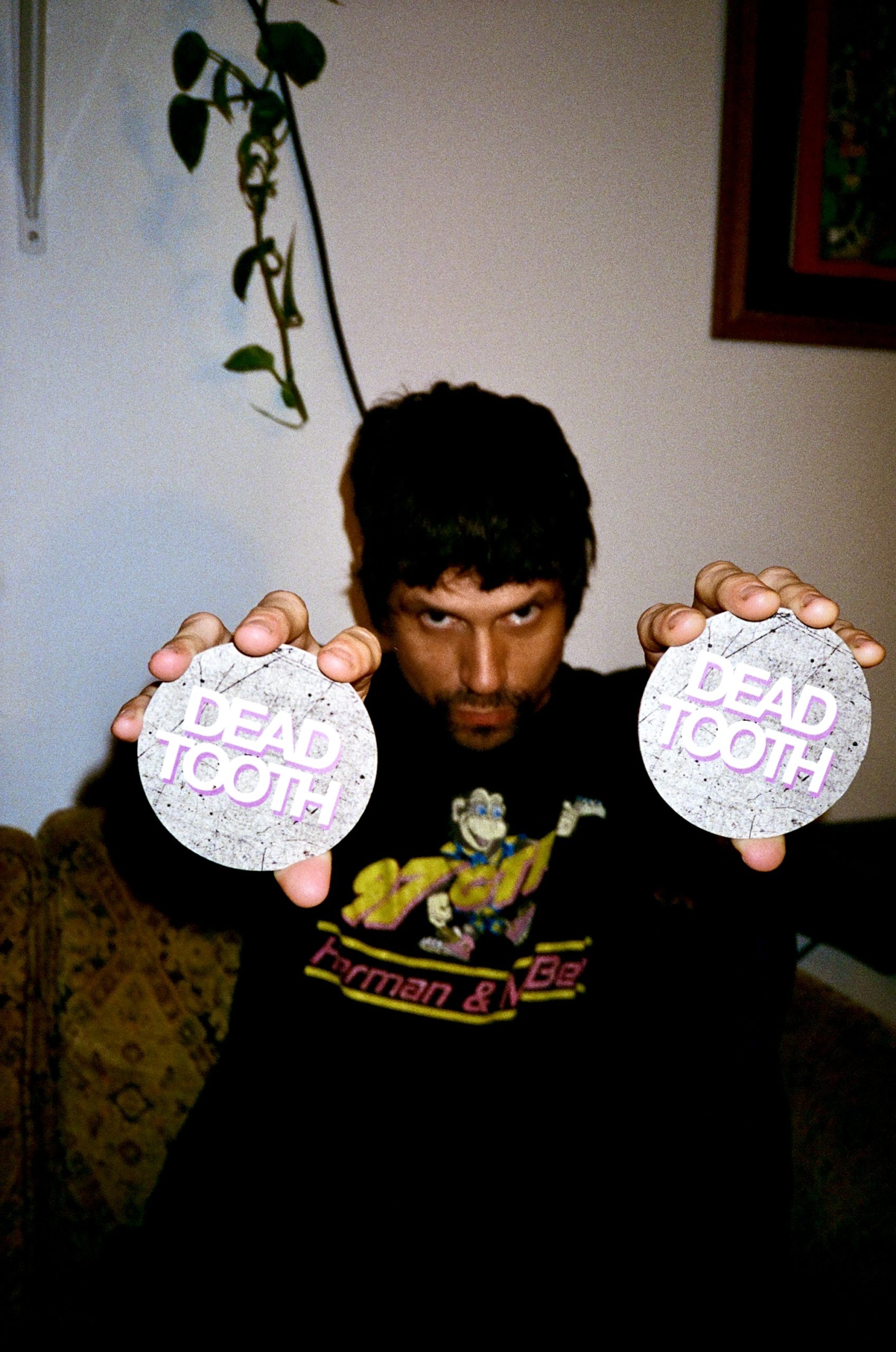
Marisa: How did this album come to be?
Zach: A lot of it came from touring and playing the songs live a lot. As a vocalist, you’re having to almost scream to get over a big band and to push through the mix. I was trying to get better at it. I’d listen back to the live shows, and I’d think, I gotta go re-record that now. “Birthday Boohoo” is a single that we put out, and when I listened to that vocal, I thought it was too tame. Especially touring in Europe, those crowds pull out this different energy from you on stage.
Marisa: I’ve been told by my music friends who’ve spent time in England that the crowds and mosh pits there are so much wilder than here. It sounds like your travels and gaining different experiences in new places influenced this work.
Zach: Yeah, for sure. A lot of it was recorded after touring Europe.
Marisa: Does this album capture that moment in your life?
Zach: It captures a long moment. We’re scrappy, we don’t have money, and we all work a ton. Years ago, we won a band tournament, the Our Wicked Lady Winter Madness Tournament. We won studio time from that and used it to record half of the record.
Marisa: So some of this album has been done for quite a while?
Zach: Yeah. The “You Never Do Shit” single has been done for a while.
Marisa: Are these songs about personal experiences?
Zach: Some of it’s fiction. The “Jack Dawson” is a silly recounting of The Titanic. Some stuff is personal, for sure. Some stuff is a story that I feel personally attached to, but didn’t necessarily happen to me. Some of it’s not even a story. It’s just cinematic emotions I tried to capture through surrealistic lyrics. “Bad for You” is about grappling with things that aren’t good for you, all the fun things in life. It’s a touch on my relationship with my dad, who’s always been a big drinker. Sometimes I can’t even hang with him and not drink. It just wouldn’t be fun. I know for my health that I should be way more sober. I feel like a lot of doors have been opened as far as science goes, that alcohol is bad, but I still love it, and I still want to just have fun.
Marisa: One of the album’s singles, “You Never Do Shit,” is about a beleaguered artist. You touch on pretty universal plights of musicians, given you’ve been one for quite a while.
Zach: The premise of that song is a guy who’s considering turning to a life of crime. There’s no end of the rope; he put everything he had into being a musician, and he’s wondering, what’s next?
Marisa: I loved your aspect of storytelling throughout the record. Every song is a different story, yet it all intertwined musically.
Zach: Even the “Jack Dawson” one, I have a whole essay about how that song tied into my childhood.
Marisa: You’re a big Titanic guy?
Zach: The real Titanic, I’m actually very obsessed with. I have a book, The Night to Remember. It’s the retelling of the last five minutes of the Titanic. It’s all first-hand accounts of people who survived. That aside, that movie, specifically, when I was 10 years old, I think, informed something in me. This guy’s out there drawing people, traveling around, he’s a cool guy. It’s kind of self-deprecating that I think that’s cool. I was coming to grips with this drunken stupor during the pandemic, watching this movie, getting teary-eyed. Like, why does this mean so much to me? This is terrible.
Marisa: It’s amazing to me that so many people today are still extremely fascinated with The Titanic.
Zach: Everything is so poetic. The stillness of the sea, the billionaires drowning with their belongings, just crazy.
Marisa: Is there an overarching theme of the album that ties all these songs together?
Zach: You can tie everything together with themes of apocalypse, apathy, and anger simultaneously with being over waking up and going on your fucking phone and seeing how the world’s crumbling. I just want to go and ride the van to the next show with my friends and play music. I hate the way things are crumbling, and I’m gonna scream my song. There’s that Townes Van Zandt song, “For The Sake of the Song,” and he goes, “Ah, but maybe she just has to sing for the sake of the song / And who do I think that I am to decide that she’s wrong?” That’s how I feel. I’m always grappling with what’s good for me and the world around me, and for anybody else. But then I’m just like, I don’t really want to do anything else, so I’m gonna just do it. I work a bunch of shitty jobs I don’t like to do it. There’s something about it. I just can’t stop.
Marisa: Do you think it’s part of an artist’s job to talk about the world around us? I feel, at times, as a journalist, that it’s my job to speak on social and political issues. I often hold back because I’m scared. There can be so much backlash. What do you think is the artist’s position when it comes to voicing world views?
Zach: I think artists should have the anonymity if they want. I think you should be able to put on a character and deliver a performance that isn’t necessarily true to your beliefs and truth as a human being, and be like, it’s for the sake of art. Like, I was putting on a villain to show you what a villain looks like. But I also think that it is the artist’s responsibility, in some ways, to also expose the injustices in the world. It’s so hard now, as an artist. Every day you wake up and there’s a new thing that you have to be paying attention to and on the right side of. Oftentimes, I’m not gonna say anything about anything until I know what’s going on. Sometimes I don’t have an answer at the time, for somebody in front of me asking about it, and I don’t say anything. Maybe that should be okay, too. … That being said, fuck genocide, free Palestine.
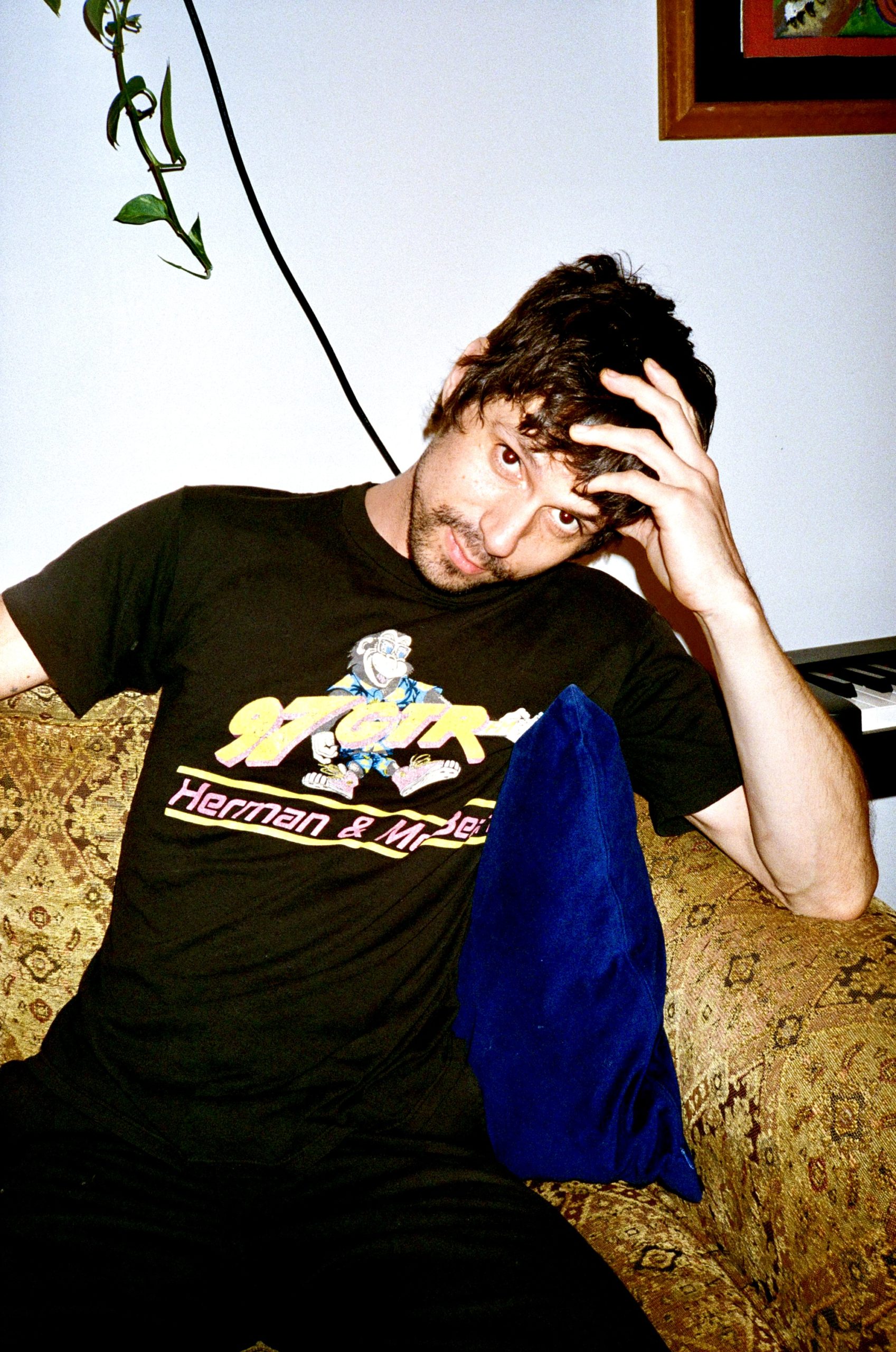
Marisa: A lot of the songs are pretty guitar-driven.
Zach: Yeah, I write everything on guitar. I play lead guitar, but on the album, Taylor [Mitchell] played because I love to do the fun dancing. I don’t really play lead guitar live. I can’t play the guitar parts I write and sing at the same time. I’m releasing so much energy up there. Who knows, it’s a recession world out there, so I might have to just up the skills and start doing it all. Following the pandemic, money wasn’t much of an issue because of the government checks. And I was like, I’m having a five-piece band doing it all. I’m just gonna dance around and sing. But now, things are just getting tight out there in the world, so maybe I need to pick back up the guitar for the live shows.
Marisa: Going into your tour this fall, how are y’all gonna translate the album live?
Zach: Just play it like it is on the album, with different musicians. The parts where there’s not a sax solo live, we’ll do a guitar solo. My friend Mel [Lucciola] drums for Gustaf, but she’s also a sick ass guitar player. She played the guitar parts for us. I wrote them and showed her how to play them all. She’s a sick performer and just ripped it. Everybody’s got their own style. Taylor had a really awesome style of playing guitar. Somebody will bring something new to the songs or the band. It’ll all be live. I don’t like having a backing track do anything. I always like to have a rock band. That’s my thing. I’ve been playing music for so long that I know enough sick rock musicians who would love the opportunity to go on tour.
Marisa: Out of all of the iterations of Dead Tooth over the years, in what way is this record reflective of the history of the band?
Zach: It’s the first full-length album. And it is representative of this era of taking the band from a few lineup changes, from post-pandemic to the album finish. The way that it was played in the studio was very much the way we were playing it live. I have demos of all the songs, and the band learned those songs and played them a lot. Certain things are unique to that experience that we captured. That’s what the debut Dead Tooth is.
Marisa: Where do you start when making a song?
Zach: It can go both ways. I’ll start with lyrics or sounds. But for me, as a lyricist, that’s always my focus throughout. A lot of times, with me, it starts with a bassline and putting lyrics to that bassline.
Marisa: How has New York influenced your music and you as a musician? You definitely have that NYC grit in your sound.
Zach: So much. If I lived anywhere else, I’d probably make much quieter music. For me, it’s a result of my ego dying when I was first thinking, Oh, I could bring soft music to New York and be this cool folk guy. Then, trying to do that at shows and going, Oh, nobody seems to care. Also, I grew up loving post-punk. At The Drive-In was my favorite band ever. I was obsessed with them. The first two records of The Mars Volta. And Fugazi. Heavier, angular music. I also loved Townes Van Zandt. Sensitive folk music. I guess Townes is this weird, almost nihilistic, folk-centric guy.
Marisa: Is there something that you want people to get out of listening to the album?
Zach: I just want people to feel what I feel when I listen to my favorite record. I feel like some people want more than that from their music. I mean, I want it to change lives in the way that other albums did for me, and create memories and moments of, Oh, I heard this thing and it was larger than life. Something that made me want to do something different that changed my life. I remember being a pizza delivery guy and listening to At The Drive-In. I remember seeing them perform. They’re giving it everything they have, they’re just doing it, and they’re gonna do whatever it takes to do it. And me being like, that’s what I want to do. If I can do that for other people, I think that’s cool. But also, I don’t know that I necessarily even recommend it. If you really have a weird, insatiable thirst for a somewhat destructive lifestyle that’s really fun, you get to live a really cool life, but stability goes out the window. And it’s pretty scary a lot of the time. If you think you have what it takes to do that, then you should definitely do it. That’s what I think. If I can inspire that in people, or even just make people feel better if they’re feeling sad, like, I’m feeling pretty bummed, but I went to this show, and I was like, ‘Nothing matters, I just raged against it and had fun.’