
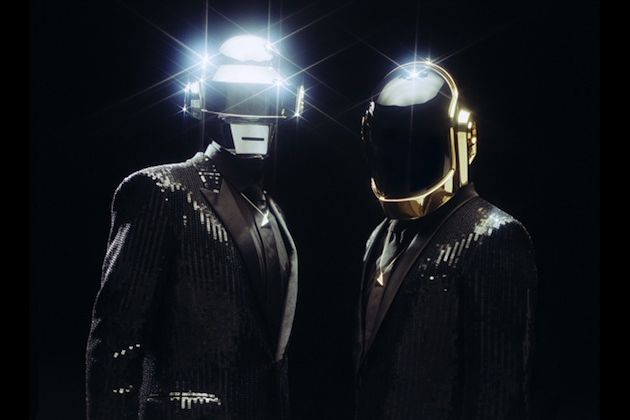
Daft Punk is back and they’re definitely harder, better, faster and stronger with Random Access Memories. The French duo pay homage to the 70s and 80s in their latest effort. With a smooth sound that will have listeners longing to break it down under the disco ball this album is flawless from start to finish. The album starts off strong with the dramatic “Give Life Back to Music” and high energy tracks like “Get Lucky.” Collaborators like Julian Casablancas, Panda Bear, and Nile Rogers also add their talents to this boogie heavy album. Listening to this album you could almost pretend that Michael Jackson and Andy Warhol might have danced to this at Studio 54.
Traditionally Daft Punk is content to let their synthesizers do the talking for them but that doesn’t mean their minimalist lyrics don’t resonate. “Let the music in tonight/ Just turn on the music/ Let the music of your life/ Give life back to music.”
The third track “Giorgio by Moroder” features the legendary Italian producer Giorgio Moroder, who made hits for icons like Donna Summers and Debbie Harry. Moroder speaks about his early struggles trying to make it as a musician in Munich. Surprisingly this track is 9 minutes long but it never feels like the song is dragging. Get your jumpsuits out for the album’s most danceable track, “Get Lucky,” which features Pharrell Williams at his most soulful. With lyrics like: “We’ve come too far to give up who are/ So let’s raise the bar and our cups to the stars,” this track is a top contender for best summer jam. With “Instant Crush,” the band and Julian Casablancas break away from the happy nostalgia for a more melancholy track. Even though this song might be one of the most lyric heavy on the album, it’s the synthesizers and drums that make listeners shut up and pay attention.
Die hard fans will appreciate Random Access Memories not only because of its grooviness but because it’s a catchy track list of songs that are easy dance to. And for an album that seems dead set on proving that disco is not dead, it’s a strangely soothing listen. The album culminates with the synth and drum machines in the last track “Contact,” reaching a crescendo that seemingly never ends before stopping on what sounds like a space ship engine back firing.

Review by Roselyn Sebastian